Resource Guarding In Dogs: Diagnosis And Training Solutions
Learn how to diagnose resource guarding in dogs and apply proven desensitization solutions. Discover triggers, training protocols, and safety tips.
Understanding the Psychology Behind Resource Guarding
Resource guarding is one of the most common, yet profoundly misunderstood, behavioral issues in canine psychology. At its core, resource guarding is a natural, evolutionary survival mechanism. In the wild, canines that fiercely protected their food, mates, and shelter were the ones that survived to pass on their genetics. While our domestic dogs no longer need to fight off scavengers for their daily kibble, the deep-seated neurological instinct to protect valued items remains intact.
From a behavioral diagnosis perspective, resource guarding is not a sign of 'dominance' or a dog trying to 'be the alpha.' Instead, it is rooted in anxiety and a perceived threat of loss. When a dog guards a resource, they are communicating a clear message: 'I am afraid you will take this away, and I need it.' Punishing this fear-based response only validates the dog's anxiety, teaching them that humans approaching their resources are indeed a threat, which often escalates the guarding behavior from subtle warnings to overt aggression.
Diagnosing Resource Guarding: Reading the Canine Ladder
Accurate diagnosis requires a keen eye for canine body language. Dogs do not typically jump straight to biting; they communicate through a progressive 'ladder' of escalation. According to the American Kennel Club (AKC), recognizing the early, subtle rungs of this ladder is critical for safe and effective intervention.
Below is a diagnostic table to help you identify where your dog falls on the resource guarding escalation ladder.
| Escalation Stage | Body Language Signals | Psychological Meaning | Required Human Action |
|---|---|---|---|
| Stage 1: Subtle (Anxiety) | Freezing, hard staring, lip licking, yawning, turning head away, whale eye (showing whites of eyes). | 'I am uncomfortable with your proximity to my item. Please give me space.' | Stop approaching immediately. Do not punish. Give the dog space to decompress. |
| Stage 2: Warning (Defensive) | Low growl, curling lips, snapping at the air, stiffening of the torso, hovering over the item. | 'Your continued approach is a threat. I will escalate if you do not retreat.' | Calmly back away. Toss a high-value treat from a distance to change the emotional response. |
| Stage 3: Overt (Aggression) | Lunging, biting, holding onto the item while thrashing, relentless pursuit if the human retreats. | 'I have exhausted my warnings. I must physically remove the threat to keep my resource.' | Evacuate the area. Implement strict environmental management. Consult a certified veterinary behaviorist. |
Identifying the Triggers: What Is Your Dog Guarding?
Before implementing a solution, you must map your dog's specific triggers. Resource guarding is highly contextual. A dog might violently guard a raw bone but happily share a plush toy. Common triggers include:
- High-Value Food: Raw bones, pig ears, bully sticks, and human food scraps.
- Everyday Meals: Standard kibble in a food bowl (often exacerbated by free-feeding).
- Stolen Items: Trash, socks, shoes, or children's toys (often linked to a history of items being forcibly removed).
- Locations: Crates, beds, couches, or specific corners of a room.
- People: Guarding a favored family member from other pets or guests.
Step-by-Step Solutions: Management and Modification
Solving resource guarding requires a dual approach: immediate environmental management to prevent rehearsal of the behavior, followed by a systematic Desensitization and Counter-Conditioning (DS/CC) protocol to change the dog's underlying emotional state. The ASPCA strongly advocates for positive reinforcement methods over confrontational 'alpha rolls' or bowl-taking exercises, which are proven to increase bite risks.
Phase 1: Environmental Management (Immediate Safety)
Management prevents the dog from practicing the unwanted behavior while you work on training. Every time a dog successfully guards an item and makes a human back away, the behavior is reinforced.
- Physical Barriers: Invest in pressure-mounted baby gates (Cost: $40 - $60) to separate the dog from high-risk areas like the kitchen or children's playrooms during meal times.
- Safe Zones: Feed the dog in a locked crate or a closed bedroom. Pick up the bowl immediately after they finish and leave the area.
- Enrichment Alternatives: Replace easily guarded, long-lasting chews with consumable enrichment. Use a Kong Classic (Red, Medium size, Cost: ~$15) stuffed with soaked kibble and frozen plain pumpkin. Because the dog must lick and chew to extract the food, it reduces the 'possess and swallow' mentality associated with raw bones.
Phase 2: Desensitization and Counter-Conditioning (DS/CC)
This protocol changes the dog's emotional response from 'They are going to take my food' to 'Their approach means I get something even better.'
- Determine the Threshold Distance: Find the exact distance at which your dog notices you but does not freeze, stiffen, or growl. For severe guarders, this might be 15 feet. For mild guarders, it might be 5 feet.
- The Approach and Toss: Stand at the threshold distance. The moment the dog looks at you, toss a piece of high-value treat (e.g., boiled chicken breast or low-sodium string cheese) directly into their bowl or near their chew.
- Timing is Critical: The treat must land within 0.5 seconds of the dog acknowledging your presence. This precise timing wires the brain to associate your approach with the arrival of premium food.
- Decreasing Distance: Only decrease your distance by 1 foot after 3 to 5 consecutive sessions where the dog shows a relaxed, happy response (loose body, wagging tail, looking up expectantly). If the dog stiffens, you have moved too fast; increase the distance by 2 feet and start over.
Phase 3: The 'Trade-Up' Protocol
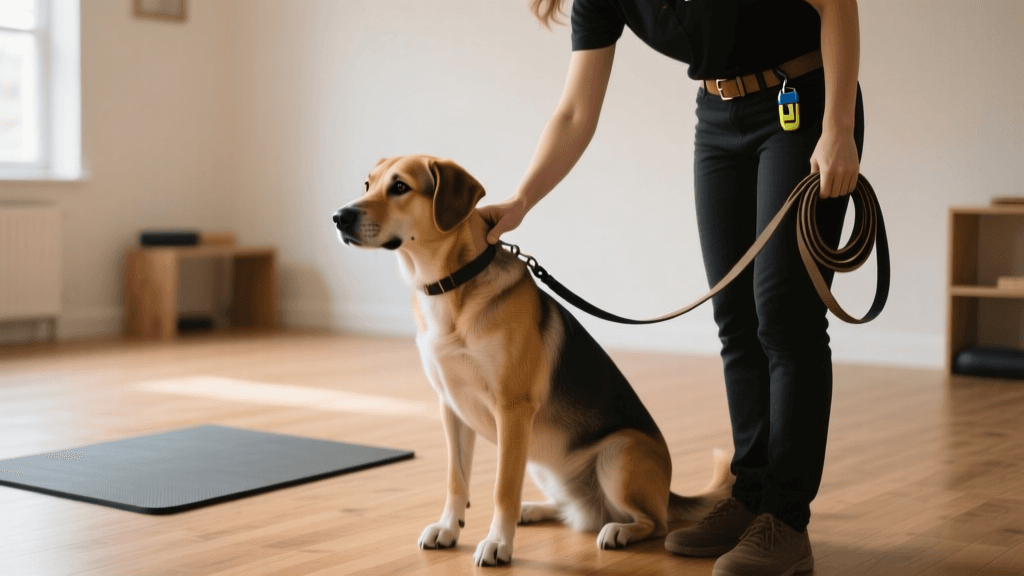
Never forcibly take an item from a dog's mouth. Instead, teach the 'Drop It' cue using the Trade-Up method.
- Offer the dog a low-value item (e.g., a boring rope toy).
- After a few seconds, present a high-value treat (e.g., a piece of roasted chicken) right at their nose.
- The dog will naturally drop the toy to eat the chicken.
- The exact millisecond the toy leaves their mouth, say 'Drop' and feed the chicken.
- Once the chicken is eaten, return the toy. This teaches the dog that giving up an item does not mean losing it forever; it means getting paid and getting the item back.
Expert Insight: 'Forcing a dog to drop an item or pinning them to the floor to assert dominance will only suppress warning signs. A suppressed dog is a dangerous dog, as they will eventually skip the growl and go straight to the bite. Always address the emotional root of the guarding through positive trade-ups.' — Principles of Applied Animal Behavior
When to Seek Professional Help
While mild to moderate food bowl guarding can often be resolved with the DS/CC protocols outlined above, severe cases require professional intervention. You should immediately consult a Certified Applied Animal Behaviorist (CAAB) or a board-certified veterinary behaviorist (DACVB) if:
- Your dog has broken the skin or caused bruising during a guarding incident.
- The dog guards unpredictable items (e.g., dust bunnies, shadows, or random trash) with high intensity.
- The guarding is accompanied by other severe anxiety disorders, such as separation anxiety or extreme noise phobias.
- You have children in the home, as kids are unpredictable and highly susceptible to facial bites during resource guarding incidents.
By shifting your perspective from 'correcting bad behavior' to 'diagnosing and treating anxiety,' you can build a foundation of trust. Resource guarding is highly treatable when approached with patience, precise timing, and a deep understanding of canine psychology.
marcus-aldridge
All our authors care for dogs every day — read more of their work on the authors page.