2026 Raw Feeding Station Setup for New Large Breed Puppies
Discover how to set up a safe, hygienic raw feeding station for your new large breed puppy in 2026, complete with budget tips and transition guides.
The 2026 Shift Toward Fresh and Raw Puppy Nutrition
Bringing a new large breed puppy into your home is a monumental milestone, and deciding to feed them a raw or fresh diet is one of the most impactful choices you can make for their long-term orthopedic and systemic health. As we navigate the pet care landscape in 2026, the availability of human-grade ingredients, advanced home-prep appliances, and transparently sourced commercial raw options has never been better. However, large breed puppies—such as Golden Retrievers, German Shepherds, and Great Danes—have highly specific nutritional requirements that demand meticulous planning.
Unlike adult dogs, growing large breed puppies require strictly controlled calcium-to-phosphorus ratios and calibrated caloric intake to prevent rapid growth and subsequent developmental orthopedic diseases like hip dysplasia and panosteitis. Setting up a dedicated raw feeding station in your home before your puppy arrives is critical. This ensures you can safely handle, store, and prepare biologically appropriate raw food (BARF) or gently cooked fresh meals while minimizing zoonotic risks and cross-contamination.
Designing the Triangle of Raw Prep: Storage, Prep, and Serving
A successful raw feeding routine relies on what veterinary nutritionists call the 'Triangle of Prep.' This involves three distinct zones in your home dedicated to your puppy's diet.
1. The Storage Zone
Raw diets require significant freezer space. For a large breed puppy that will grow to weigh over 70 pounds, you will need to store bulk proteins, raw meaty bones (RMBs), and organ meats. In 2026, energy-efficient dual-zone chest freezers are the gold standard for raw feeders. These units allow you to keep one side at a deep-freeze temperature (-10°F) for long-term parasite destruction of raw meats, while the other side operates as a standard freezer for commercially prepared raw patties. Always store raw pet food on the bottom shelves or in a dedicated freezer to prevent accidental cross-contamination with human groceries.
2. The Prep Zone
Dedicate a specific cutting board (preferably color-coded red for raw meat) and a set of stainless steel mixing bowls exclusively for your dog's meals. Avoid porous materials like wood or plastic, which can harbor Salmonella or Listeria in microscopic grooves. A stainless steel prep mat with a raised lip is an excellent investment for your countertop, catching stray meat juices and making sanitization effortless.
3. The Serving Zone
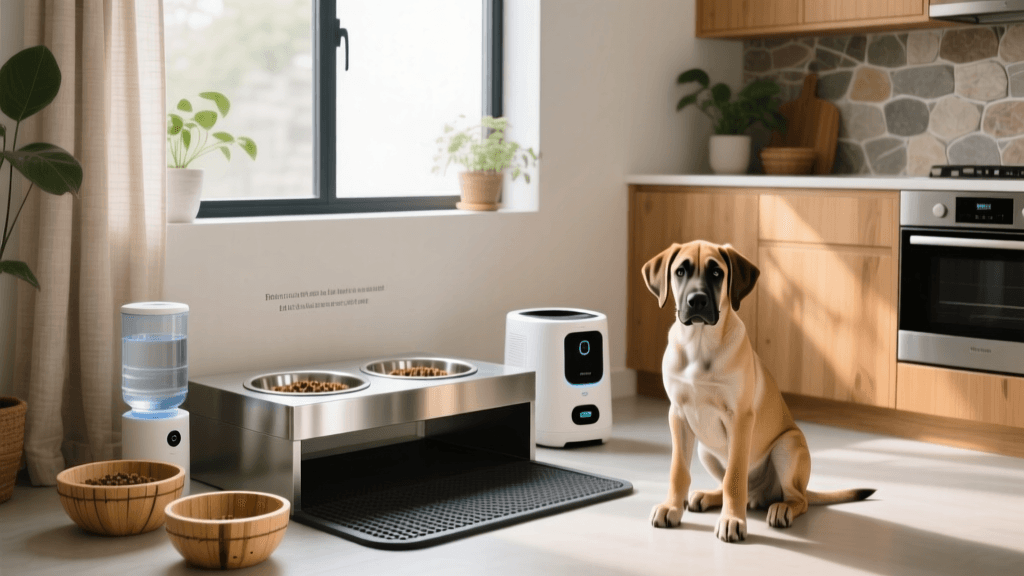
Large breed puppies are notoriously messy eaters. Serve meals on a raised, adjustable feeding station to promote better digestion and reduce neck strain. Place a heavy-duty, waterproof silicone mat underneath the bowls. In 2026, many owners are utilizing antimicrobial feeding mats infused with silver-ion technology to inhibit bacterial growth between daily washings.
Nutritional Imperatives for Large Breed Puppies
Formulating or sourcing a raw diet for a large breed puppy is not as simple as tossing a slab of chicken into a bowl. The National Research Council (NRC) and the Association of American Feed Control Officials (AAFCO) dictate that large breed puppies must consume a diet with a calcium content between 0.8% and 1.2% on a dry matter basis, and a calcium-to-phosphorus ratio strictly between 1.1:1 and 1.4:1.
If you are DIY-prepping your puppy's meals, you must use a gram-accurate digital scale and follow recipes formulated by a board-certified veterinary nutritionist. Alternatively, many owners in 2026 opt for commercially prepared raw diets that utilize High-Pressure Pasteurization (HPP). HPP effectively eliminates dangerous pathogens without cooking the meat, preserving the natural enzymes and bioavailability of nutrients while ensuring the food meets strict AAFCO growth standards.
Sourcing and Budgeting: Commercial Fresh vs. DIY Raw
Budgeting is a primary concern for new owners. Large breed puppies consume a surprising amount of food. Below is a 2026 cost comparison for feeding a large breed puppy (projected adult weight of 75 lbs) during their peak growth phase at 6 months of age, consuming approximately 2.5 lbs of food daily.
| Diet Type | Brand / Method | Est. Monthly Cost (2026) | Prep Time | Nutritional Compliance |
|---|---|---|---|---|
| Commercial HPP Raw | WeFeedRaw / Steve's Real Food | $380 - $450 | Low (Thaw & Serve) | AAFCO Growth Compliant |
| Gently Cooked Fresh | The Farmer's Dog / Nom Nom | $420 - $510 | None (Ready to Serve) | AAFCO Growth Compliant |
| DIY Raw (BARF Model) | Local Butcher + Farm Sourcing | $210 - $280 | High (Weekly Batch Prep) | Requires Vet Nutritionist Recipe |
| DIY Pre-Mix Raw | Balance IT / Know Better Pet Food | $290 - $340 | Medium (Add Meat & Water) | AAFCO Growth Compliant |
While DIY raw is the most cost-effective, it carries the highest risk of nutritional imbalance if not guided by a professional. Pre-mixes and commercial HPP raw diets offer a safe middle ground for busy new puppy owners.
Essential 2026 Equipment Checklist
To set up your raw feeding station properly, ensure you have the following equipment ready before your puppy arrives:
- Gram-Accurate Digital Kitchen Scale: Essential for weighing organs and calcium supplements to the exact gram.
- Heavy-Duty Bone Grinder: If you are prepping DIY meals and need to grind raw meaty bones (like chicken necks or quail) into a safe, digestible powder for your puppy's developing teeth and stomach.
- Food-Grade Silicone Meal Prep Trays: Perfect for portioning out weekly DIY mixes into single-serving, freeze-safe pucks.
- UV-C Sanitizing Wand or Bin: A 2026 staple for quickly sanitizing stainless steel bowls and prep mats without relying on harsh chemical sprays.
- Dedicated Thawing Containers: Leak-proof, BPA-free containers kept on the bottom shelf of your refrigerator for safe, 24-hour thawing.
The 7-Day Breeder-to-Raw Transition Protocol
Your puppy will likely arrive eating a kibble diet provided by the breeder or rescue. Abruptly switching to a rich, moisture-dense raw diet will cause severe gastrointestinal upset. Follow this 7-day transition protocol:
- Days 1-2: 75% Breeder Kibble, 25% New Raw/Fresh Food. Monitor stool consistency closely.
- Days 3-4: 50% Breeder Kibble, 50% New Raw/Fresh Food. Introduce a canine-specific probiotic to support the gut microbiome shift.
- Days 5-6: 25% Breeder Kibble, 75% New Raw/Fresh Food. Reduce kibble to a small topper.
- Day 7: 100% New Raw/Fresh Food. Expect the stool to become significantly smaller, firmer, and less odorous—a hallmark of a highly digestible fresh diet.
Pro Tip: Never feed raw meaty bones during the transition phase. Wait until your puppy's digestive tract has fully adapted to the new raw diet (usually around week 3 or 4) before introducing recreational or edible raw bones.
Safety, Handling, and Zoonotic Precautions
Handling raw meat requires strict adherence to hygiene protocols to protect both your family and your new puppy. According to the U.S. Food and Drug Administration, raw pet food diets carry a higher risk of containing harmful bacteria such as Salmonella, Listeria monocytogenes, and E. coli. These pathogens pose a risk not only to the puppy but also to the humans handling the food.
The American Veterinary Medical Association also advises extreme caution regarding raw diets, particularly in households with young children, the elderly, or immunocompromised individuals. To mitigate these risks in 2026:
- Never thaw raw food on the counter. Always thaw in the refrigerator or use the defrost setting on your microwave if serving immediately.
- Wash hands thoroughly with warm water and antibacterial soap for at least 20 seconds after handling raw pet food or cleaning your puppy's face post-meal.
- Sanitize all surfaces using a diluted bleach solution (1 tablespoon of bleach per gallon of water) or a veterinary-grade enzymatic cleaner after every prep session.
- Discard uneaten raw food after 20 minutes. Do not leave raw meat sitting out at room temperature, as bacterial multiplication occurs rapidly.
Final Thoughts on Starting Your Raw Journey
Committing to a raw or fresh diet for your new large breed puppy is a labor of love that yields incredible dividends in the form of vibrant health, gleaming coats, and optimal joint development. By establishing a hygienic, well-organized feeding station and respecting the precise nutritional needs of growing giant breeds, you are setting your puppy up for a lifetime of vitality. Take the time to source high-quality ingredients, invest in the right prep equipment, and consult with a veterinary nutritionist to ensure your 2026 raw feeding journey is as safe as it is rewarding.
hannah-wickes
All our authors care for dogs every day — read more of their work on the authors page.