2026 Puppy Raw Diet Setup: First-Week Fresh Food Prep & Meal Plan
Learn how to set up a safe raw feeding station and plan your new puppy's first week of fresh meals in 2026 with this expert prep guide.
Preparing for a Fresh Start: The 2026 Guide to Puppy Raw Diets
Bringing a new puppy home is one of the most exciting milestones in a dog owner's life. As we navigate the canine care landscape in 2026, a growing majority of dedicated pet parents are turning away from highly processed kibble and toward raw, fresh, and gently cooked alternative diets. The benefits of species-appropriate nutrition are well-documented, ranging from improved gut microbiome diversity to leaner body condition and shinier coats. However, transitioning a vulnerable, growing puppy to a raw or fresh food diet requires meticulous preparation before their paws ever touch your kitchen floor.
Unlike adult dogs, puppies have rapidly developing immune systems, sensitive digestive tracts, and precise nutritional requirements for bone and tissue growth. If you are planning to feed a raw or fresh diet, your preparation must begin weeks before your puppy arrives. This comprehensive guide will walk you through setting up a hygienic raw prep station, sourcing safe ingredients, and executing a flawless first-week transition meal plan to ensure your new companion thrives from day one.
Setting Up Your 2026 Raw Prep Station
Cross-contamination is the single greatest risk when handling raw meats in a household. According to the U.S. Food and Drug Administration (FDA), raw pet food diets carry a higher risk of containing harmful bacteria like Salmonella and Listeria, which can affect both pets and humans. To mitigate this, establishing a dedicated, highly sanitized prep station is non-negotiable.
Essential Equipment for Safe Preparation
- Dedicated Mini-Fridge: Invest in a compact, temperature-monitored refrigerator strictly for your dog's raw meats and supplements. In 2026, smart-fridge thermometers that send alerts to your phone if the temperature rises above 40°F (4°C) are highly recommended to prevent bacterial proliferation.
- Color-Coded Cutting Boards: Use specific, non-porous cutting boards (preferably high-density polyethylene or stainless steel) exclusively for pet food prep. Never use the boards you use for your own human meals.
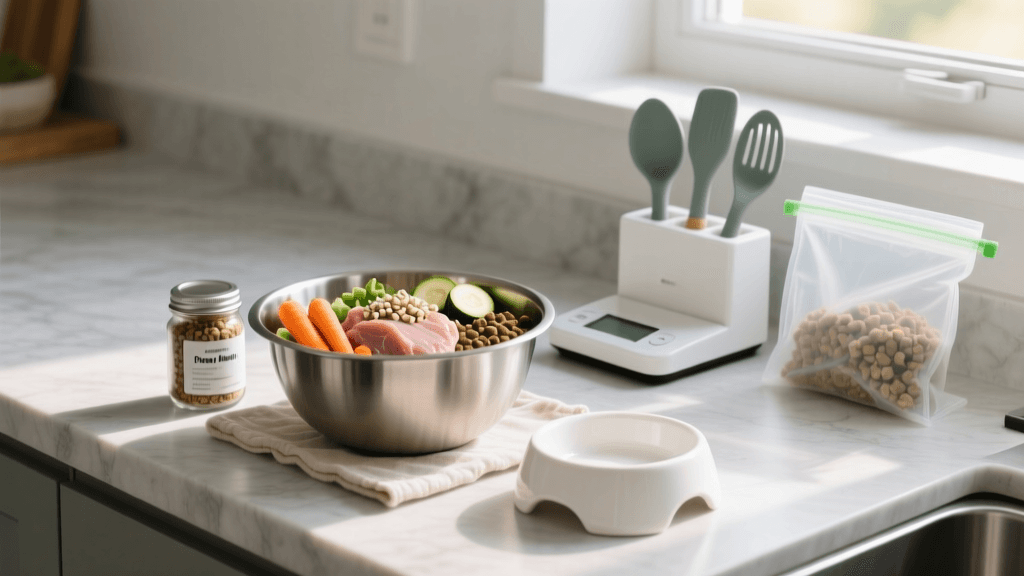
- Stainless Steel or Ceramic Bowls: Discard all plastic food bowls. Plastic develops micro-scratches over time, creating a haven for biofilm and dangerous bacteria. Heavy-bottomed stainless steel bowls are the gold standard for raw feeding.
- Accelerated Hydrogen Peroxide (AHP) Cleaners: Standard kitchen sprays are often insufficient for raw meat pathogens. AHP-based disinfectants are veterinary-grade, food-safe once dried, and highly effective against common raw-feeding pathogens.
- Digital Gram Scale: Puppies require precise caloric and mineral intake. A high-accuracy digital scale that measures down to the single gram is essential for portioning meals and adding supplements.
Sourcing Safe Proteins and Produce
The foundation of any successful raw diet is the quality of the ingredients. In 2026, the raw feeding community heavily emphasizes transparency in sourcing. You generally have two routes: commercial raw diets or DIY home-prepared meals.
If you opt for commercial raw, look for brands that utilize High-Pressure Processing (HPP). HPP is a cold-pasteurization technique that eliminates harmful pathogens without applying heat, thereby preserving the raw nutritional profile, enzymes, and amino acids. If you choose to DIY, build a relationship with a local, reputable butcher or a specialized raw-feeding cooperative. Human-grade meats are always preferred over 'feed-grade' or 'pet-grade' meats, which are legally permitted to contain higher levels of bacterial load and 4D meats (dead, dying, diseased, or disabled animals).
For produce, focus on low-glycemic, dog-safe vegetables like broccoli, zucchini, and leafy greens. These should be lightly steamed or blended to break down the cellulose walls, as dogs lack the enzymes to digest raw plant matter efficiently.
The First-Week Transition Meal Plan
Puppies are notoriously sensitive to sudden dietary shifts. If your breeder or rescue sent your puppy home on a commercial kibble, abruptly switching them to a rich, raw diet will almost certainly result in severe gastrointestinal upset, including diarrhea and vomiting. A gradual, structured transition is critical.
Below is a recommended 7-day transition schedule. During this week, monitor your puppy's stool quality closely. If stool becomes loose, hold at the current stage for an extra day and consider adding a canine-specific probiotic or plain canned pumpkin (100% pure pumpkin, no spices) to firm things up.
| Day | Current Breeder Food (Kibble) | New Fresh/Raw Diet | Preparation Notes |
|---|---|---|---|
| Day 1 & 2 | 75% | 25% | Serve raw slightly chilled, not freezing. Mix thoroughly with kibble. |
| Day 3 & 4 | 50% | 50% | Introduce a single, easily digestible protein like chicken or turkey. |
| Day 5 & 6 | 25% | 75% | Monitor stool closely. Add a digestive enzyme if digestion seems sluggish. |
| Day 7 | 0% | 100% | Full transition. Begin introducing secondary proteins and organ meats. |
Crucial Supplements for Growing Puppies
Feeding a puppy raw meat and bones is not enough to sustain healthy growth. Muscle meat is incredibly high in phosphorus and virtually devoid of calcium, iodine, and vitamin E. According to experts at the Tufts University Cummings Veterinary Medical Center, home-prepared diets are frequently deficient in essential micronutrients unless carefully formulated by a board-certified veterinary nutritionist.
The Calcium-to-Phosphorus Ratio
For growing puppies, the calcium-to-phosphorus (Ca:P) ratio must be strictly maintained between 1.2:1 and 1.4:1. An imbalance can lead to severe orthopedic issues, including nutritional secondary hyperparathyroidism or developmental bone diseases. If you are not feeding raw meaty bones (which naturally balance this ratio), you must supplement with a high-quality calcium source like eggshell powder or microcrystalline hydroxyapatite (MCHA).
Essential Daily Additions
- Omega-3 Fatty Acids (EPA/DHA): Crucial for brain and retinal development. Use a sustainable algal oil or wild-caught salmon oil, stored in the fridge to prevent oxidation.
- Iodine: Essential for thyroid function. A precise pinch of organic kelp powder usually suffices for a puppy's daily requirement.
- Vitamin E: Raw diets high in polyunsaturated fats increase the body's demand for Vitamin E to prevent oxidative stress. Use a natural mixed-tocopherol supplement.
- Manganese: Often overlooked, manganese is vital for joint and ligament health. It can be sourced from small amounts of raw ginger, mussels, or a dedicated supplement.
Large Breed Puppy Considerations
If you are bringing home a large or giant breed puppy (e.g., Great Dane, German Shepherd, Golden Retriever), the rules of raw feeding shift slightly. Large breed puppies are highly susceptible to rapid growth spurts, which can cause their bones to grow faster than their supporting muscles and ligaments, leading to conditions like hip dysplasia and panosteitis.
In 2026, veterinary consensus dictates that large breed puppies should be kept on a strictly calorie-controlled diet to promote slow, steady growth. Furthermore, excess calcium is incredibly dangerous for large breeds, as their bodies cannot down-regulate calcium absorption in the intestines. Always consult with a veterinary nutritionist to formulate a specific large-breed raw recipe that restricts both caloric density and calcium to safe upper limits.
Hygiene and Safety Protocols
The American Veterinary Medical Association (AVMA) maintains a cautious stance on raw diets due to the public health risks associated with handling raw meat and the shedding of pathogens in canine feces. To align with safety best practices, implement the following household rules:
- Safe Thawing: Never thaw raw meat on the counter or in warm water, and never microwave raw bones, as microwaves cook the bone, making it brittle and prone to splintering. Always thaw meats in the refrigerator on a bottom shelf to prevent drips.
- The 20-Minute Rule: Puppies should eat their meals within 15 to 20 minutes. If they walk away, pick up the bowl, cover it, and place it back in the fridge. Leaving raw meat out at room temperature invites rapid bacterial growth.
- Dishwasher Sanitization: Wash your puppy's stainless steel bowls and your prep utensils in the dishwasher on a high-heat sanitize cycle daily.
- Hand Hygiene: Wash your hands thoroughly with warm water and antibacterial soap for at least 20 seconds after handling your puppy's food.
'A raw diet can be wonderfully beneficial for dogs, but it is not inherently safe or complete simply because it is raw. The margin for error with a growing puppy is zero. Preparation, precise weighing, and rigorous hygiene are the pillars of success.' — Canine Nutrition Best Practices, 2026.
Conclusion: Setting the Stage for Lifelong Health
Choosing to feed your new puppy a raw or fresh diet in 2026 is a commitment to their long-term vitality, but it demands a high level of responsibility from the owner. By setting up a dedicated prep station, understanding the critical importance of micronutrient supplementation, and executing a slow, methodical transition plan, you can bypass the common pitfalls of raw feeding. Take the time to prepare your kitchen, source your ingredients, and calculate your puppy's specific caloric needs before they arrive. When you do, you will be rewarded with the sight of a thriving, energetic, and exceptionally healthy puppy ready to take on the world.
aaron-whyte
All our authors care for dogs every day — read more of their work on the authors page.