7 Quiet Dog Breeds for Apartments in 2026: Urban Guide
Discover the best quiet dog breeds for apartments with thin walls in 2026. Compare low-bark breeds and get urban living tips for peaceful coexistence.
The Rise of Urban Dog Ownership in 2026
As we navigate the urban housing landscape of 2026, the shift toward high-density, mixed-use apartment complexes has made noise ordinances stricter than ever. For city dwellers, sharing a wall with neighbors means that a vocal dog can quickly lead to noise complaints, strained relationships, and even lease violations. However, living in a compact space with thin walls does not mean you have to give up on your dream of dog ownership. The secret lies in selecting a breed that is naturally predisposed to quiet behavior and pairing them with the right indoor enrichment strategies.
According to the American Kennel Club, selecting a breed that matches your living environment is the cornerstone of responsible urban pet ownership. While no dog is completely mute, certain breeds are genetically inclined to be reserved, stoic, or simply uninterested in barking at every passing shadow. Below, we explore the top seven quiet dog breeds perfectly suited for apartment living in 2026, along with actionable advice for maintaining a peaceful home.
Top 7 Quiet Dog Breeds for Thin-Wall Apartments
When evaluating breeds for apartment life, we look beyond just size. A large, low-energy dog is often a better apartment companion than a small, high-strung terrier. Here is a comparison of the best low-bark breeds for urban environments.
| Breed | Average Weight | Vocalization Level | Indoor Energy | Apartment Score |
|---|---|---|---|---|
| Basenji | 22-24 lbs | Very Low (Yodels) | Moderate | 9/10 |
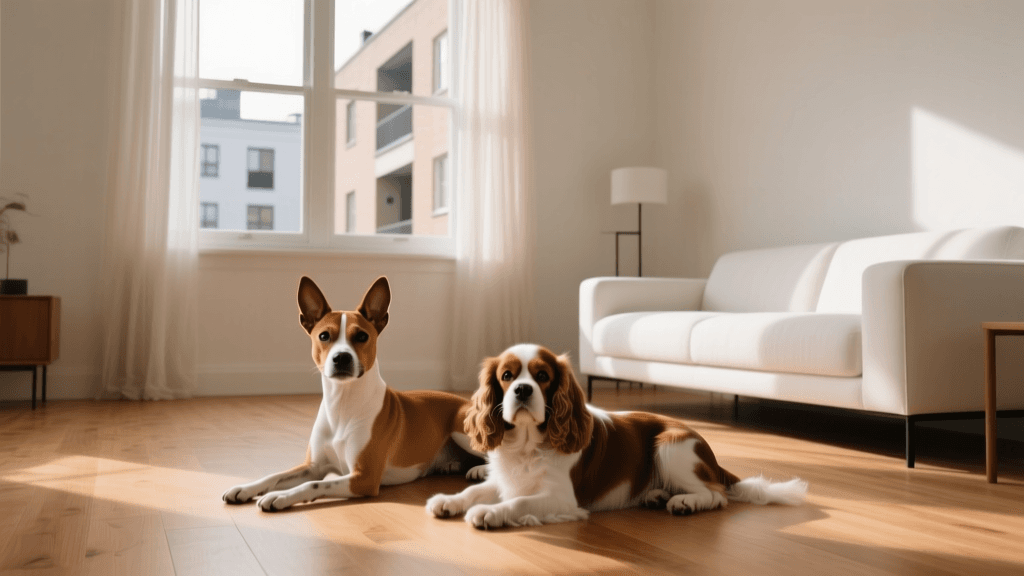
| Cavalier King Charles Spaniel | 13-18 lbs | Low | Low | 10/10 |
| Greyhound | 60-70 lbs | Very Low | Very Low | 9/10 |
| Saluki | 40-65 lbs | Very Low | Low | 8/10 |
| Tibetan Spaniel | 9-15 lbs | Low | Low | 9/10 |
| Borzoi | 60-105 lbs | Very Low | Low | 8/10 |
| Shiba Inu | 17-23 lbs | Low (Unless provoked) | Moderate | 8/10 |
1. Basenji: The Barkless Wonder
Famously known as the 'barkless dog,' the Basenji possesses a uniquely shaped larynx that produces a yodel-like sound (called a baroo) rather than a traditional bark. Originating from Central Africa, they are fastidious groomers, making them exceptionally clean apartment companions. However, their high intelligence requires daily puzzle toys to prevent destructive boredom.
2. Cavalier King Charles Spaniel
The Cavalier is the quintessential lap dog. They are deeply affectionate, highly adaptable, and rarely bark without a compelling reason. Their primary need is companionship; they thrive in apartments where their owners work from home or can take them to dog-friendly offices. If left alone for long hours, they may develop separation anxiety, which can lead to distress vocalization.
3. Greyhound: The 45-MPH Couch Potato
It is a common misconception that Greyhuds need vast open spaces to live happily. In reality, retired racing Greyhounds are notorious couch potatoes. They sleep up to 18 hours a day and are incredibly quiet indoors. A single 30-minute daily walk and a brief sprint in a secure dog park are usually enough to keep them perfectly content in a studio or one-bedroom apartment.
4. Saluki
Similar to the Greyhound, the Saluki is a sighthound that is aloof, independent, and remarkably quiet. They are deeply bonded to their families but tend to ignore strangers, meaning they will not bark at delivery drivers or neighbors in the hallway. They do require a secure, fenced area for occasional off-leash running to satisfy their prey drive.
5. Tibetan Spaniel
Do not let the small size fool you; the Tibetan Spaniel was bred as a monastery watchdog. While they will alert you to someone approaching your door, they are not yappy or hysterical. Once the 'threat' has passed, they quickly settle back into their role as a calm, observant companion. They shed moderately, so regular brushing is required.
6. Borzoi
The Borzoi is a giant breed, yet they are surprisingly well-suited for quiet apartment living. They are dignified, calm, and rarely bark. The main challenge with a Borzoi in an apartment is simply their physical footprint; they need a large dog bed and enough floor space to stretch out their long legs. Their serene demeanor makes them excellent neighbors.
7. Shiba Inu
The Shiba Inu is famously cat-like. They are clean, quiet, and independent. However, potential owners must be aware of the 'Shiba Scream'—a high-pitched vocalization they emit when highly stressed, frightened, or severely displeased. With proper socialization and positive reinforcement training, Shibas are incredibly quiet and respectful apartment dwellers.
Managing Separation Anxiety in Quiet Breeds
Even the quietest dog breeds can become vocal if they suffer from separation anxiety. In 2026, veterinary behaviorists emphasize that addressing the root cause of anxiety is more effective than simply suppressing the bark. The ASPCA notes that mental enrichment and predictable routines are vital for dogs living in high-stress urban environments.
To prevent distress vocalization when you leave for work, implement a structured departure routine. Avoid making a big fuss when leaving or returning home. Utilize smart home technology, such as the Furbo 360 Pro (2026 Model), which allows you to monitor your dog, dispense treats, and speak to them in a calming voice if they begin to pace or whine.
2026 Apartment Soundproofing and Enrichment Gear
Creating a serene environment benefits both you and your dog. Urban noise—sirens, construction, and hallway footsteps—can trigger reactive barking. Here is how to soundproof and enrich your apartment space:
- White Noise Machines: The Hatch Restore 3 is excellent for masking sudden hallway noises that might startle your dog. Place it near the front door to create an acoustic buffer.
- Acoustic Panels and Heavy Curtains: Hanging thermal, sound-dampening curtains over windows and placing acoustic foam panels on shared walls can significantly reduce noise transfer.
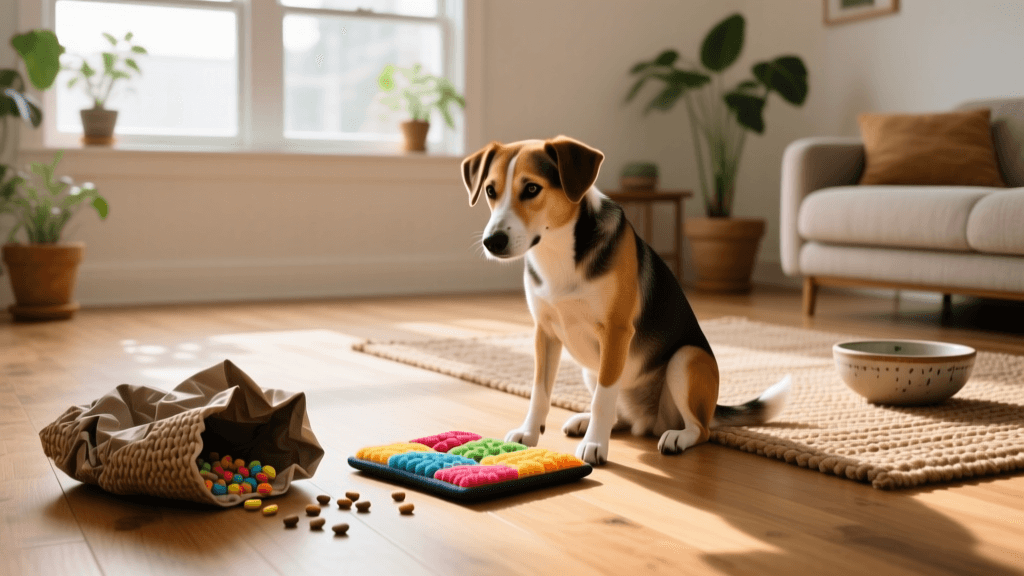
- LickiMat Soother Pro: Licking releases endorphins in dogs. Spreading peanut butter or plain yogurt on a LickiMat and freezing it provides up to 45 minutes of quiet, soothing enrichment while you are away.
- Snuffle Mats: Foraging for kibble in a dense snuffle mat tires out a dog's brain, leading to deeper, quieter sleep cycles during the day.
Training Protocols for Minimizing Vocalization
While genetics play a massive role in a dog's vocal tendencies, training solidifies good habits. If your quiet breed develops a habit of barking at hallway noises, use the 'Desensitization and Counter-Conditioning' (DSCC) protocol.
The Hallway Desensitization Drill
Record the sounds of your apartment building (footsteps, doors closing, elevator dings) on your smartphone. Play the recording at a very low volume while feeding your dog high-value treats like boiled chicken or freeze-dried liver. Gradually increase the volume over several weeks. The goal is to rewire your dog's emotional response so that hallway noises predict delicious food rather than an intruder.
Teaching the 'Quiet' Command
When your dog does bark, acknowledge the trigger. Say 'Thank you,' gently guide them away from the door, and ask for an incompatible behavior, such as 'Go to your mat.' Reward them heavily for settling on their mat. By acknowledging their alert, you satisfy their instinct to protect, and by redirecting them, you prevent the barking from escalating into a prolonged nuisance.
Conclusion
Living in an apartment in 2026 does not mean you must sacrifice the joy of dog companionship. By choosing a naturally quiet breed like the Basenji, Cavalier, or Greyhound, and pairing them with modern enrichment tools and proactive soundproofing, you can cultivate a peaceful sanctuary in the heart of the city. Always remember that a tired, mentally stimulated dog is a quiet dog, ensuring a harmonious life for you, your pet, and your neighbors.
anouk-beaumont
All our authors care for dogs every day — read more of their work on the authors page.