Best Dog Breeds for Remote Workers in 2026: 5 Top Picks
Discover the best dog breeds for remote workers in 2026. Find low-barking, affectionate companions perfect for your home office setup and daily Zoom calls.
The Rise of the Canine Co-Worker in 2026
As remote and hybrid work models solidify in 2026, the home office has transformed from a temporary desk setup into a permanent, multi-functional sanctuary. For millions of professionals, this shift has sparked a major lifestyle upgrade: getting a dog. However, not every breed is suited for the unique environment of a home office. A dog that barks at every passing delivery drone or demands constant playtime during a critical virtual presentation can quickly turn a dream scenario into a stressful liability. Choosing the right canine companion requires a careful evaluation of your work habits, your living space, and the inherent traits of different breeds. In this comprehensive guide, we explore the best dog breeds for remote workers, ensuring your new furry friend is the perfect silent partner for your daily grind.
Essential Traits for a Home Office Dog
Before diving into specific breeds, it is crucial to understand what makes a dog an ideal 'co-worker.' The home office environment requires a delicate balance of companionship and independence. When evaluating breeds or shelter dogs, look for the following core characteristics:
- Low Vocalization: You need a dog that is not prone to alarm barking. Breeds that are naturally quiet will save you from awkward interruptions during conference calls.
- Moderate to Low Energy: While all dogs need daily exercise, a home office dog should be content with a morning walk and an evening play session, spending the bulk of the workday napping.
- Independence: Clingy breeds that suffer from severe separation anxiety or demand constant physical touch can be highly distracting. A good office dog is happy to simply be in the same room as you.
- Adaptability: The ability to adjust to the sounds of typing, virtual meetings, and household appliances without becoming stressed is vital for a harmonious workspace.
Top 5 Dog Breeds for Remote Workers
1. Cavalier King Charles Spaniel
Often referred to as the ultimate lap dog, the Cavalier King Charles Spaniel is a masterclass in gentle companionship. Weighing between 12 and 18 pounds, they are small enough to fit comfortably on a designated chair or a plush bed beneath your desk. Cavaliers are incredibly attuned to their owner's emotions and will happily snooze at your feet while you type away. According to the American Kennel Club, this breed is known for its graceful, affectionate nature and lack of aggressive tendencies, making them exceptionally quiet and unobtrusive during your work hours.
2. Greyhound
It might seem counterintuitive to recommend a racing breed for a sedentary home office, but Greyhounds are famously known as '45-mph couch potatoes.' Despite their athletic build, they are sprinters, not endurance runners. A single 30-minute morning run or brisk walk is usually enough to satisfy their exercise needs, after which they will happily sleep for up to 18 hours a day. The AKC notes that Greyhounds are remarkably calm, quiet, and independent indoors. Their short coats also mean minimal grooming disruptions to your busy schedule.
3. Basset Hound
If you want a dog with a larger presence but a remarkably low-key demeanor, the Basset Hound is an excellent choice. Famous for their soulful eyes and droopy ears, Bassets are notoriously stubborn but incredibly chill. They are not prone to frantic energy bursts and prefer to lounge near their humans. While they can be vocal if left alone outside for long periods, indoors they are generally quiet, heavy sleepers. Their low stature and relaxed temperament make them ideal floor companions for a standing desk setup.
4. Japanese Chin
For those in smaller apartments or condos, the Japanese Chin offers a cat-like demeanor in a canine package. Weighing under 11 pounds, this ancient breed is quiet, clean, and highly observant. They do not demand rigorous outdoor exercise and are perfectly content to watch you work from a nearby sofa. Their independent yet affectionate nature means they will offer a comforting presence without constantly pawing at your keyboard for attention.
5. The Senior Rescue Mix
Purebreds are wonderful, but the best home office dog might be a senior mixed breed from a local shelter. Dogs over the age of seven have typically outgrown their destructive chewing and hyperactive puppy phases. They are often already house-trained, know basic commands, and possess a calm, predictable energy level. The Humane Society of the United States highlights that senior pets make incredible companions for quieter households and professionals who need a relaxed, steady presence. Adopting a senior dog also provides the immense reward of giving a vulnerable animal a comfortable, loving home for their golden years.
Breed Comparison Chart
To help you visualize how these breeds fit into a remote work lifestyle, review the comparison table below:
| Breed | Weight Range | Energy Level | Barking Level | Best WFH Trait |
|---|---|---|---|---|
| Cavalier King Charles | 12-18 lbs | Moderate | Low | Lap-friendly, highly affectionate |
| Greyhound | 60-70 lbs | Low (Indoors) | Very Low | Sleeps 18 hours, zero shedding |
| Basset Hound | 40-65 lbs | Low | Moderate | Extremely calm, sturdy floor lounger |
| Japanese Chin | 7-11 lbs | Low | Low | Cat-like independence, apartment-ready |
| Senior Rescue Mix | Varies | Low | Varies | Predictable routine, already trained |
Optimizing Your 2026 Home Office for a Dog
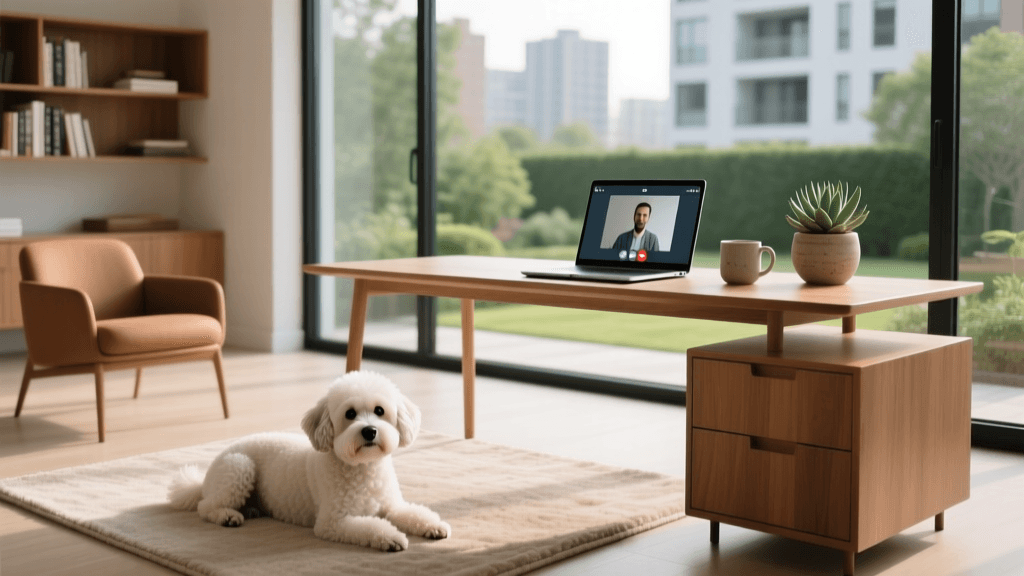
Bringing a dog into your workspace requires more than just picking the right breed; it demands a dog-proofed and ergonomically sound environment. In 2026, smart home technology and pet-specific office gear have made this easier than ever.
Cable Management and Safety
A home office is a maze of power cords, ethernet cables, and charging wires. Puppies and anxious dogs may chew on these, posing a severe electrocution risk. Invest in heavy-duty, chew-proof braided cable sleeves and mount power strips securely to the side of your desk or wall. Ensure all toxic office supplies, such as ink cartridges and certain types of whiteboard markers, are stored in locked drawers.
Ergonomic Pet Bedding
Your dog needs a designated 'workspace' just like you do. Place an orthopedic cooling gel mat or a heated memory foam bed just outside your immediate peripheral vision. This allows your dog to feel close to you without being directly underfoot, which can be a tripping hazard when you stand up quickly. Training your dog to 'go to your bed' on command is a game-changer for maintaining focus during deep-work sessions.
Smart Monitoring and Enrichment
When you need to step away for a long meeting in another room, modern AI-driven pet cameras can monitor your dog's anxiety levels and automatically dispense treats or play calming audio. Pair this with a snuffle mat or a frozen lick mat to keep them quietly occupied during your most critical afternoon hours.
Pro Tip: Position your dog's bed near a window with a secure screen. Visual stimulation from the outside world can provide passive entertainment that keeps boredom at bay without requiring your direct interaction.
The Ideal Remote Workday Schedule
Dogs thrive on routine. Establishing a predictable schedule helps your dog understand when it is time to be active and when it is time to let you work. Here is a sample schedule optimized for a remote worker and a moderate-energy breed:
- 7:00 AM - Morning Walk & Breakfast: Burn off morning energy with a 30-minute sniffari walk, followed by breakfast.
- 8:30 AM - Login & Settle: You log on to your computer. Give your dog a long-lasting chew or lick mat on their designated bed to signal the start of the workday.
- 10:30 AM - Potty & Stretch Break: A quick 10-minute outdoor bathroom break for both of you. This prevents indoor accidents and refreshes your screen-fatigued eyes.
- 12:30 PM - Lunch & Play: Eat your lunch, then spend 15 minutes doing active indoor training or tug-of-war to satisfy their mental and physical needs.
- 3:00 PM - Afternoon Nap: Most dogs will naturally sleep through your afternoon meetings. If they stir, a quiet puzzle toy can keep them occupied.
- 5:30 PM - Logout & Evening Exercise: Close the laptop. Transition into personal time with a longer walk, a trip to the dog park, or a jogging session.
Final Thoughts
Finding the best dog breed for remote workers in 2026 is all about matching your professional lifestyle with a canine temperament that thrives in a calm, indoor environment. Whether you opt for the aristocratic quietness of a Japanese Chin, the deep-slumbering tendencies of a retired Greyhound, or the grateful companionship of a senior shelter rescue, the right dog will elevate your work-from-home experience. By prioritizing low vocalization, preparing your office space for safety, and sticking to a consistent daily routine, you and your new best friend will enjoy a highly productive and deeply rewarding partnership for years to come.
aaron-whyte
All our authors care for dogs every day — read more of their work on the authors page.