Best Quiet Apartment Dogs 2026: Breed Psychology Guide
Discover the psychological reasons why certain dog breeds thrive quietly in apartments and learn 2026 strategies to manage their environmental triggers.
As urban density continues to rise in 2026, apartment living has become the default for millions of dog owners. However, high-density environments come with strict strata regulations, shared walls, and a premium on acoustic privacy. While many prospective owners search for 'small dogs' assuming size equates to silence, canine behaviorists emphasize that a dog's vocalization habits are rooted deeply in breed psychology, evolutionary instincts, and environmental triggers rather than physical stature. A tiny terrier may possess a massive territorial drive, while a large sighthound might be completely mute in the same environment.
Understanding your dog requires looking past their physical footprint and examining the psychological drivers behind their communication. Why do some breeds naturally conserve their vocalizations, and how can modern apartment dwellers support these instinctual needs? In this comprehensive guide, we explore the fascinating psychology behind the quietest apartment-suited breeds and how to manage their environment using the latest 2026 behavioral strategies.
The Psychology of Canine Vocalization in High-Density Living
To understand why certain dogs are quiet, we must first understand why dogs bark. According to the ASPCA's behavioral guidelines, barking is a multifaceted communication tool used for alerting, expressing boredom, signaling separation anxiety, or initiating play. In an apartment setting, the acoustic environment is highly stimulating. Dogs hear the muffled footsteps of neighbors, the hum of elevators, and the slamming of distant doors.
For breeds with high territorial instincts or acute auditory sensitivity, these ambient noises trigger an 'alert barking' response. Their psychology dictates that any unfamiliar sound is a potential threat to their den. Conversely, breeds that are naturally quiet possess a different psychological baseline. They either lack a strong territorial guarding drive, possess a hunting history that required stealth, or have been selectively bred for empathetic companionship rather than environmental vigilance. Recognizing these instinctual differences is the first step in fostering a peaceful apartment environment.
Top Quiet Breeds and Their Instinctual Drivers
The Greyhound: The Sighthound's Silent Sprint
Despite their large size, retired racing Greyhounds are famously dubbed '45-MPH couch potatoes' and are exceptionally well-suited for apartment living. The psychological key to the Greyhound's silence lies in their evolutionary classification as sighthounds. Unlike scenthounds (like Beagles or Basset Hounds) who vocalize to communicate with the hunting pack over long distances, sighthounds hunt using their visual cortex and explosive speed.
In the wild or on the track, barking would waste precious breath and alert prey. Therefore, their instinctual drive is to observe silently and act swiftly. In an apartment, this translates to a dog that prefers to watch the hallway from the sofa rather than bark at the mail carrier. Their energy conservation instinct means they sleep up to 18 hours a day, making them remarkably low-impact neighbors.
The Basenji: The Evolutionary Anomaly
The Basenji is famously known as the 'barkless dog,' but their silence is not a lack of communication; it is an evolutionary adaptation. Originating from the dense forests of Central Africa, the Basenji's ancestors hunted small game in environments where a sharp bark would either attract larger predators or ruin the stealth required for the hunt. Anatomically, the Basenji possesses a uniquely shaped larynx that is shallower than other breeds, preventing the standard bark.
Instead, they communicate through a yodel-like sound called a 'baroo,' ear positioning, and intense eye contact. Psychologically, Basenjis are highly independent and fastidious, often compared to cats. They do not suffer from the velcro-dog anxiety that triggers excessive vocalization when left alone, provided their intense mental enrichment needs are met through scent work and puzzle toys.
Cavalier King Charles Spaniel: The Empathic Companion
If the Greyhound is silent due to hunting instincts, the Cavalier King Charles Spaniel is quiet due to its profound psychological drive for human proximity. Bred exclusively as lap warmers and companions for European royalty, the Cavalier lacks the territorial guarding instincts that trigger alert barking. Their psychological baseline is rooted in oxytocin feedback loops generated by physical touch and proximity to their owners.
Because they do not view the apartment door as a perimeter to be defended, Cavaliers are far less likely to bark at hallway noises. Their primary communication method is physical leaning, soft eye contact, and gentle tail wags. However, their deep empathic bond means they are prone to separation anxiety, which can manifest as distress vocalization if not properly managed with 2026's advanced enrichment tools.
Shiba Inu: The Fastidious Basal Breed
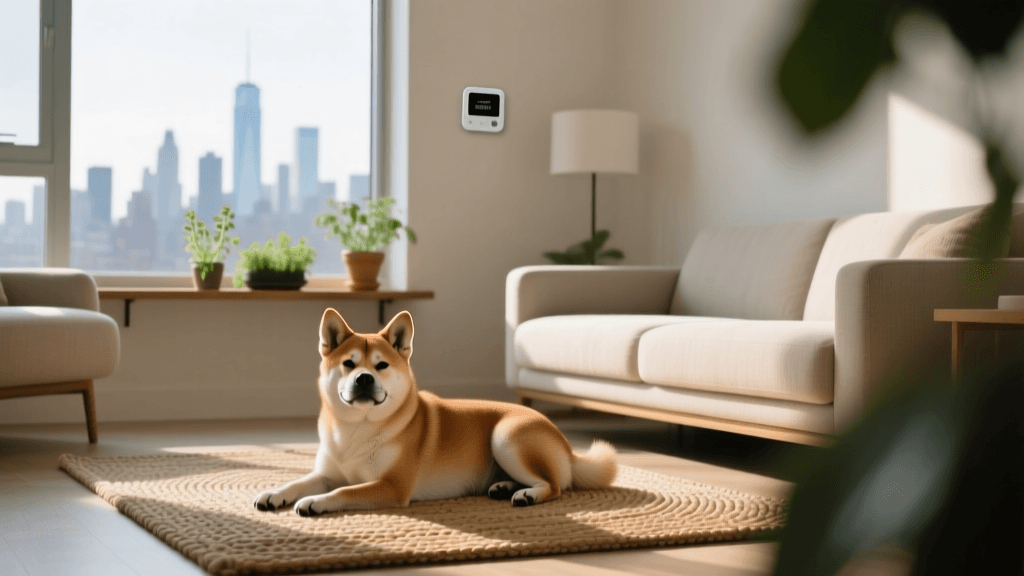
The Shiba Inu represents one of the oldest basal dog lineages, retaining a primitive, wolf-like independence. Psychologically, Shibas are highly self-contained and fastidious. They do not typically bark for attention or out of boredom, as their independent nature means they are perfectly content entertaining themselves with a chew toy or observing their domain from a high vantage point.
While they possess a famous 'Shiba scream' when highly distressed or at the vet, their day-to-day apartment vocalization is near zero. They are naturally aloof with strangers and do not feel the compulsive need to greet or warn every person who walks past the apartment door, making them exceptionally quiet neighbors.
2026 Environmental Management for Apartment Dogs
Even the quietest breeds can develop vocalization issues if their environment is poorly managed. In 2026, the intersection of canine psychology and smart home technology offers unprecedented tools for maintaining a peaceful apartment.
- AI-Driven Anxiety Detection: Modern pet cameras, such as the 2026 Furbo 360 Pro, utilize machine learning algorithms to detect early signs of pacing, whining, or stress-induced panting before they escalate into full-blown separation anxiety barking. The device can automatically dispense calming treats or play a pre-recorded owner voice clip to interrupt the anxiety loop.
- Acoustic Masking: Shared apartment walls transmit low-frequency noises that can trigger a dog's alert instinct. Using a smart white noise machine like the LectroFan Evo (featuring 2026's adaptive sound-masking firmware) helps drown out the unpredictable acoustic spikes of elevator dings and neighbor footsteps, keeping the dog's nervous system regulated.
- Olfactory Enrichment: Because breeds like the Basenji and Shiba Inu rely heavily on their senses to process the world, replacing auditory stimulation with olfactory stimulation is key. Utilizing complex snuffle mats and automated, timed lick mats engages the parasympathetic nervous system, promoting natural licking behaviors that release endorphins and induce silence and calm.
Comparison Chart: Quiet Breeds vs. Vocalization Triggers
| Breed | Primary Psychological Instinct | Primary Apartment Trigger | 2026 Mitigation Strategy |
|---|---|---|---|
| Greyhound | Visual predation / Energy conservation | Fast-moving objects outside windows | Window film to blur street-level movement; orthopedic ramp for couch access to observe safely. |
| Basenji | Stealth hunting / Independence | Boredom / Lack of mental challenge | GPS-enabled indoor scent-tracking kits; automated puzzle feeders requiring problem-solving. |
| Cavalier King Charles | Empathic companionship / Proximity | Separation anxiety / Owner absence | Heartbeat-simulating plush toys; AI pet cameras with two-way calming audio integration. |
| Shiba Inu | Basal independence / Territorial aloofness | Forced interaction / Overstimulation | Designated 'safe zone' crate with sound-dampening covers; strict routine to prevent anxiety. |
Mitigating Separation Anxiety Without Noise
According to the American Kennel Club's breed registries, understanding a breed's original purpose is vital for behavioral management. For companion breeds that are naturally quiet but prone to separation distress, the goal is to build 'alone-time confidence.' In 2026, behaviorists recommend the 'graduated departure protocol.' This involves using smart home routines to simulate your departure (e.g., turning off lights, playing the sound of keys jingling via smart speakers) without actually leaving, thereby desensitizing the dog to the triggers that typically cause distress vocalization.
Furthermore, providing a long-lasting, species-appropriate chew (such as a single-ingredient yak milk chew or a coffee-wood root) engages the dog's natural mastication drive. Chewing is a self-soothing behavior in canine psychology that lowers cortisol levels and naturally suppresses the urge to vocalize.
Conclusion
Choosing a quiet dog for an apartment is not merely about finding a breed that lacks the physical ability to bark; it is about aligning your living situation with a dog's psychological and instinctual baseline. By understanding the evolutionary drivers behind the silence of Greyhounds, Basenjis, Cavaliers, and Shibas, and by leveraging 2026's advanced environmental management tools, you can create a harmonious, stress-free sanctuary for both your canine companion and your neighbors. True harmony in high-density living comes from understanding the 'why' behind your dog's behavior, allowing you to support their natural instincts in a modern world.
aaron-whyte
All our authors care for dogs every day — read more of their work on the authors page.