Puppy Teething Behavior: Best Soothing Chew Toys for 2026
Discover the psychology behind puppy teething behavior and explore the best soothing chew toys of 2026 to save your furniture and ease their pain.
Welcome to the chaotic, shoe-destroying, baseboard-gnawing world of puppyhood. If you are currently raising a young dog, you are likely intimately familiar with the sharp, needle-like teeth that seem to find their way onto your fingers, your favorite slippers, and your furniture. While you may have seen outdated 'best teething toy 2024' lists circulating on older forums or legacy blogs, the veterinary and behavioral consensus for 2026 has evolved significantly. Today, we understand that teething is not merely a physical milestone; it is a profound psychological and developmental event.
As a senior behaviorist contributing to Paws-Tales, my goal is to help you look beyond the destruction and understand the why behind your puppy's chewing. By understanding the canine teething timeline and the psychological drives behind oral exploration, we can select the absolute best teething toys of 2026 that soothe their pain, satisfy their instincts, and save your household belongings.
The Canine Teething Timeline: A Biological Imperative
To choose the right toy, you must first understand the biological clock ticking inside your puppy's jaw. According to the American Kennel Club (AKC), puppies are born without teeth. Their 28 deciduous (baby) teeth begin to erupt at around three to four weeks of age. By the time they are eight weeks old and ready to join your family, they have a full set of incredibly sharp baby teeth.
The true teething chaos begins around 12 to 16 weeks of age. This is when the adult teeth start pushing through the gums, forcing the baby teeth to fall out. By the time your puppy is six to eight months old, they will have a full set of 42 adult teeth. This four-month window is characterized by intense gum inflammation, soreness, and a biological urge to chew that helps loosen the baby teeth and massage the aching gums.
The Psychology of Chewing: Why Puppies Destroy Your Shoes
Why do puppies chew on inappropriate items when they have a basket full of toys? The answer lies in canine psychology and sensory exploration. For a puppy, the mouth is the primary tool for interacting with the world, much like a human toddler's hands. When a puppy bites into a leather shoe or a wooden table leg, they are gathering complex tactile and olfactory information.
Furthermore, chewing is a self-soothing behavior. The physical act of gnawing releases endorphins in the canine brain, which act as natural painkillers and anxiety-reducers. When a puppy's gums are throbbing from an erupting molar, chewing on a hard surface provides immediate, albeit temporary, neurological relief. Understanding this endorphin release is critical: you cannot simply punish a puppy for chewing, as you would be punishing them for attempting to self-medicate their pain. Instead, as highlighted by the ASPCA, you must redirect this powerful psychological drive toward appropriate, specially designed outlets.
The 2026 Standard for Teething Toys
In 2026, the pet care industry has moved away from cheap, easily destructible plastics and overly hard materials like real bones or antlers, which veterinary dentists now universally warn against due to the high risk of slab fractures in developing puppy teeth. The best teething toys of 2026 focus on three pillars: variable texture for gum massage, ergonomic design to satisfy the instinct to hold and pin down prey, and stuffability to engage the foraging instinct and provide mental fatigue.
Top Teething Toys for Behavioral Relief (2026 Review)
Based on current veterinary recommendations and behavioral efficacy, here are the top three teething toys that address the psychological and physiological needs of your puppy.
1. KONG Puppy Rubber Toy: The Foraging and Soothing Combo
The Classic KONG Puppy (specifically the pink or blue softer - formulated for developing jaws) remains a gold standard in 2026. Made from a proprietary, ultra-soft natural rubber, it provides enough resistance to massage sore gums without risking tooth fractures. Psychologically, the KONG taps into the dog's natural foraging and scavenging instincts. By stuffing the hollow center with a mixture of plain yogurt, pumpkin puree, and kibble, and then freezing it overnight, you create a dual-action tool. The cold temperature numbs the inflamed gums (physiological relief), while the task of licking and digging out the food provides mental enrichment that tires the puppy out and reduces anxiety-driven chewing (psychological relief).
2. Nylabone Puppy Chew Textured Rings: The Gnawing Inst67
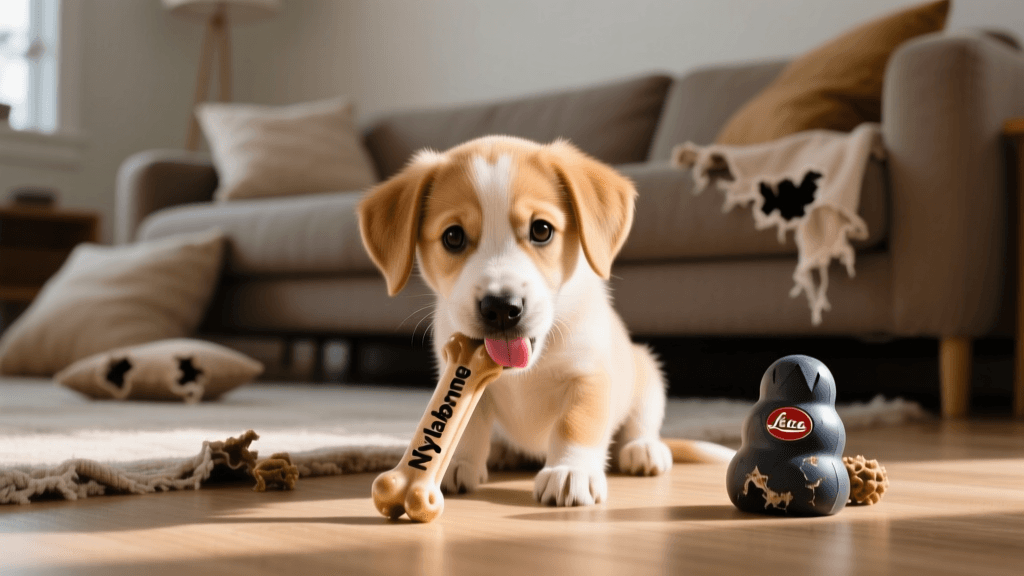
For puppies with an intense, aggressive drive to gnaw, the Nylabone Puppy Chew Textured Rings are exceptional. Unlike the adult power chews, the puppy version is made from a softer, flexible polymer that yields slightly under pressure. The psychological appeal here is the varied topography of the toy. The raised bristles and nubs act like a toothbrush, scraping against the gums and providing the deep-tissue pressure that puppies crave when an adult incisor is breaking through the gum line. It satisfies the urge to 'destroy' without actually breaking apart into dangerous, ingestible chunks.
3. Benebone Puppy Wishbone: The Ergonomic Grip
One often overlooked aspect of canine chewing psychology is the desire to hold and manipulate the object. Puppies often steal shoes or TV remotes because their shape allows the dog to pin them down with their front paws while they work on them with their molars. The Benebone Puppy Wishbone is brilliantly designed with this ergonomic instinct in mind. Its curved, wishbone shape allows the puppy to easily grip it with their paws. Infused with 100% real bacon (using 2026's improved, non-toxic infusion methods rather than surface coatings that flake off), it provides a long-lasting olfactory stimulus that keeps the puppy engaged far longer than unscented rubber.
2026 Teething Toy Comparison Chart
To help you match the toy to your puppy's specific behavioral profile, refer to the comparison table below:
| Toy Name | Primary Psychological Need Met | Best For | Material Safety (2026) | Approx. Price |
|---|---|---|---|---|
| KONG Puppy | Foraging, Licking, Problem Solving | Anxious chewers, food-motivated pups | Soft, BPA-free natural rubber | $12 - $18 |
| Nylabone Puppy Rings | Deep Tissue Gum Pressure, Gnawing | Intense, aggressive oral fixations | Flexible, non-toxic polymer | $8 - $14 |
| Benebone Puppy Wishbone | Prey-holding, Paw-gripping, Scent tracking | Pups who like to hold items down | Nylon infused with real food scents | $15 - $22 |
Behavioral Training: Redirecting the Bite
Purchasing the best teething toys of 2026 is only half the battle; the other half is behavioral training. Puppies do not inherently know that a Nylabone is a toy and a table leg is furniture. You must actively teach them through redirection and positive reinforcement.
The 'Trade-Up' Method: When you catch your puppy chewing on an inappropriate item, do not yell or chase them. Chasing turns the stolen item into a high-value game of keep-away. Instead, approach calmly with a high-value toy (like a frozen KONG) or a treat. Offer it to them. When they drop the shoe to take the toy, praise them enthusiastically. You are teaching them that giving up an item results in something even better.
Environmental Management: According to VCA Animal Hospitals, management is just as crucial as training. If your puppy is in the peak teething phase (3 to 5 months), restrict their access to the house. Use baby gates or a playpen to keep them in puppy-proofed zones where only appropriate chew toys are available. Set them up for success by removing the temptation entirely.
Sensory Deterrents: For items you cannot move, like baseboards, use a pet-safe bitter apple spray. However, remember that deterrents only work if you simultaneously provide an appealing alternative. If you make the baseboard taste bad but don't provide a soothing Benebone, the puppy's psychological need to relieve their gum pain will simply drive them to find another inappropriate target.
Conclusion: Empathy Through the Chewing Phase
Teething is a fleeting, albeit frustrating, developmental window. By shifting your perspective from 'my puppy is being destructive' to 'my puppy is in pain and trying to self-soothe,' you can approach this phase with empathy and strategic planning. The best teething toys of 2026 are not just distractions; they are vital behavioral tools that cater to your dog's natural instincts for foraging, gripping, and gnawing. Invest in a rotation of the KONG, Nylabone, and Benebone, keep them frozen, stuffed, and readily available, and you will guide your puppy through this painful milestone while building a foundation of good chewing habits that will last a lifetime.
anouk-beaumont
All our authors care for dogs every day — read more of their work on the authors page.