Puppy-Proofing Your Home: The Ultimate Beginner's Guide
Learn how to puppy-proof your home with our room-by-room handbook. Discover essential safety tips, product recommendations, and costs for new dog owners.

Welcome to the Complete Beginner's Handbooks: Puppy-Proofing 101
Bringing a new puppy into your home is one of life's greatest joys, but it also comes with a significant responsibility that many first-time owners underestimate. Puppies explore the world primarily through their mouths, and their boundless curiosity can quickly turn a standard living space into a hazard zone. According to the Humane Society of the United States, proper preparation and environmental management are critical steps in setting up a new dog for success and preventing costly emergency veterinary visits.
In this edition of the Complete Beginner's Handbooks, we will walk you through a meticulous, room-by-room guide to puppy-proofing your home. We will cover specific product recommendations, exact measurements for safety barriers, and the hidden dangers that even the most observant new owners often miss.
The Kitchen: Managing Toxins and Trash
The kitchen is arguably the most dangerous room in the house for a curious puppy. Between dropped food, accessible trash, and toxic cleaning supplies, this area requires rigorous fortification.
The Hidden Danger of Xylitol
Many new owners are unaware of the extreme toxicity of xylitol, a common artificial sweetener found in sugar-free gum, peanut butter, and baked goods. According to the U.S. Food and Drug Administration, even small amounts of xylitol can cause a rapid, life-threatening drop in blood sugar and acute liver failure in dogs. Always check the ingredient labels of any peanut butter you use for training or stuffing enrichment toys, and ensure all sugar-free products are stored in upper cabinets, well beyond a puppy's jumping reach.
Securing the Trash and Lower Cabinets
Puppies are natural scavengers. A standard open-top trash can is an invitation for trouble. Invest in a heavy-duty, step-operated trash can with a secure lid lock, such as the simplehuman 13-Gallon Semi-Round Step Can. The weight and locking mechanism prevent puppies from tipping it over or prying the lid open with their snouts.
For lower cabinets containing cleaning supplies, dishwasher pods, and trash bags, standard child-proof latches are often insufficient for determined terriers or retrievers. Instead, install magnetic cabinet locks. These require a magnetic key to open and can withstand over 15 pounds of pull force, ensuring your puppy cannot yank the doors open. Expect to spend around 25 dollars for a comprehensive 12-pack of magnetic locks.
The Living Room: Securing Cords and Furniture
The living room is where your puppy will spend most of its time relaxing with you, but it is filled with choking hazards and electrical dangers.
Electrical Cord Management
Chewing on electrical cords can result in severe oral burns, electrocution, or even fatal shocks. You must secure all loose wires. Use split loom tubing or flexible cable sleeves to bundle cords together and make them less appealing to chew. For cords that run across the floor, use heavy-duty cord concealers or raceways that adhere to the baseboards. Brands like JOTO offer 4-inch flexible cable protectors that are bite-resistant and cost approximately 15 dollars for a 10-foot roll.
Houseplants and Decorative Items
Many popular houseplants are highly toxic to dogs. Lilies, sago palms, and pothos can cause severe gastrointestinal distress or organ failure if ingested. Before bringing any plant into your home, cross-reference it with the ASPCA Toxic and Non-Toxic Plants database. If you have toxic plants, move them to high shelves or hanging planters that are at least six feet off the ground, keeping in mind that puppies will eventually grow into adult dogs capable of reaching higher surfaces.
The Bathroom: Locking Away Chemicals
Bathrooms present unique risks, primarily involving medications and chemical cleaners. Toilet bowls are a common source of accidental poisoning, especially if you use automatic drop-in bowl cleaners that tint the water blue or green. The chemicals in these cleaners are toxic, and the standing water is a breeding ground for bacteria.
Always keep the toilet lid closed and consider installing a toilet lid lock if your puppy is small enough to nudge the lid open with its nose. All medications, including seemingly harmless vitamins and supplements, must be stored in a high, locked medicine cabinet. Never leave pills on the counter or nightstand, as puppies can easily sniff them out and consume them, mistaking them for treats.
The Bedroom and Laundry Room: Fabric and Choking Hazards
Puppies love to chew on soft textures, making bedrooms and laundry rooms prime targets for destructive and dangerous behavior. Swallowing fabric, such as socks, underwear, or towels, can lead to a life-threatening intestinal blockage that requires emergency surgery costing thousands of dollars.
Invest in a heavy-duty, latching laundry hamper. Wicker baskets are easily shredded, and open plastic bins can be tipped over. Keep all shoes inside a closed closet or on a shoe rack that is at least three feet high. Remember that puppies can jump surprisingly high when motivated by the scent of their owner's footwear.
The Backyard: Fencing and Flora
Your outdoor space should be a safe sanctuary for your puppy to burn off energy, but it requires careful inspection.
Fencing and Digging Barriers
A standard wooden fence is often not enough to contain a digging breed like a Husky or a Terrier. Inspect the perimeter of your yard for gaps. If your puppy is a known digger, install an L-footer barrier. This involves burying chicken wire or hardware cloth at the base of the fence, extending at least 12 inches outward into the yard, and covering it with soil or gravel. This prevents the puppy from digging directly under the fence line.
Toxic Mulch and Garden Chemicals
Avoid using cocoa bean mulch in your garden beds. Made from the hulls of cocoa beans, this mulch smells like chocolate and is highly attractive to dogs, but it contains theobromine, the same compound that makes chocolate toxic to pets. Opt for pet-safe alternatives like cedar or pine mulch. Additionally, ensure that any fertilizers, pesticides, or snail baits are stored in a locked shed, as snail bait is notoriously lethal to dogs even in microscopic quantities.
The Ultimate Puppy-Proofing Shopping List
To help you budget and prepare, we have compiled a comprehensive checklist of essential puppy-proofing products, complete with estimated costs and recommended specifications.
| Item | Purpose | Estimated Cost | Recommended Specifications |
|---|---|---|---|
| Magnetic Cabinet Locks | Securing lower kitchen and bathroom cabinets | 20 - 30 USD | Adhesive mount, 15+ lbs pull force resistance |
| Step-On Trash Can | Preventing scavenging and trash ingestion | 60 - 90 USD | 13-gallon capacity, weighted base, locking lid |
| Split Loom Cable Sleeves | Protecting electrical cords from chewing | 15 - 25 USD | 1/2 inch diameter, flexible nylon or PET material |
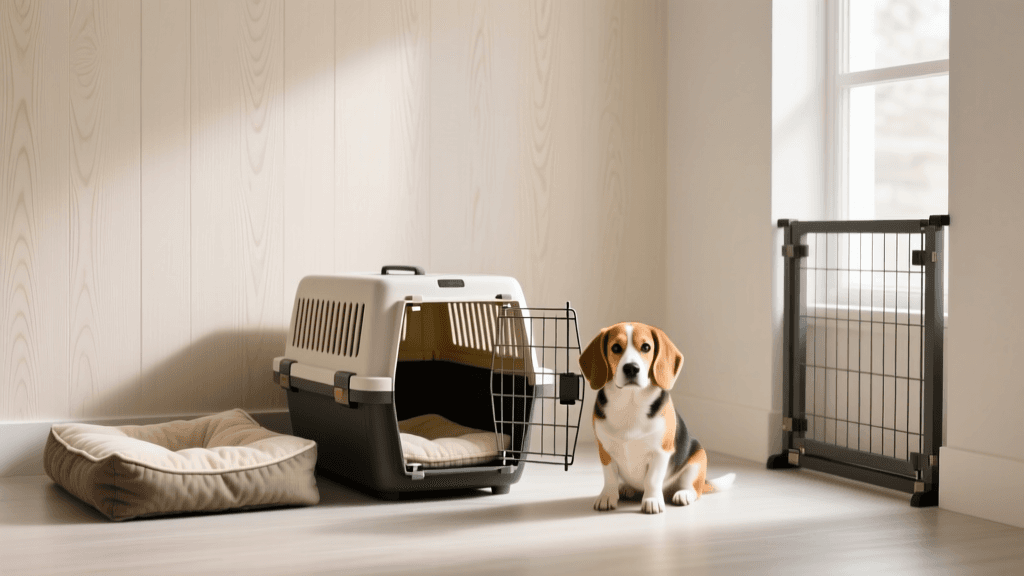
| Freestanding Pet Gate | Blocking off high-risk rooms like the kitchen | 40 - 70 USD | Minimum 30 inches tall, dual-action latch, no climb design |
| Latching Laundry Hamper | Preventing ingestion of socks and clothing | 25 - 45 USD | Hard plastic or metal, secure snap-lock lid |
| Heavy-Duty Crate | Providing a safe zone when unsupervised | 50 - 120 USD | Wire or impact-tested plastic, proper sizing for adult dog |
Establishing Safe Zones and Supervision
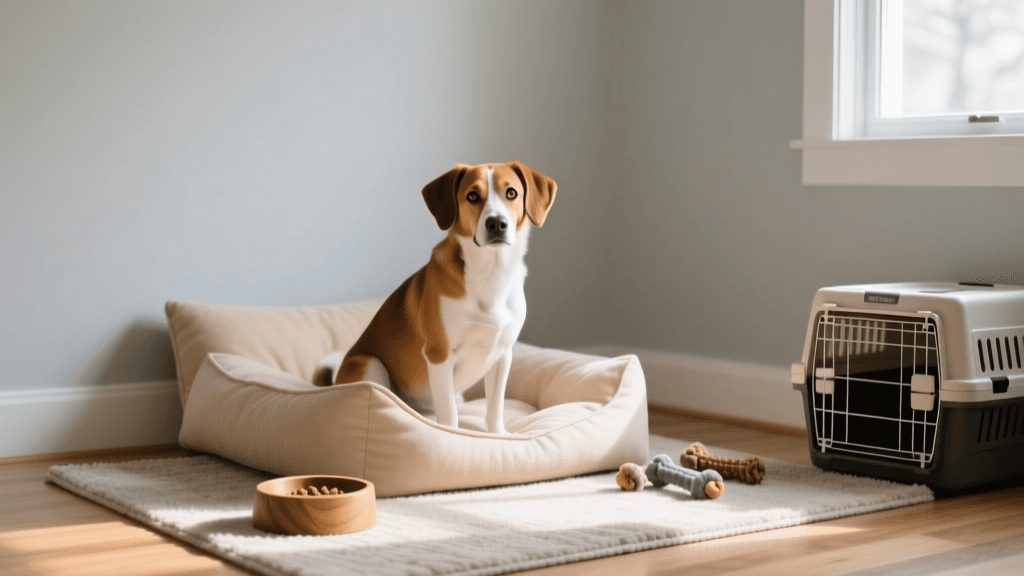
Puppy-proofing is not just about removing hazards; it is also about creating designated safe zones. When you cannot actively supervise your puppy, they should be confined to a puppy-proofed area, such as a playpen or a properly sized crate. A crate should be large enough for the puppy to stand up, turn around, and lie down comfortably, but not so large that they can use one end as a bathroom. This confinement prevents them from wandering into un-proofed areas and developing destructive habits out of boredom or anxiety.
Final Walkthrough Checklist
Before your puppy crosses the threshold for the first time, get down on your hands and knees. Look at your home from their perspective. Are there loose coins under the sofa? Is there a dangling blind cord within reach? Are the electrical outlets covered? By adopting this ground-level viewpoint, you will spot hazards that are completely invisible from a standing human perspective.
Remember that puppy-proofing is an ongoing process. As your dog grows, their reach, jumping ability, and problem-solving skills will expand. A cabinet that was safe for a 10-pound puppy might easily be nudged open by a 60-pound adolescent dog. Stay vigilant, adapt your environment as your dog matures, and enjoy the peace of mind that comes with knowing your home is a secure, welcoming space for your newest family member.
anouk-beaumont
All our authors care for dogs every day — read more of their work on the authors page.