Early-Onset Puppy Osteoarthritis: 2026 Dysplasia Treatment Guide
Discover how to manage early-onset osteoarthritis and puppy dysplasia in 2026. Learn about joint supplements, Adequan, and surgical options for young dogs.
Understanding Early-Onset Osteoarthritis in Puppies
When most pet owners hear the term osteoarthritis (OA), they immediately picture senior dogs struggling to get off the couch. However, early-onset osteoarthritis is a significant and growing concern in the realm of puppy care. In young dogs, OA is rarely a primary disease of aging; instead, it is almost always secondary to Developmental Orthopedic Diseases (DOD). Conditions such as hip dysplasia, elbow dysplasia, and osteochondritis dissecans (OCD) cause abnormal joint mechanics and micro-trauma during a puppy's critical growth phases. According to the MSD Veterinary Manual, the inflammatory cascade triggered by these developmental anomalies can lead to irreversible cartilage degradation and early-onset OA before the puppy even reaches its first birthday.
As we navigate veterinary care in 2026, the paradigm has shifted from simply managing pain in older dogs to aggressively intervening during puppyhood. The goal of modern puppy OA treatment is to halt the progression of cartilage loss, stabilize the joint environment, and preserve the dog's long-term mobility and quality of life. If you are raising a large or giant breed puppy, or a breed genetically predisposed to joint issues, understanding these early interventions is a critical component of responsible puppy care.
Recognizing the Subtle Signs of Joint Pain in Young Dogs
Puppies are notoriously stoic and possess boundless energy, which can easily mask the subtle signs of joint discomfort. Unlike senior dogs who may exhibit obvious limping, a puppy with early-onset OA or dysplasia will often adapt their movement to avoid pain. Watch for the following indicators during your puppy's first year:
- The "Bunny Hop": Running with both hind legs moving simultaneously rather than in an alternating stride.
- Reluctance to Jump or Climb: Hesitating at the base of stairs or refusing to jump into the car or onto furniture.
- Splayed Sitting: Sitting with hind legs kicked out to the sides rather than tucked neatly underneath the body.
- Exercise Intolerance: Lagging behind on walks or suddenly lying down during play sessions.
- Behavioral Changes: Whining when picked up, resistance to being groomed, or unexplained irritability.
If you notice any of these signs, prompt evaluation by a veterinary orthopedic specialist is essential. Early diagnostic imaging, such as PennHIP evaluations for hip laxity, can be performed as early as 16 weeks of age to predict the likelihood of dysplasia and subsequent OA.
Top 2026 Veterinary Treatments for Puppy Joint Disease
Treating early-onset OA in puppies requires a delicate balance. Because their skeletal systems are still developing, certain medications and therapies used in adult dogs must be carefully calibrated. Here are the leading veterinary interventions utilized in 2026.
Polysulfated Glycosaminoglycans (Adequan Canine)
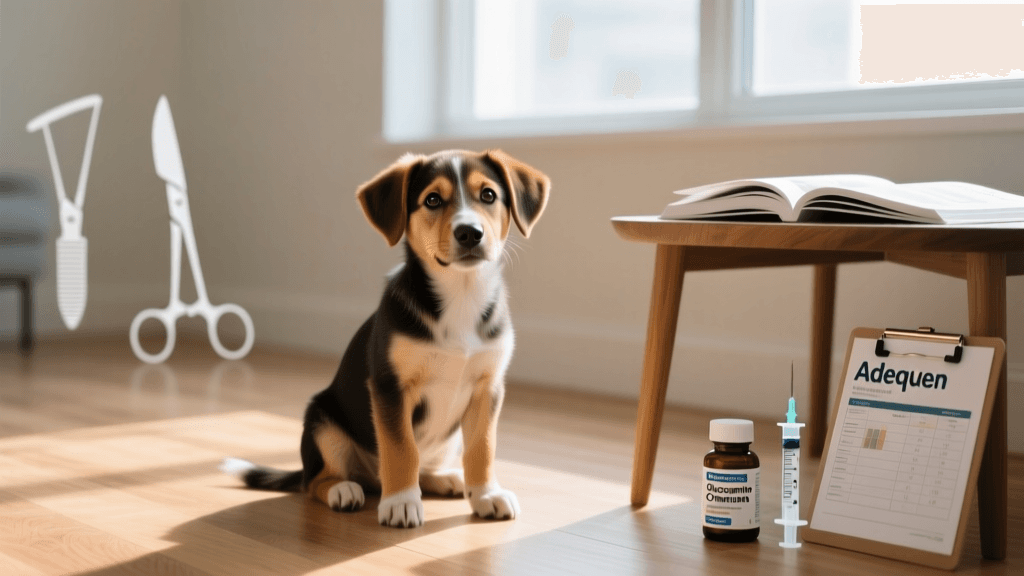
Adequan remains a cornerstone of disease-modifying osteoarthritis drug (DMOAD) therapy. Administered via intramuscular injection, Adequan works by inhibiting the enzymes that break down articular cartilage while simultaneously stimulating the synthesis of new cartilage matrix and joint fluid. For puppies showing early signs of joint laxity or OCD, a modified loading dose protocol is often prescribed by veterinarians to protect the developing joint surfaces. In 2026, the cost for a standard course of Adequan ranges from $300 to $450, depending on the puppy's weight and the clinic's pricing structure.
Precision Omega-3 Fatty Acid Therapy
Not all fish oils are created equal. To combat joint inflammation in puppies, veterinarians recommend prescription-strength Omega-3 supplements specifically standardized for high concentrations of Eicosapentaenoic Acid (EPA) and Docosahexaenoic Acid (DHA). EPA actively disrupts the inflammatory cascade within the joint capsule. When selecting a supplement in 2026, look for products housed in UV-protected, airless pump bottles to prevent oxidation, ensuring the fatty acids remain biologically active when ingested.
Surgical Interventions: JPS and TPO
For puppies diagnosed with severe hip dysplasia, surgical intervention during the growth phase can prevent OA from developing altogether. The American College of Veterinary Surgeons (ACVS) highlights Juvenile Pubic Symphysiodesis (JPS) as a minimally invasive procedure performed strictly between 16 and 20 weeks of age. By prematurely fusing a specific growth plate in the pelvis, JPS alters the angle of the hip socket as the puppy grows, creating a deeper, more stable joint. For older puppies (typically 5 to 8 months), a Triple Pelvic Osteotomy (TPO) may be recommended to surgically rotate the hip socket for better femoral head coverage.
2026 Puppy Joint Care Comparison Chart
Choosing the right intervention depends heavily on the puppy's age, diagnosis, and the severity of the joint laxity. Below is a comparison of common early OA and dysplasia management strategies.
| Intervention | Ideal Age Window | Primary Mechanism | Estimated 2026 Cost |
|---|---|---|---|
| Juvenile Pubic Symphysiodesis (JPS) | 16 - 20 Weeks | Alters pelvic growth to deepen hip socket | $1,500 - $2,500 |
| Triple Pelvic Osteotomy (TPO) | 5 - 8 Months | Surgically rotates acetabulum for coverage | $3,000 - $5,000 |
| Adequan Canine (Injections) | Any Age (Post-Diagnosis) | Inhibits cartilage-degrading enzymes | $300 - $450 / course |
| Puppy Hydrotherapy | 4 Months+ | Builds muscle mass without joint impact | $85 - $150 / session |
| Prescription Joint Diet | Weaning to Adulthood | Controls growth rate, provides targeted EPA | $90 - $130 / month |
Daily Management and Environmental Modifications
Medical and surgical treatments must be paired with strict environmental management to protect your puppy's vulnerable joints. The American Kennel Club (AKC) emphasizes that repetitive micro-trauma from slippery floors is a leading environmental contributor to early joint degradation in large breed puppies.
- Flooring Traction: Hardwood, tile, and laminate floors are hazardous for developing puppies. Cover high-traffic areas with non-slip, low-pile area rugs or interlocking foam mats to provide adequate traction.
- Ramp Training: Introduce a low-angle, textured ramp early in your puppy's life. Teaching them to use a ramp for vehicles and elevated furniture prevents the acute joint shock associated with jumping.
- Orthopedic Bedding: Invest in a high-density, CertiPUR-US certified memory foam bed. In 2026, leading veterinary orthopedic beds feature temperature-regulating gels and waterproof, easily washable covers to maintain hygiene and joint support.
- Controlled Exercise: Follow the "5-minute rule" for structured walks (5 minutes of walking per month of age, twice a day). Avoid forced running, agility training, or repetitive fetch on hard surfaces until the puppy's growth plates have fully closed, typically between 14 and 18 months of age.
The Role of Weight Management and Nutrition
Perhaps the most powerful tool in preventing early-onset OA is strict weight management and optimized nutrition. Excess body weight places exponential mechanical stress on dysplastic joints, accelerating cartilage wear. Puppies should be kept on the lean side of the body condition score (BCS) chart; you should be able to easily feel their ribs without pressing hard, and they should have a visible abdominal tuck.
Feeding a diet specifically formulated for large breed puppies is non-negotiable. These diets are carefully balanced to contain controlled levels of calcium and phosphorus, preventing the rapid bone growth that outpaces muscle and tendon development. Furthermore, restricting caloric intake to maintain a slow, steady growth curve has been scientifically proven to delay the onset and reduce the severity of osteoarthritis in genetically predisposed breeds.
Conclusion
Early-onset osteoarthritis and developmental joint diseases can be daunting diagnoses for any puppy owner. However, the veterinary advancements available in 2026 offer unprecedented opportunities to alter the trajectory of your dog's joint health. By combining early diagnostic screening, targeted medical therapies like Adequan, precise surgical interventions when necessary, and rigorous environmental management, you can preserve your puppy's mobility and ensure they grow into an active, pain-free adult dog. Always partner closely with your veterinarian or a board-certified veterinary orthopedic surgeon to tailor a joint-care protocol specific to your puppy's unique developmental needs.
priya-sutaria
All our authors care for dogs every day — read more of their work on the authors page.