Preventing Puppy Separation Anxiety in 2026: Tech & Training
Learn how to prevent puppy separation anxiety in 2026 using smart cameras, desensitization schedules, and interactive enrichment toys for alone time.
Bringing a New Puppy Home in 2026: The Alone Time Challenge
Bringing a new puppy into your home is one of the most rewarding experiences a person can have, but it also comes with a unique set of modern challenges. As we navigate the hybrid work schedules and active lifestyles of 2026, new dog owners are increasingly concerned about how their new companions will handle being left alone. Unlike the constant companionship many pets experienced during the early remote-work boom, today's puppies often face abrupt transitions from round-the-clock human presence to sudden, confusing isolation. This abrupt shift is a primary catalyst for separation anxiety, a behavioral condition that can lead to destructive chewing, excessive vocalization, and immense stress for both the dog and the owner.
Preparing your puppy for alone time is not an afterthought; it must be a foundational pillar of your 'Getting a Dog' strategy from the very first day. By combining modern smart home technology with evidence-based behavioral desensitization protocols, you can proactively prevent separation anxiety before it takes root. This comprehensive guide will walk you through the exact tech stack, environmental setups, and training schedules you need to foster a confident, independent puppy in 2026.
Understanding Separation Anxiety vs. Normal Puppy Whining
Before implementing a training plan, it is crucial to distinguish between normal puppy adjustment periods and true separation anxiety. When a puppy first arrives home, whining or crying in a crate is often a normal response to a novel environment and missing littermates. However, true separation anxiety is a state of panic. According to the ASPCA, dogs with separation anxiety exhibit extreme distress behaviors, such as frantic pacing, drooling, destructive scratching at door frames, and inappropriate elimination, specifically triggered by the owner's departure.
The goal of early intervention is to teach your puppy that being alone is safe, predictable, and even rewarding. If you wait until your puppy is exhibiting full-blown panic responses to address the issue, you will be forced into a much longer, more difficult rehabilitation process rather than a straightforward prevention strategy.
Setting Up Your 2026 Smart Monitoring Station
You cannot manage what you cannot measure. In 2026, smart pet cameras have evolved from simple video feeds into sophisticated behavioral monitoring tools. Setting up a dedicated monitoring station in your puppy's safe zone is critical for tracking their stress levels when you are not in the room.
1. Furbo 360 Dog Camera
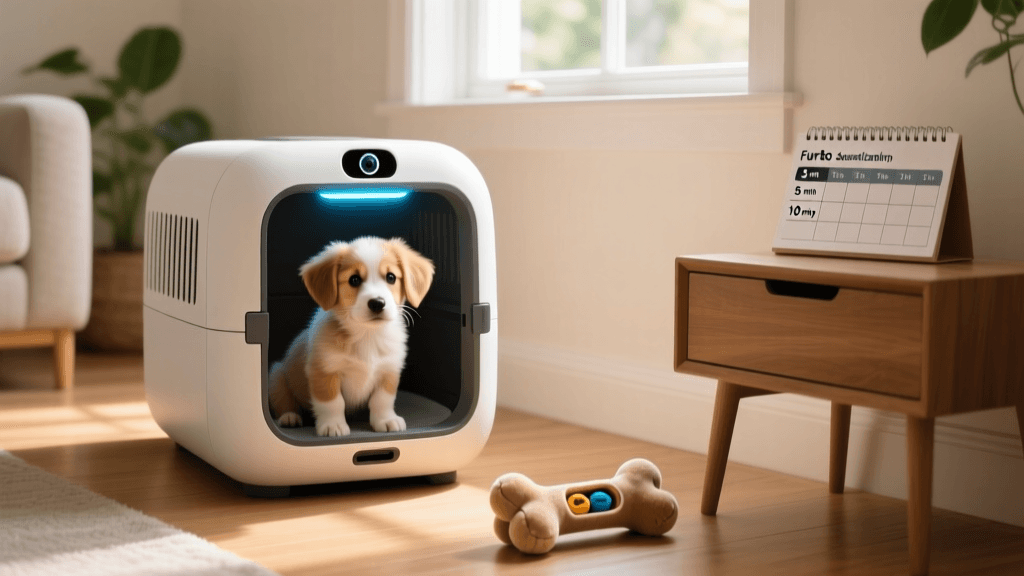
The Furbo 360 remains a top-tier choice for interactive monitoring. Its auto-roaming feature and 360-degree pan-and-tilt capabilities allow you to track your puppy's movements across the entire room. More importantly, its AI-driven 'Dog Nanny' alerts can notify your smartphone if your puppy is crying, vomiting, or engaging in destructive behavior. The two-way audio and treat-tossing feature allow you to interrupt mild whining and reward moments of quiet calm from your office desk.
2. Wyze Cam v4 with Pet AI Detection
For a budget-friendly but highly capable alternative, the Wyze Cam v4 offers stunning 2.5K QHD resolution and Color Night Vision. Its localized AI pet detection can be configured to send push notifications only when the puppy enters or leaves their designated bed or crate area. At a price point hovering around $45 in 2026, it is an accessible tool for setting up multiple angles in your puppy's playpen area to eliminate blind spots.
The 4-Week Puppy Desensitization Protocol
Desensitization is the process of gradually exposing your puppy to the triggers of your departure without causing a stress response. The key is to keep the puppy under their 'anxiety threshold.' If your puppy begins to panic, you have moved too quickly and must return to the previous successful step. Below is a structured 4-week progression to build your puppy's alone-time stamina.
| Week | Duration | Location | Departure Cues | Owner Action |
|---|---|---|---|---|
| Week 1 | 1 to 5 minutes | Same room, out of sight | None | Step behind a closed door, return before whining starts. |
| Week 2 | 5 to 20 minutes | Inside the home | None | Leave the house entirely, enter through a different door to avoid predictability. |
| Week 3 | 20 to 45 minutes | Inside the home | Keys, shoes, jacket | Perform departure cues, sit on the couch for 5 mins, then leave for 20 mins. |
| Week 4 | 1 to 2 hours | Inside the home | Full morning routine | Execute normal work-leaving routine, monitor via smart camera for stress signals. |
Throughout this protocol, your departures and arrivals must be incredibly boring. Do not offer enthusiastic greetings when you return. Wait until your puppy is completely calm and all four paws are on the floor before offering a gentle pet. This neutral approach prevents the dog from viewing your departure as a tragedy and your return as a massive celebratory event.
Interactive Enrichment: Keeping Paws and Minds Busy
A tired puppy is a quiet puppy, but physical exercise alone is not enough. Mental enrichment tires a dog's brain much faster than a simple walk around the block. When setting up your puppy's alone-time zone, you must provide high-value, long-lasting enrichment items that are exclusively available when they are left alone.
- KONG Classic (Red or Black): Stuff the KONG with a mixture of your puppy's daily kibble, plain pumpkin puree, and a smear of dog-safe peanut butter. Freeze it overnight. A frozen KONG can keep a puppy engaged in licking and chewing for 30 to 45 minutes, which naturally releases endorphins and soothes the nervous system.
- West Paw Toppl: This interlocking puzzle toy is excellent for puppies who figure out the KONG too quickly. You can insert larger treats into the side holes and plug the bottom with wet food, forcing the puppy to manipulate the toy from multiple angles.
- Hyper Pet IQ Lick Mat: Smear plain Greek yogurt or bone broth onto the textured surface of the mat and freeze it. Licking is a self-soothing behavior for dogs, making this an ideal tool to use inside the crate right before you walk out the door.
Audio Therapy and Calming Pheromones
The auditory and olfactory environment of your home plays a massive role in your puppy's ability to settle. In 2026, curated audio streams designed specifically for canine hearing ranges are widely available on major streaming platforms. Look for playlists featuring 'bioacoustic music for dogs,' which utilizes simplified melodies and specific tempos (around 50-60 beats per minute) proven to lower canine heart rates.
Pair this audio therapy with synthetic dog-appeasing pheromones (DAP). Products like the Adaptil Optimum diffuser release a synthetic copy of the pheromone produced by a nursing mother dog, which signals safety and comfort to the puppy. Plug the diffuser into the outlet nearest to your puppy's crate or playpen at least 48 hours before you plan to begin your alone-time training.
Crate Training as a Safe Haven
The crate should never be used as a place of punishment. When introduced correctly, it becomes a den-like sanctuary where your puppy chooses to retreat when they feel overwhelmed. The American Kennel Club emphasizes that crate training is one of the most effective methods for preventing separation-related destruction and aiding in housebreaking. Start by feeding all meals inside the crate with the door open. Gradually close the door for short increments while you sit nearby, eventually building up to leaving the room while the puppy is resting comfortably inside.
When to Seek Professional Help
If you have diligently followed a desensitization protocol, utilized smart monitoring, and provided adequate enrichment, but your puppy still exhibits signs of severe distress (such as injuring themselves trying to escape the crate or refusing to eat high-value treats when alone), it is time to consult a professional. Seek out a Certified Applied Animal Behaviorist (CAAB) or a board-certified veterinary behaviorist. In some cases, temporary anti-anxiety medication prescribed by a veterinarian is necessary to lower the puppy's baseline stress enough for behavioral modification to take effect.
Conclusion
Preventing separation anxiety requires patience, consistency, and a proactive mindset. By leveraging the smart monitoring technology available in 2026 and committing to a gradual, reward-based desensitization schedule, you are setting your new puppy up for a lifetime of confidence. Remember that independence is a learned skill for dogs; by teaching your puppy how to be comfortably alone, you are ultimately giving them the gift of a stress-free, well-adjusted life by your side.
aaron-whyte
All our authors care for dogs every day — read more of their work on the authors page.