Dog Training for a New Baby: 2026 Nursery Boundary Guide
Prepare your dog for a new baby in 2026 with expert nursery boundary training, scent desensitization, and mat work. Ensure a safe, stress-free transition.
Navigating the Transition: Preparing Your Dog for a New Baby
Bringing a new baby home is one of the most profound life transitions a family can experience. For your dog, however, this transition introduces a whirlwind of unfamiliar scents, erratic noises, and sudden changes to their daily routine. As of 2026, veterinary behaviorists emphasize that proactive training is the single most effective way to prevent stress-related behavioral issues and ensure a harmonious household. Waiting until the baby arrives to establish boundaries is a recipe for disaster; instead, expectant parents should begin a structured desensitization and boundary training protocol at least three to four months before the due date.
This comprehensive guide will walk you through the exact scent desensitization techniques, nursery boundary setups, and impulse control exercises you need to master in 2026 to create a safe environment for both your newborn and your furry best friend.
Phase 1: Scent and Audio Desensitization
Dogs experience the world primarily through their noses and ears. Long before the baby arrives, you must introduce the sensory elements of a newborn into your dog's environment, pairing them with high-value rewards to build a positive conditioned emotional response.
Introducing Baby Scents
Purchase the baby lotion, powder, and diaper cream you plan to use. Apply a small amount to your hands and let your dog investigate. Immediately reward calm sniffing with a high-value treat, such as Zuke's Mini Naturals or freeze-dried liver. Over the course of several weeks, apply these scents to your clothing and the furniture near the nursery. The goal is for your dog to associate the smell of baby products with positive outcomes, rather than viewing the new scents as an environmental threat.
Audio Conditioning
Baby cries can trigger anxiety or prey drive in some dogs. Utilize a smart speaker or a dedicated white noise machine (like the 2026 edition of the Hatch Rest+) to play recordings of infant crying, cooing, and babbling. Start at a very low volume—barely audible—while feeding your dog their dinner or engaging in a fun play session. Gradually increase the volume over several weeks. If your dog shows signs of stress (panting, pacing, whining), lower the volume immediately. According to ASPCA's guidelines on preparing pets for a new baby, gradual auditory desensitization significantly reduces startle responses when the baby actually arrives.
Phase 2: Establishing Nursery Boundaries
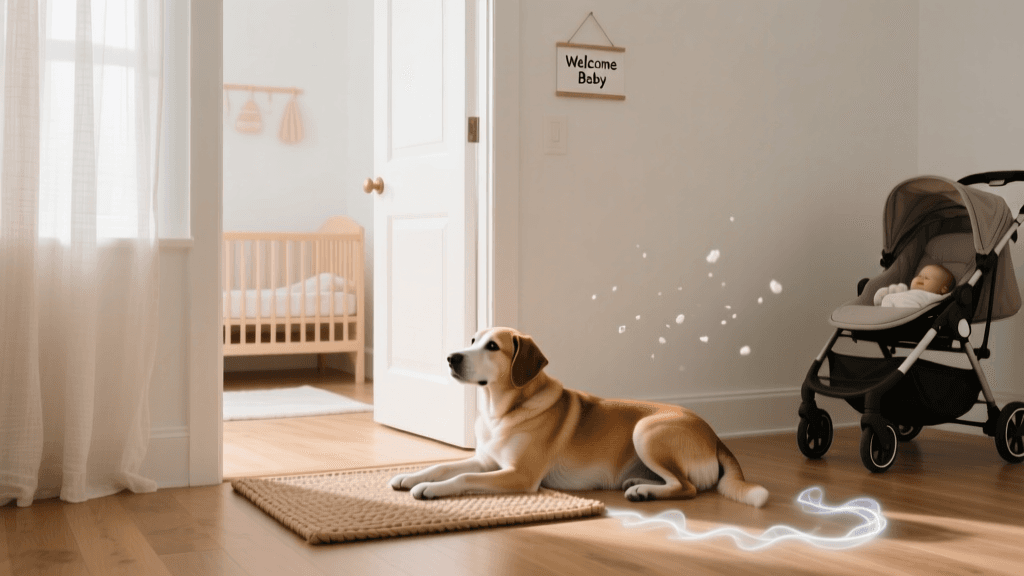
The nursery must become a structured zone. Even if you plan to allow your dog in the room eventually, they must first learn that they cannot enter without an explicit invitation. This prevents accidental knock-overs and ensures you have a controlled environment for late-night feedings.
Choosing the Right Physical Barrier
In 2026, pet parents have access to a variety of gating solutions. The most reliable option for a nursery is a hardware-mounted gate, which cannot be pushed over by a large, excited dog. The Regalo Easy Step Walk Thru Baby Gate remains a top industry standard due to its durable steel frame and one-touch release handle, which is crucial when you are holding an infant. Pressure-mounted gates are strictly discouraged for nursery doorways, as they can be dislodged by a determined dog.
Comparison of Nursery Boundary Methods
Below is a breakdown of the most common boundary training methods, including current 2026 estimated costs and practical applications.
| Boundary Method | Estimated Cost (2026) | Pros | Cons |
|---|---|---|---|
| Hardware-Mounted Gate | $65 - $120 | 100% physical barrier, highly secure, prevents jumping | Requires drilling into doorframes, blocks adult access |
| Place Mat Training | $45 - $95 | Builds deep impulse control, highly portable, no drilling | Requires months of active reinforcement and proofing |
| Freestanding Pet Pen | $80 - $160 | No drilling required, flexible layout, creates a 'dog zone' | Takes up significant floor space, can be moved by giant breeds |
Phase 3: Mastering the "Place" Command
The "Place" command is arguably the most valuable tool in your training arsenal during a life transition. It instructs your dog to go to a specific mat or bed and remain there until released. This is invaluable when you are bringing the baby through the front door, handling a diaper blowout, or hosting visitors.
Step-by-Step "Place" Training Protocol
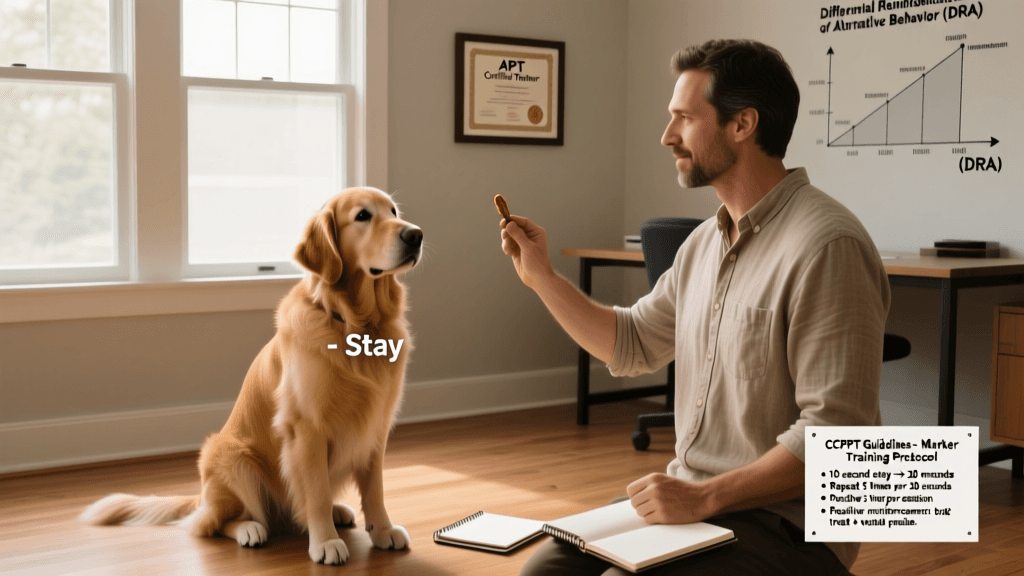
- Step 1: Luring and Marking. Use a raised, chew-proof bed like the Kuranda Chewproof Dog Bed. Toss a treat onto the bed. The moment all four paws touch the mat, use a marker word like "Yes!" and reward heavily.
- Step 2: Adding the Cue. Once your dog is reliably stepping onto the mat for treats, introduce the verbal cue "Place" right before they step up.
- Step 3: Building Duration. Ask your dog to go to their place, then delay the reward by one second. Gradually increase this to five seconds, ten seconds, and eventually several minutes. Feed treats continuously while they remain on the mat to reinforce that staying put is highly rewarding.
- Step 4: Adding Distance and Distraction. Begin taking steps away from the mat. Return and reward. Next, add environmental distractions, such as dropping a baby toy on the floor or playing the audio recordings of baby cries mentioned in Phase 1. If your dog breaks the "Place" command, calmly guide them back without rewarding, and lower the difficulty.
"Consistency is the bedrock of boundary training. If the dog is allowed to jump off the mat to grab a dropped toy even once, the boundary is compromised. In 2026, force-free behaviorists universally agree that managing the environment to prevent rehearsal of unwanted behaviors is just as important as the active training itself."
Phase 4: Impulse Control and Toy Discrimination
As your baby grows and begins to crawl, they will inevitably drop food, pacifiers, and small toys. Your dog must have a rock-solid "Leave It" and "Drop It" command to prevent choking hazards and resource guarding incidents.
The "Leave It" Protocol for Baby Items
Start by placing a low-value dog toy on the floor and covering it with your hand. When your dog stops pawing at your hand and pulls back, mark and reward with a high-value treat from your other hand. Progress to uncovering the toy, then to dropping baby items (like a clean teething ring or a baby sock) on the floor. The Humane Society of the United States strongly recommends practicing these impulse control exercises daily in various rooms of the house to ensure the behavior generalizes to real-world scenarios.
Managing Resource Guarding
If your dog has a history of resource guarding, this life transition requires immediate intervention from a certified professional dog trainer or veterinary behaviorist. Never punish a dog for growling over a baby's toy, as this suppresses the warning sign and can lead to a bite without warning. Instead, practice the "trade-up" game, where you offer a piece of real meat or cheese in exchange for the item in their mouth, ensuring the dog learns that giving up an item always results in something better.
Creating a Baby-Free Safe Retreat
While much of the training focuses on keeping the dog away from the baby, it is equally vital to provide your dog with a sanctuary where they can escape the noise and stress of a growing infant. This is a core component of modern animal welfare standards outlined by the American Kennel Club's training resources.
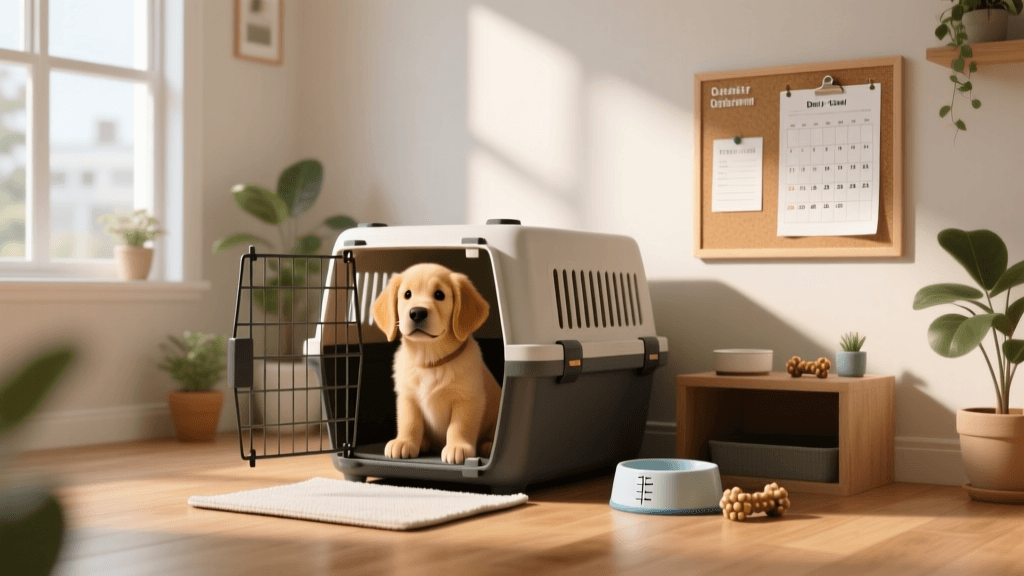
Set up a crate or a gated-off room in a quiet part of the house, far from the nursery and the main living area. Furnish it with a comfortable bed, a water bowl, and long-lasting enrichment items like a frozen Kong stuffed with peanut butter and Stella & Chewy's Meal Mixers. Teach your children, from the moment they are old enough to understand, that this area is strictly off-limits. When your dog retreats to this space, they must never be disturbed, ensuring they always have a voluntary coping mechanism for household chaos.
Final Thoughts on the 2026 Transition
Transitioning your dog into their new role as a gentle, respectful older sibling takes time, patience, and meticulous planning. By implementing scent desensitization, enforcing strict nursery boundaries with reliable hardware, and proofing the "Place" and "Leave It" commands, you are setting the stage for a lifetime of safe interactions. Remember to manage your own stress levels as well; dogs are incredibly empathetic and will mirror your anxiety. Stick to your training protocols, celebrate the small victories, and look forward to the beautiful bond that will eventually blossom between your dog and your new baby.
aaron-whyte
All our authors care for dogs every day — read more of their work on the authors page.