Top Nina Ottosson Dog Puzzles for 2026: Enrichment Guide
Discover the best Nina Ottosson dog puzzles for 2026. Learn how interactive enrichment toys like the Dog Brick boost canine mental health and reduce anxiety.
As we navigate through 2026, the veterinary and canine behavior communities have placed an unprecedented emphasis on mental enrichment. While physical exercise like fetch and long walks remains vital for cardiovascular health, cognitive stimulation is now recognized as equally critical for preventing behavioral issues, reducing anxiety, and delaying the onset of Canine Cognitive Dysfunction (CCD). Among the myriad of enrichment tools available on the market today, the Nina Ottosson line of interactive puzzle toys stands out as the gold standard. This comprehensive guide explores the science behind canine puzzles, provides an in-depth review of the iconic Dog Brick, and offers actionable training protocols to maximize your dog's mental wellbeing.
The Science of Canine Cognitive Enrichment
Dogs are natural foragers. In the wild, their ancestors spent up to 80% of their waking hours searching for, capturing, and consuming food. In our modern homes, however, most dogs are fed from a bowl in a matter of seconds. This mismatch between their evolutionary instincts and their daily reality often leads to boredom, frustration, and destructive behaviors such as excessive chewing, digging, or barking.
Interactive puzzle toys bridge this gap by requiring dogs to use their problem-solving skills and natural foraging instincts to earn their rewards. According to behavioral experts cited by the American Kennel Club, engaging a dog's brain through puzzle games releases dopamine, the neurotransmitter associated with pleasure and reward. This not only tires them out mentally—a state that is often more exhausting than physical exercise—but also builds confidence and reduces stress-related behaviors. Furthermore, consistent mental stimulation has been shown to build cognitive reserve, which is vital for aging dogs to maintain neural plasticity well into their senior years.
Why Nina Ottosson Puzzles Dominate the 2026 Market
The Nina Ottosson brand, now manufactured by Outward Hound, has been pioneering dog puzzle toys for decades. In 2026, their products remain the top recommendation among certified professional dog trainers and veterinary behaviorists. The primary reason for this enduring popularity is the brand's commitment to safety and progressive difficulty. Unlike cheap, brittle plastic alternatives that can splinter and pose severe choking or gastrointestinal blockage hazards, Nina Ottosson puzzles are constructed from a proprietary, BPA-free, phthalate-free, and PVC-free composite material. This unique blend is exceptionally durable, easy to clean, and designed to withstand the enthusiastic chewing and pawing of determined dogs.
Additionally, the brand utilizes a clear leveling system ranging from Level 1 (Beginner) to Level 4 (Genius). This structured approach allows pet parents to progressively increase the cognitive load on their dogs, ensuring the animal remains challenged without crossing the threshold into frustration.
Product Spotlight: The Nina Ottosson Dog Brick
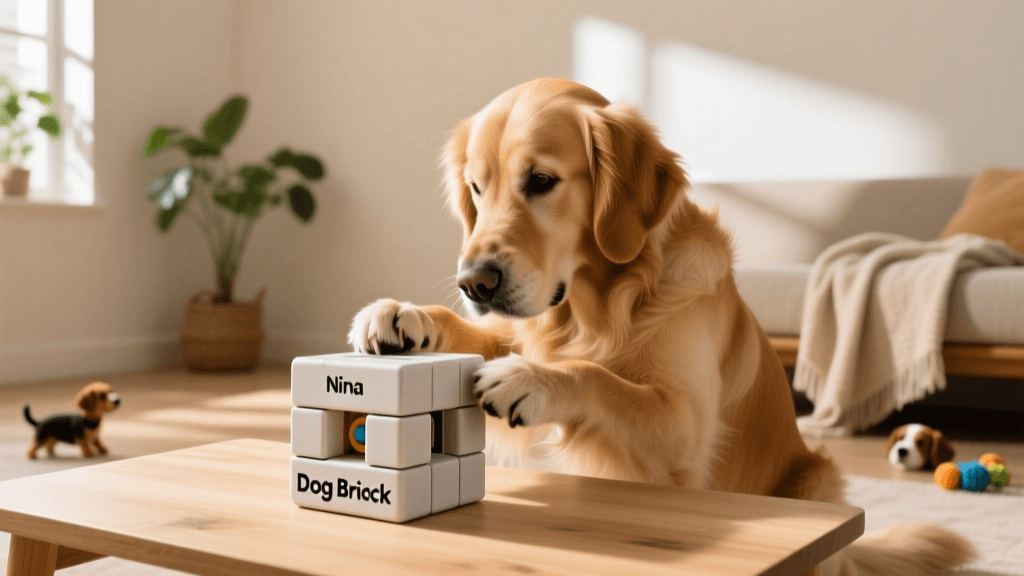
The Nina Ottosson Dog Brick Interactive Treat Puzzle is arguably the most versatile and popular model in their extensive lineup. Rated as a Level 2 (Intermediate) puzzle, it is the perfect entry point for dogs who have mastered basic sniffing mats but are not yet ready for complex, multi-step locking mechanisms.
The Dog Brick features three distinct types of treat-hiding compartments, requiring the dog to utilize different physical actions to access the food:
- Flipping Bones: The dog must use their nose or paws to flip over plastic bone-shaped covers.
- Sliding Covers: The dog must push sliding blocks out of the way to reveal hidden wells.
- Lifting Pegs: The dog must grasp and lift removable white pegs that act as locking mechanisms for the sliding covers.
This multi-action requirement forces the dog to think critically and switch tactics if one method fails. The removable pegs also allow owners to customize the difficulty. For a dog just learning the puzzle, you can remove the pegs entirely, leaving only the sliding and flipping actions. As the dog's proficiency grows, you can replace the pegs, requiring them to perform a two-step sequence (lift the peg, then slide the block) to get the reward.
2026 Nina Ottosson Puzzle Comparison Chart
Choosing the right puzzle depends heavily on your dog's size, snout shape, and current cognitive abilities. Below is a comparison of the top models available this year to help you make an informed purchasing decision.
| Model Name | Difficulty Level | Best For | Approx. 2026 Price |
|---|---|---|---|
| Dog Smart (Composite) | Level 1 (Beginner) | Puppies, seniors, and puzzle novices | $24.99 |
| Dog Brick | Level 2 (Intermediate) | Most adult dogs, versatile daily use | $34.99 |
| Dog Tornado | Level 3 (Advanced) | Smart breeds (Poodles, Collies) needing sequential steps | $39.99 |
| MultiPuzzle | Level 4 (Genius) | Working breeds, highly experienced puzzle solvers | $49.99 |
Step-by-Step Training Protocol for Puzzle Toys
Simply placing a puzzle toy in front of your dog and walking away is a recipe for frustration. To ensure a positive experience, you must actively shape their behavior. The Humane Society of the United States emphasizes that interactive play and guided enrichment are key to building a confident, well-adjusted pet. Follow this protocol when introducing the Dog Brick or any new puzzle:
- Start Unlocked and Visible: For the first few sessions, place high-value, strongly scented treats (like freeze-dried liver or small pieces of boiled chicken) in the compartments. Leave the sliding covers completely open and the bones flipped up. Let your dog eat the treats directly from the wells to build a positive association with the toy.
- Introduce One Mechanism: Once your dog eagerly approaches the toy, partially cover one or two compartments. Encourage them to use their nose to nudge the cover. If they struggle, gently guide their nose or paw to demonstrate the sliding motion. Praise heavily and reward immediately when they succeed.
- Increase Complexity Gradually: Over the course of several days or weeks, slowly increase the number of covered compartments. Introduce the flipping bones and the locking pegs one at a time. Never introduce all the locking mechanisms in a single session.
- Keep Sessions Short: Mental fatigue sets in much faster than physical fatigue. Limit puzzle sessions to 10–15 minutes. Always end the session while your dog is still eager to play, which maintains their enthusiasm for the next time.
Troubleshooting Common Puzzle Toy Issues
Even with careful training, you may encounter a few hurdles. Here is how to troubleshoot the most common issues:
- Issue: The dog flips the entire puzzle upside down. Solution: Ensure the anti-slip rubber feet on the bottom of the toy are clean and gripping the floor. If your dog is particularly strong or enthusiastic, you may need to hold the base steady with your foot or hand during the initial learning phases, or upgrade to a heavier, more advanced model.
- Issue: The dog loses interest and walks away. Solution: The puzzle may be too difficult, or the treats may not be motivating enough. Upgrade to higher-value rewards (e.g., smearing a tiny bit of dog-safe peanut butter in the deep wells) and temporarily reduce the difficulty by removing the locking pegs.
- Issue: The dog gets frustrated and starts barking or pawing aggressively. Solution: Frustration means the cognitive load is too high. Step in immediately, help them solve the final step to get the reward, and put the toy away. Next time, use easier treats and fewer locked compartments.
Dietary Considerations: Managing Calories in 2026
With canine obesity remaining a critical health crisis, it is vital to account for the calories your dog consumes during enrichment activities. Puzzle toys should not be an excuse to overfeed. Instead, use them as an alternative to traditional bowl feeding. Measure out your dog's daily kibble allowance and use a portion of it to fill the puzzle. If you use high-value treats or wet food toppers like plain pumpkin puree or unsweetened yogurt, ensure you reduce their main meal portions accordingly to maintain a healthy body condition score.
Maintenance and Hygiene
Because puzzle toys come into direct contact with your dog's mouth and food, proper hygiene is non-negotiable. The Nina Ottosson composite material is incredibly easy to clean. After each use, wash the puzzle with warm water and a mild, pet-safe dish soap. Use a small brush or an old toothbrush to clean out the deep treat wells and the tracks where the sliding blocks move. While some owners attempt to clean these toys in the dishwasher, hand washing is highly recommended to preserve the integrity of the plastic and the anti-slip rubber feet over the long term. Always dry the toy completely before storing it to prevent mold growth in the crevices.
Final Thoughts on Canine Enrichment
Investing in high-quality mental enrichment tools like the Nina Ottosson Dog Brick is one of the most impactful things you can do for your dog's overall health in 2026. By tapping into their natural foraging instincts, you are not only preventing destructive behaviors but also fostering a deeper bond built on trust, communication, and shared success. Start slow, keep the sessions positive, and watch your dog's confidence and cognitive sharpness flourish.
robin-maitland
All our authors care for dogs every day — read more of their work on the authors page.