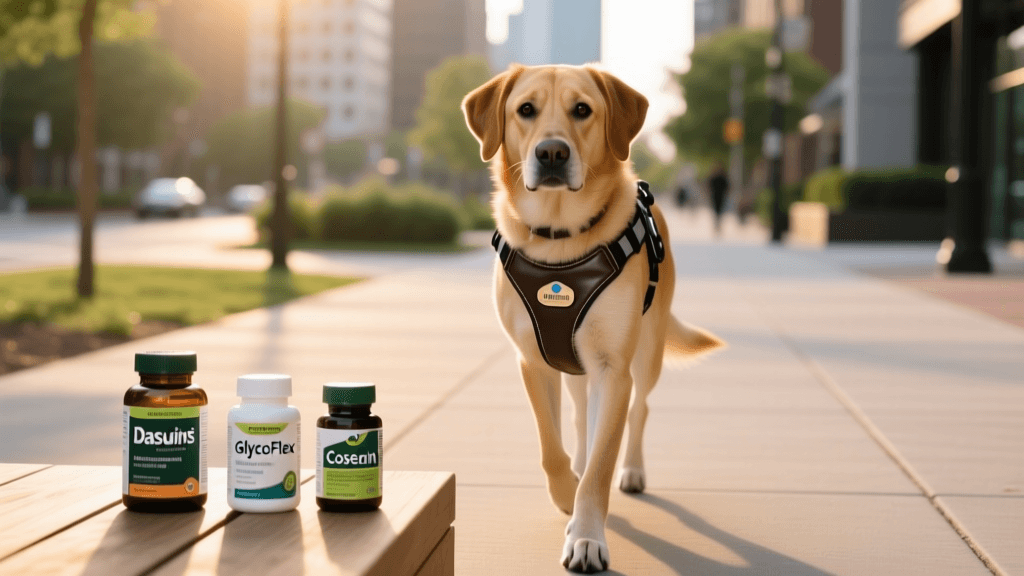
Best Joint Supplements for Mobility Service Dogs in 2026
Discover the top joint supplements for mobility service dogs in 2026. Compare Dasuquin, GlycoFlex, and Cosequin to protect your working dog's health.
Mobility assistance dogs are extraordinary partners that provide life-changing independence to their handlers. From bracing for balance to pulling wheelchairs and retrieving heavy objects, these working dogs perform physically demanding tasks daily. However, this intense physical output places significant biomechanical stress on their orthopedic structures. As of 2026, veterinary orthopedic specialists and organizations like Assistance Dogs International emphasize that proactive joint care is not just optional for mobility dogs; it is a critical component of their working longevity and overall wellbeing.
The Biomechanical Toll of Mobility Tasks
Unlike companion pets, mobility service dogs are essentially canine athletes. Their daily routines involve repetitive, high-impact, and asymmetrical loading of their musculoskeletal systems. Understanding these specific stressors is vital for selecting the right preventative care and nutritional support.
Bracing and Counterbalance
When a handler experiences dizziness or instability, a mobility dog is trained to 'brace,' planting their feet and stiffening their body to act as a living crutch. This sudden absorption of human weight—often exceeding the dog's own body mass—places acute compressive forces on the cervical spine, shoulder joints, and carpal (wrist) joints. Over time, this repetitive micro-trauma can accelerate cartilage degradation.
Wheelchair Pulling and Heavy Retrieval
Dogs trained to pull manual wheelchairs or carts engage their hindquarters, hips, and stifles (knees) in sustained, high-torque movements. Similarly, retrieving heavy items like dropped keys, medication bags, or opening heavy refrigerator doors via tug-straps requires intense gripping and pulling mechanics that strain the temporomandibular joint (TMJ), neck, and front assemblies.
Deep Pressure Therapy (DPT)
While less impact-heavy than bracing, DPT requires the dog to lay their full body weight across the handler's chest or lap for extended periods. Maintaining this static, sometimes awkward posture can lead to muscle fatigue and secondary joint stiffness, particularly in the hips and elbows.
Essential Joint Ingredients in 2026
The veterinary consensus in 2026 has moved beyond basic glucosamine. According to the American College of Veterinary Surgeons, modern osteoarthritis management requires a multi-modal approach that targets inflammation, cartilage synthesis, and synovial fluid viscosity simultaneously. When evaluating supplements for a working mobility dog, look for these clinically backed ingredients:
- Glucosamine HCl & Chondroitin Sulfate: The foundational building blocks for glycosaminoglycans (GAGs), which are essential for maintaining cartilage matrix integrity and synovial fluid thickness.
- Avocado/Soybean Unsaponifiables (ASU): A powerful natural anti-inflammatory that has been shown to inhibit the breakdown of cartilage and stimulate the synthesis of new joint tissue.
- Eggshell Membrane (ESM): A breakthrough ingredient heavily utilized in 2026 formulations. ESM contains naturally occurring collagen, hyaluronic acid, and elastin, providing rapid relief from joint stiffness and supporting connective tissue elasticity.
- Methylsulfonylmethane (MSM): An organic sulfur compound that reduces oxidative stress and systemic inflammation, crucial for dogs recovering from a heavy day of bracing or pulling.
- Omega-3 Fatty Acids (EPA/DHA): Often sourced from wild-caught fish or green-lipped mussels, these fatty acids down-regulate inflammatory pathways in the joint capsule.
Top 3 Joint Supplements for Working Mobility Dogs
Based on current 2026 veterinary recommendations, bioavailability, and working-dog specific needs, here are the top three joint supplements for mobility assistance dogs.
1. Nutramax Dasuquin Advanced with ESM
Dasuquin Advanced remains the gold standard for working dogs experiencing moderate to severe joint stress. The inclusion of Eggshell Membrane (ESM) and a specialized matrix of antioxidants makes it uniquely suited for mobility dogs that endure the sudden, high-impact forces of bracing. The chewable tablets are highly palatable, and the proprietary ASU formula actively protects against cartilage erosion. It is an investment, but for a dog whose livelihood depends on their joints, it is widely considered the premium choice.
2. VetriScience GlycoFlex Max
GlycoFlex Max is heavily favored in the working dog community due to its inclusion of New Zealand Green-Lipped Mussel (Perna canaliculus). This ingredient provides a natural, highly bioavailable source of GAGs, omega-3s, and amino acids. GlycoFlex Max also includes DMG (Dimethylglycine) to support cellular health and immune function, which is excellent for service dogs that travel frequently and face environmental stressors. It is particularly effective for maintaining hindquarter strength in wheelchair-pulling dogs.
3. Cosequin Advanced Plus MSM
For younger mobility dogs in training or those in the early stages of their working career, Cosequin Advanced Plus MSM offers a robust preventative profile. It combines high-grade glucosamine and chondroitin with a potent dose of MSM for immediate anti-inflammatory support. While it lacks the ASU and ESM found in Dasuquin Advanced, its lower price point makes it an accessible, high-quality option for early-career joint preservation.
Comparison Chart: Mobility Dog Joint Supplements
| Product | Key Active Ingredients | Best For | Est. Monthly Cost (2026) | Form |
|---|---|---|---|---|
| Dasuquin Advanced | Glucosamine, Chondroitin, ASU, ESM, Boswellia | Senior mobility dogs; heavy bracing tasks | $85 - $105 | Chewable Tablet |
| GlycoFlex Max | Green-Lipped Mussel, Glucosamine, MSM, DMG | Wheelchair pulling; active travel dogs | $65 - $80 | Chewable Tablet |
| Cosequin Advanced | Glucosamine, Chondroitin, MSM, Omega-3s | Young dogs in training; early prevention | $45 - $60 | Chewable Tablet |
Note: Costs are estimated for a 60 lb (27 kg) working dog based on average 2026 retail pricing and standard maintenance dosing.
Beyond Supplements: Harness Fit and Rehabilitation
As the American Kennel Club notes, supplements are only one piece of the orthopedic puzzle. For mobility dogs, the equipment they wear is just as critical as the nutraceuticals they consume.
The Importance of Custom-Fitted Mobility Harnesses
A poorly fitted pulling or bracing harness can cause severe asymmetrical loading, leading to premature spinal and shoulder degeneration. In 2026, the standard of care dictates that mobility dogs must be fitted with custom-molded or highly adjustable ergonomic harnesses (such as those from Walkeez or custom Dogleggs setups). These harnesses feature rigid handles that distribute the handler's weight evenly across the dog's chest and ribcage, bypassing the delicate structures of the neck and axillary (armpit) regions. Handlers should have their dog's harness fit evaluated by a certified canine physical therapist every six months, as the dog's muscle mass and body condition will fluctuate throughout their working life.
Integrating Canine Physical Rehabilitation
To maximize the efficacy of joint supplements, integrate weekly physical rehabilitation into your dog's routine. Underwater treadmill therapy is exceptional for wheelchair-pulling dogs, as it builds hindquarter and core strength without the concussive forces of land-based exercise. Therapeutic laser (photobiomodulation) and canine acupuncture are also highly effective for managing the localized muscle spasms and joint inflammation that occur after a long day of bracing and DPT.
Conclusion
Mobility service dogs give their bodies to their handlers every single day. Protecting their orthopedic health requires a proactive, multi-modal strategy that combines premium joint supplementation, meticulous harness fitting, and targeted physical rehabilitation. By selecting a high-quality supplement like Dasuquin Advanced or GlycoFlex Max and adhering to 2026 veterinary best practices, you can ensure your working partner remains sound, comfortable, and capable of performing their vital tasks for years to come. Always consult with your primary veterinarian or a board-certified veterinary orthopedic specialist before initiating a new supplement protocol for your working dog.
priya-sutaria
All our authors care for dogs every day — read more of their work on the authors page.