How To Manage Safe Feeding Routines In Multi-Dog Homes
Learn how to manage safe feeding routines in multi-dog households. Prevent resource guarding with expert tips, spatial setups, and structured schedules.

The Challenge of Multi-Dog Mealtimes
Sharing your life with multiple dogs is an incredibly rewarding experience, but it introduces unique logistical challenges, particularly around mealtimes. When you bring a second or third dog into your home, you are no longer just feeding a pet; you are managing a complex pack dynamic. Food is a primary survival resource, and in a multi-dog household, the presence of competing pack members can trigger anxiety, competition, and resource guarding. Establishing a safe, structured feeding routine is not just about nutrition; it is a critical component of behavioral management and household harmony.
Understanding Resource Guarding in Packs
Resource guarding occurs when a dog exhibits aggressive or defensive behaviors to maintain control over a valued item, such as food, treats, or toys. According to VCA Animal Hospitals, resource guarding is a natural canine behavior rooted in survival instincts, but it becomes dangerous in a multi-pet environment where dogs are forced into close proximity during meals. Signs of guarding include stiffening over the bowl, eating at an accelerated pace, growling, snapping, or blocking access to the feeding area. Even dogs that have never shown aggression can develop guarding behaviors if they feel their food supply is threatened by a housemate.
Designing a Safe Spatial Feeding Environment
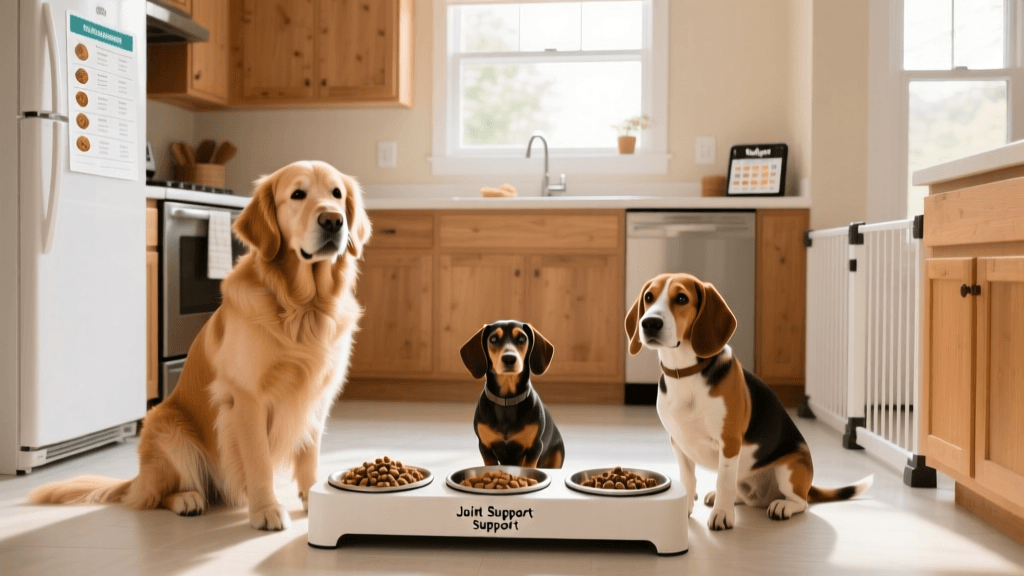
The foundation of a peaceful multi-dog feeding routine is spatial separation. Dogs should never be forced to eat shoulder-to-shoulder, as this creates unnecessary tension. You must create designated feeding zones that provide each dog with a sense of security. Ideally, dogs should be fed at least six to eight feet apart. If space is limited, utilize physical barriers to break the line of sight between dogs while they eat.
Recommended Equipment and Setup Costs
- Physical Barriers: Invest in a reliable baby gate or pet pen. The Regalo Easy Step Walk Thru Gate (approximately $40) is an excellent, hardware-free option for doorways. For open-concept rooms, a freestanding pet playpen (around $60-$80) can create a temporary, secure feeding zone.
- Crate Training: If your dogs are crate-trained, the crate is the ultimate safe feeding zone. Feeding inside the crate with the door closed or partially latched provides maximum security and eliminates visual triggers from other dogs.
- Elevated Feeders: For large breeds or dogs with mobility issues, a 12-inch elevated feeder (like the Platinum Pets Double Diner, ~$35) can improve digestion and comfort, though ensure the elevation does not trigger guarding in smaller dogs who might feel intimidated.
- Snuffle Mats and Slow Feeders: To reduce the speed of eating and lower anxiety, use slow feeder bowls or snuffle mats ($15-$25). These engage the dog's foraging instincts and keep their head down and focused on the task rather than scanning the room for threats.
The 15-Minute Scheduled Feeding Protocol
Free-feeding (leaving food out all day) is highly discouraged in multi-dog households. It obscures appetite changes, makes house training difficult, and creates a persistent, low-level competition for resources. Instead, implement a strict 15-minute scheduled feeding protocol.
- Preparation (5 Minutes Before): Prepare all bowls out of sight. Ask all dogs to perform a known command, such as 'sit' or 'place' on their designated mats. This establishes your control over the environment and lowers arousal levels.
- Distribution: Place the bowls in their respective, separated zones. If using crates, place the bowl inside and invite the dog in. Close the doors or ensure the physical barriers are secure.
- The 15-Minute Window: Allow the dogs exactly 15 minutes to eat in peace. Do not hover, stare, or attempt to 'test' their guarding by putting your hands near the bowls. Give them space.
- Pickup: After 15 minutes, calmly pick up all bowls, regardless of whether they are empty. If a dog has not finished, they simply wait until the next scheduled meal. This teaches the dogs that food is abundant, predictable, and entirely controlled by you, which drastically reduces anxiety.
- Post-Meal Rest: Enforce a 30-minute post-meal rest period to prevent bloat (Gastric Dilatation-Volvulus), especially in large, deep-chested breeds.
Bonus Tip: Rotate the feeding locations periodically. If Dog A always eats in the kitchen and Dog B always eats in the living room, they may begin to guard those specific rooms. Rotating their spots prevents spatial territoriality from developing alongside food guarding.
Comparing Multi-Dog Feeding Strategies
Choosing the right strategy depends on your dogs' temperaments and your household schedule. Below is a comparison of common feeding methodologies in multi-pet homes.
| Strategy | Description | Pros | Cons | Best For |
|---|---|---|---|---|
| Free-Feeding | Food is left out 24/7. | Convenient for owners. | High risk of guarding, obesity, and missed illness signs. | Single-dog homes only. |
| Scheduled Group Feeding | Dogs eat at the same time in the same room. | Quick and easy. | High stress for anxious dogs; encourages rapid eating. | Highly socialized, non-guarding dogs. |
| Spatial Separation | Dogs eat at the same time but in different rooms/crates. | Eliminates visual triggers; reduces anxiety. | Requires more space and setup time. | Most multi-dog households. |
| Staggered Feeding | Dogs are fed one at a time in the same space. | Requires minimal space; high owner control. | Time-consuming; waiting dogs may whine or pace. | Severe resource guarders. |
Managing High-Value Treats and Chews
While dogs might tolerate each other near their daily kibble bowls, high-value items like bully sticks, raw bones, or peanut butter-stuffed Kongs can instantly trigger severe resource guarding. The American Kennel Club (AKC) emphasizes that management is the most effective tool for preventing fights over high-value items. Never hand out long-lasting chews in a shared, open space. Instead, distribute these treats only when dogs are fully separated in crates or behind closed doors. Once the chew is completely consumed, release the dogs back into the shared environment. This simple management technique prevents the rehearsal of aggressive behaviors and keeps your pack safe.
Water Bowl Management in Shared Spaces
While food is a high-stakes resource, water bowls can also become flashpoints for conflict, especially in warmer climates or after vigorous exercise. Unlike food, water should be available throughout the day, but the placement of water bowls requires strategic thought. Avoid placing water bowls in narrow hallways, doorways, or high-traffic choke points where a dog might feel 'trapped' while drinking. Instead, set up multiple, wide-based stainless steel or ceramic water stations in open, well-lit areas of your home. Having at least one more water station than the number of dogs (e.g., three stations for two dogs) ensures that a lower-ranking dog is never blocked from hydration by a more assertive housemate. Clean these bowls daily with hot, soapy water to prevent bacterial biofilm buildup, which can cause canine acne and gastrointestinal issues.
Integrating Cats and Small Pets
Multi-pet living often extends beyond dogs. Cats and small dogs are particularly vulnerable during mealtimes, as larger dogs may view their food as an opportunity for theft or their small bodies as prey. To protect your feline family members, elevate their feeding stations to inaccessible heights, such as on top of cat trees or high shelving. Alternatively, invest in a microchip-activated feeder like the SureFeed Microchip Pet Feeder Connect (approximately $180). This device reads your cat's implanted microchip or RFID collar tag and only opens the lid for the designated pet, completely eliminating food theft and the stress it causes your cat.
When to Seek Professional Help
If your dogs exhibit severe resource guarding—such as lunging, biting, or fighting that results in injury—management alone is not enough. You must consult a certified professional dog trainer or a veterinary behaviorist. Attempting to punish resource guarding can suppress the warning signs (like growling) without fixing the underlying anxiety, leading to a dog that bites without warning. With the right spatial setup, a strict 15-minute routine, and professional guidance when necessary, your multi-dog household can enjoy peaceful, stress-free mealtimes.
robin-maitland
All our authors care for dogs every day — read more of their work on the authors page.