Best Dog Breeds for Remote Workers in 2026: Wellness Guide
Discover the best low-stress, quiet dog breeds for remote workers in 2026. Enhance your home office wellness with our expert breed and setup guide.
The Mental and Physical Health Benefits of a Work-From-Home Dog
As the landscape of professional life continues to shift in 2026, the home office has become a permanent fixture for millions. With this evolution comes a unique opportunity to integrate canine companionship into our daily routines. However, not every dog is suited for the quiet, focused environment of a remote worker's home office. Choosing the right breed is not just a matter of preference; it is a critical decision that impacts both your professional productivity and your mutual health and wellbeing. In this comprehensive guide, we explore the best dog breeds for remote workers in 2026, focusing on low-anxiety, moderate-energy companions that promote mental wellness without disrupting your workflow.
The presence of a dog in your home office offers profound health benefits. According to the Mayo Clinic, interacting with pets can significantly reduce stress, lower blood pressure, and decrease feelings of loneliness and depression. For remote workers who often face isolation, a dog provides a vital psychological anchor. Furthermore, the necessity of taking short walking breaks improves cardiovascular health and breaks up prolonged periods of sedentary screen time. However, a high-strung or excessively vocal dog can elevate cortisol levels and disrupt deep work sessions. Therefore, selecting a breed known for emotional stability and quiet companionship is essential for maintaining a healthy, stress-free work environment.
What Makes a Breed Ideal for the 2026 Remote Office?
When evaluating the best dog breeds for remote workers, we must look beyond aesthetics and focus on behavioral and physiological traits that align with a work-from-home lifestyle in 2026.
First, low vocalization is paramount. Frequent barking at delivery drones or neighborhood noises will derail virtual meetings and elevate your stress levels.
Second, moderate energy levels are ideal. You need a dog that requires a solid morning walk and an evening stroll, but one that is content to nap under your desk during a four-hour deep work block.
Third, low separation anxiety is crucial. Even remote workers must step away for grocery runs, school drop-offs, or occasional in-office collaboration days. A dog that panics when left alone for two hours will suffer mentally and cause property damage.
Finally, adaptability to indoor living ensures the dog remains comfortable in a climate-controlled home office without needing constant outdoor stimulation.
Top 5 Low-Stress Dog Breeds for Remote Workers
1. Cavalier King Charles Spaniel
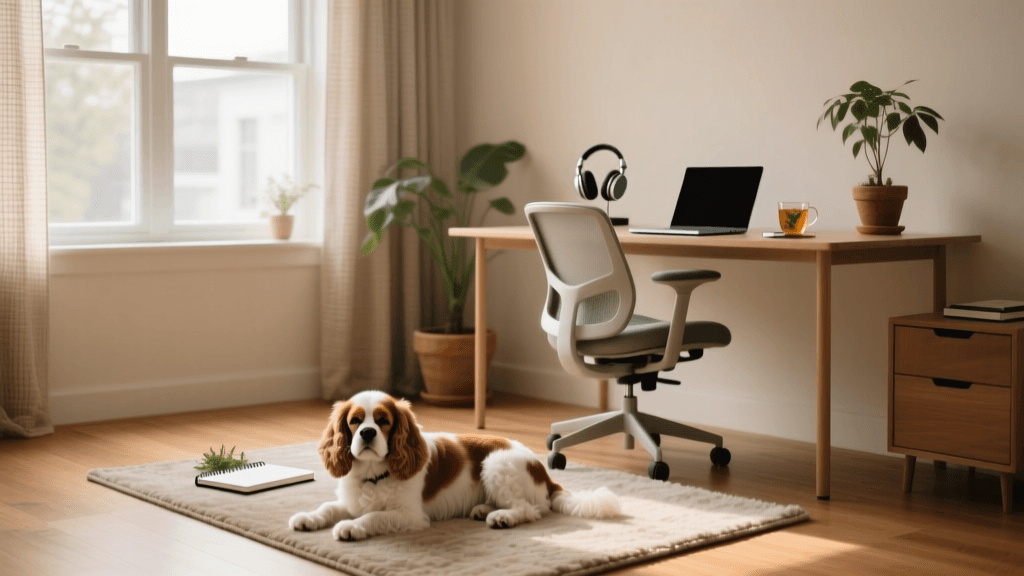
The Cavalier King Charles Spaniel is the quintessential lap dog, making it an exceptional choice for remote workers seeking emotional support. Weighing between 12 to 18 pounds, they easily fit into a designated under-desk bed. Cavaliers are renowned for their empathetic nature, often sensing when their owner is stressed and offering silent comfort. Their exercise needs are easily met with a 30-minute neighborhood walk, leaving them perfectly content to snooze while you tackle your inbox.
2. Greyhound
It may seem counterintuitive to recommend a racing breed for a home office, but Greyhounds are famously known as "45-mph couch potatoes." Retired racing Greyhounds or rescued seniors are incredibly calm, quiet, and low-energy indoors. They rarely bark, making them ideal for open-floor-plan homes where sound carries. Their short coats require minimal grooming, and their gentle demeanor makes them a soothing, low-maintenance presence during high-pressure project deadlines.
3. Bichon Frise
For remote workers who suffer from pet dander allergies, the Bichon Frise is a premier hypoallergenic option. Their cheerful disposition provides a steady stream of dopamine-boosting interactions without the hyperactivity of a terrier. Bichons are highly adaptable and respond well to indoor puzzle toys, which can keep them mentally stimulated while you are on a long conference call. Regular professional grooming is required, but the trade-off for a sneeze-free, joyful home office is well worth it.
4. Whippet
Similar to the Greyhound but in a more compact package, the Whippet is a master of relaxation. They are exceptionally quiet dogs, rarely using their voices, which is a massive benefit for professionals who spend their days on Zoom or Microsoft Teams. Whippets form deep bonds with their owners and prefer to be in the same room, often curling up on a nearby dog sofa. They are sensitive to cold, so providing a heated orthopedic bed in your office corner will ensure their physical comfort throughout the winter months.
5. Pug
Pugs are the ultimate comedic relief for the isolated remote worker. Their expressive faces and affectionate nature provide excellent mental health benefits, breaking the monotony of solitary work. Pugs require minimal exercise and are generally happy to lounge nearby. However, prospective owners must be mindful of their brachycephalic (flat-faced) anatomy. Keeping your home office well-ventilated and climate-controlled with a smart air purifier is essential to ensure their respiratory health and comfort.
Breed Comparison Chart for Home Office Wellness
To help you make an informed decision, we have compiled a comparison chart detailing how these breeds align with the specific wellness and environmental needs of a remote worker.
| Breed | Energy Level | Vocalization | Separation Anxiety Risk | Primary Wellness Benefit |
|---|---|---|---|---|
| Cavalier King Charles | Low | Low | Moderate | Stress reduction and emotional grounding |
| Greyhound | Low (Indoor) | Very Low | Low | Calming presence, promotes routine walking |
| Bichon Frise | Moderate | Moderate | Moderate | Mood elevation, hypoallergenic air quality |
| Whippet | Low | Very Low | Low | Deep companionship, quiet focus environment |
| Pug | Low | Moderate | High | Laughter, affection, breaks work monotony |
Structuring Mental Health Breaks with Your Canine Co-Worker
Remote work often blurs the line between personal and professional time, leading to burnout. Your dog can serve as a natural, biological timer for essential mental health breaks. In 2026, wellness experts recommend the "50/10 Rule" for remote workers: 50 minutes of focused work followed by 10 minutes of active disengagement. Use this 10-minute window to engage in low-impact enrichment activities with your dog. For a Whippet or Greyhound, this might mean a gentle game of indoor lure coursing using a flirt pole in the hallway. For a Cavalier or Pug, a short session of scent work using a snuffle mat can provide excellent cognitive stimulation without raising their heart rate too high. These micro-breaks lower your cortisol levels, reset your attention span, and fulfill your dog's psychological need for interaction, preventing the development of destructive boredom behaviors.
Optimizing Your 2026 Home Office for Canine Wellness
Creating a health-promoting environment for your dog in 2026 goes beyond picking the right breed; it requires optimizing your physical workspace. Invest in an ergonomic, orthopedic dog bed like the Big Barker Orthopedic Lounge, which supports joint health, especially for older rescues like Greyhounds.
To manage your dog's nutrition while you are engrossed in deep work, utilize a smart feeder such as the PetSafe Smart Feed Ultra. This device allows you to schedule precise, portion-controlled meals via a smartphone app, preventing obesity—a major health risk for low-energy office dogs.
Air quality is another critical component of mutual wellness. Running a Dyson Purifier Big+Quiet Formaldehyde in your home office captures pet dander, eliminates odors, and ensures both you and your Bichon or Pug are breathing clean, filtered air. Finally, for moments when you must leave the house, a Furbo 4K Dog Camera with treat-tossing capabilities allows you to check in, monitor their stress levels, and interact with them remotely, providing peace of mind and reducing their isolation. For more insights on managing quiet breeds in a home environment, the American Kennel Club offers excellent behavioral tips.
Conclusion
Integrating a dog into your remote work life in 2026 is a profound commitment to your own mental and physical wellbeing. By selecting a breed that aligns with the quiet, focused, and sometimes sedentary nature of home-based work, you create a symbiotic relationship that enhances productivity and joy. Whether you choose the empathetic Cavalier, the stoic Greyhound, or the cheerful Bichon, prioritizing low-stress traits and optimizing your home office for their health will ensure that your canine co-worker remains a source of comfort and vitality for years to come.
beth-carrasco
All our authors care for dogs every day — read more of their work on the authors page.