Top Dog Breeds for Remote Workers in 2026: Wellness Guide
Discover the best low-anxiety dog breeds for remote workers in 2026. Boost your mental health and find a calm, quiet companion for your home office.
The Intersection of Remote Work and Canine Wellness in 2026
As we settle into the established remote and hybrid work norms of 2026, the home office has become a permanent fixture for millions of professionals. While working from home offers unparalleled flexibility, it also presents unique challenges for pet owners. The right canine companion can drastically improve your mental health, reduce stress, and encourage healthy screen-breaks. However, the wrong breed can lead to disrupted Zoom calls, heightened anxiety, and a chaotic work environment.
Choosing a dog is not just about finding a cute face; it is a critical decision that impacts both your psychological wellbeing and the dog's physical and mental health. In this comprehensive guide, we explore the best dog breeds for remote workers, focusing on low-anxiety temperaments, minimal barking, and manageable exercise requirements that align with a busy digital lifestyle.
Why Breed Selection Matters for Your Mental Health
The presence of a dog in the home office is a proven wellness tool. According to the Mayo Clinic, interacting with pets can significantly lower cortisol levels, decrease blood pressure, and boost the production of serotonin and dopamine. However, these benefits are quickly negated if your dog is prone to excessive barking, destructive behavior, or high-strung energy that demands constant attention during deep-work sessions.
Furthermore, canine wellbeing must be considered. Dogs that require intense physical stimulation or are genetically predisposed to vocalize will suffer from chronic stress if confined to an apartment while you work eight-hour shifts. Selecting a breed that naturally aligns with a sedentary but routine-based lifestyle ensures that both you and your dog remain mentally balanced throughout the workday.
Top 5 Low-Stress Dog Breeds for the Home Office
1. The Greyhound
Often jokingly referred to as '45-mph couch potatoes,' retired racing Greyhounds are among the best companions for remote workers. Despite their athletic build, Greyhounds are notoriously lazy indoors. They sleep up to 18 hours a day, making them the perfect silent partners for long coding sessions or virtual meetings. A brisk 30-minute morning walk and a short evening stroll are usually sufficient to keep them physically healthy and mentally content.
2. The Cavalier King Charles Spaniel
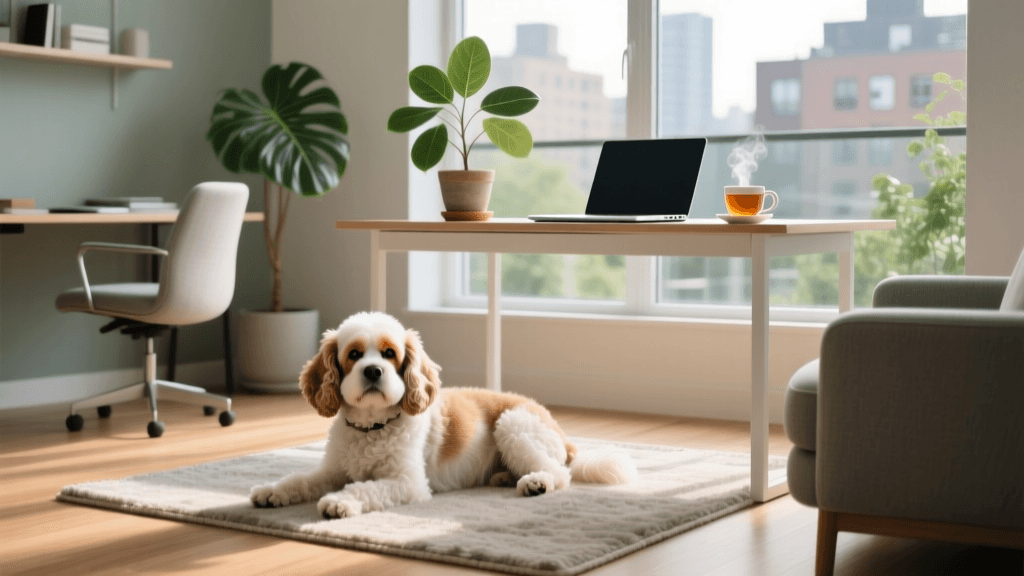
If your remote job involves high stress and you need an emotional anchor, the Cavalier King Charles Spaniel is an exceptional choice. Known for their deeply empathetic and affectionate nature, Cavaliers thrive on simply being in the same room as their owners. They are relatively quiet and adapt well to apartment living. Their moderate energy levels mean they are happy to nap on a dog bed under your desk while you tackle your inbox.
3. The Basset Hound
With their soulful eyes and incredibly laid-back demeanor, Basset Hounds bring a calming, almost meditative presence to the home office. They are stubborn but deeply devoted. While they do have a distinctive howl, they rarely bark without a profound reason, making them suitable for noise-sensitive environments. Their low stamina means your midday walk will be a leisurely, mindful stroll rather than a grueling marathon, promoting mental decompression for you both.
4. The Standard Poodle
For remote workers who want a highly trainable, intelligent dog that doesn't shed all over their ergonomic chair, the Standard Poodle is ideal. The American Kennel Club (AKC) notes that Poodles are highly attuned to their owners' emotions and can be easily trained to respect 'quiet time' boundaries. They require mental enrichment—such as puzzle toys during your lunch break—but are generally quiet and dignified indoors.
5. Senior Mixed-Breed Rescues
Do not overlook the local shelter. Adopting a senior mixed-breed dog (typically aged 7 and older) is often the ultimate lifehack for remote workers. Senior dogs have established temperaments, meaning you know exactly how they react to doorbells, delivery drivers, and video calls. They require less physical exercise, are usually already house-trained, and provide immense emotional satisfaction through the act of giving them a comfortable retirement.
Breeds That May Disrupt Your Remote Workflow
While every dog is an individual, certain breeds are genetically wired for high stimulation, vocalization, and independent decision-making. If your job requires intense concentration or frequent client-facing video calls, you may want to reconsider bringing the following types of dogs into your home office:
- Herding Breeds (Border Collies, Australian Shepherds): These dogs need a 'job' to do. Without hours of intense physical and mental exercise, they will create their own jobs—like herding your children, barking at shadows, or chewing your standing desk mat.
- Territorial Terriers (Jack Russells, Schnauzers): Prone to alert barking at every passing car or neighbor, terriers can make maintaining professional audio on conference calls nearly impossible.
- Vocal Hounds (Beagles, Huskies): Known for baying, howling, and 'talking,' these breeds are wonderful pets but are often incompatible with the quiet demands of a modern home office.
Comparison Chart: Home Office Dog Breeds
| Breed | Barking Level | Indoor Energy | Separation Anxiety Risk | Daily Exercise Need |
|---|---|---|---|---|
| Greyhound | Very Low | Very Low | Low | 45 mins (walking) |
| Cavalier Spaniel | Low | Low to Moderate | Moderate | 30-45 mins |
| Basset Hound | Low (but howls) | Very Low | Low | 30 mins (leisurely) |
| Standard Poodle | Low | Moderate | Moderate | 60 mins (active) |
| Senior Rescue Mix | Variable (usually low) | Very Low | Low to Moderate | 20-30 mins |
Building a 2026 Wellness Routine for You and Your Dog
Owning a dog while working from home requires a structured routine to protect both your productivity and your pet's mental health. The ASPCA warns that dogs who are with their owners 24/7 can develop severe separation anxiety when the owner eventually leaves the house for errands or occasional in-office days. To prevent this, implement the following wellness strategies:
1. Enforce 'Alone Time' Boundaries
Use baby gates or a comfortable crate in another room for at least two hours a day while you are still home. This teaches your dog that being apart is safe and temporary, preserving their psychological resilience.
2. Leverage Smart Enrichment Tech
In 2026, smart home pet technology is more advanced than ever. Utilize automated puzzle feeders and treat-dispensing cameras during your afternoon meetings. These devices keep your dog's brain engaged, stave off boredom-induced anxiety, and allow you to work uninterrupted.
3. The Midday Decompression Walk
Do not use your dog's midday walk merely as a bathroom break. Treat it as a mandatory screen-time detox for yourself. Leave your phone in your pocket, practice mindful walking, and let your dog engage in 'sniffari' activities. Sniffing lowers a dog's heart rate and provides immense mental fatigue, ensuring they sleep soundly through your afternoon presentations.
Conclusion
Integrating a dog into your remote work lifestyle is a profound commitment to your holistic wellbeing. By selecting a low-anxiety, quiet breed like a Greyhound, Cavalier King Charles Spaniel, or a senior rescue, you set the stage for a harmonious home office. Remember that a successful human-canine work environment relies on mutual respect for boundaries, structured routines, and an understanding of your dog's unique psychological needs. Choose wisely, and your new companion will be the best coworker you have ever had.
anouk-beaumont
All our authors care for dogs every day — read more of their work on the authors page.