Managing Canine OA in 2026: Librela Therapy & Home Setup
Discover the 2026 standard for canine OA treatment. Learn how Librela injections, ergonomic home setups, and joint supplements improve your dog's mobility.
Navigating Life with a Senior Dog: The 2026 Approach to Canine Osteoarthritis
Sharing your life with a senior dog is one of the most rewarding experiences a pet owner can have, but it often comes with the challenge of managing age-related conditions. Canine osteoarthritis (OA) is a progressive, degenerative joint disease that affects an estimated 80% of dogs over the age of eight. As our understanding of canine pain management has evolved, so too have the treatments available to us. Leading into 2026, the veterinary consensus has shifted dramatically away from relying solely on traditional NSAIDs (Non-Steroidal Anti-Inflammatory Drugs) toward targeted biologic therapies and comprehensive environmental modifications.
According to the American Kennel Club, early intervention and a multi-modal approach are the keys to preserving your dog's quality of life. In this guide, we will explore the current gold standard for canine OA treatment, focusing on anti-NGF injections, ergonomic home setups, and daily routine adjustments that will keep your furry companion comfortable and mobile in 2026.
The 2026 Standard of Care: Anti-NGF Injections (Librela)
For decades, NSAIDs were the primary tool for managing OA pain. While effective, long-term NSAID use can pose risks to a dog's liver, kidneys, and gastrointestinal tract. The introduction and widespread adoption of anti-Nerve Growth Factor (anti-NGF) monoclonal antibodies have revolutionized canine pain management. As of 2026, Librela (bedinvetmab) remains the premier biologic treatment for canine OA.
How Librela Works
Librela specifically targets and neutralizes Nerve Growth Factor (NGF), a protein that becomes overactive in arthritic joints and amplifies pain signals to the brain. By binding to NGF, Librela effectively turns down the volume on pain without metabolizing through the liver or kidneys, making it exceptionally safe for senior dogs with underlying organ concerns.
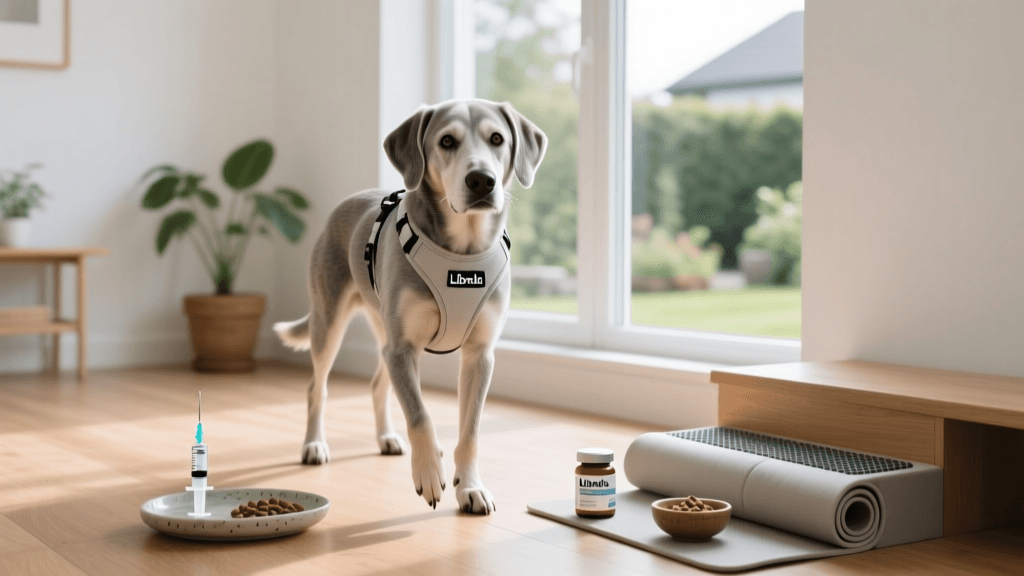
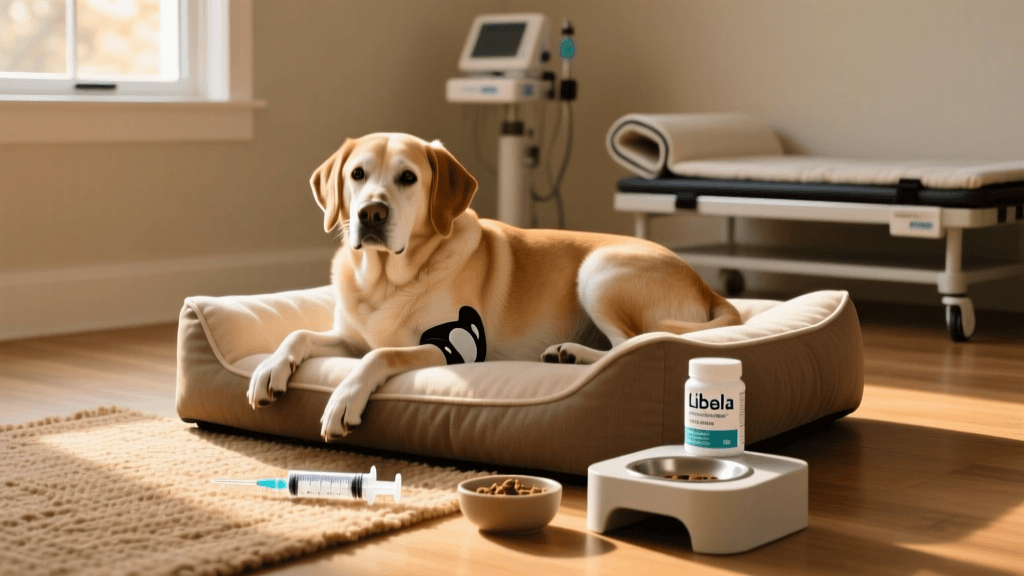
- Administration: A simple subcutaneous injection administered by your veterinarian once a month.
- Onset of Action: Most owners report noticeable improvements in mobility and enthusiasm within the first 7 to 14 days of the initial injection.
- 2026 Pricing Trends: Depending on your dog's weight class and geographic location, a monthly Librela injection typically ranges from $95 to $140. Many pet insurance providers in 2026 now cover biologic OA therapies under their wellness or chronic care riders.
The Washington State University Veterinary Teaching Hospital emphasizes that combining biologic therapies like Librela with weight management and physical rehabilitation yields the highest success rates for long-term mobility preservation.
Ergonomic Home Modifications for Arthritic Dogs
Medical treatment must be paired with an environment that supports your dog's physical limitations. Slippery floors and high jumps are the enemies of arthritic joints. Here is how to optimize your home in 2026.
1. High-Traction Flooring Solutions
Hardwood and tile floors can cause micro-slips that exacerbate joint inflammation. Instead of carpeting your entire home, opt for modular, dog-friendly rug systems. Brands like Ruggable offer low-pile, non-slip rug pads that grip hard surfaces securely and can be easily machine-washed when accidents happen. For high-traffic corridors, interlocking EVA foam puzzle tiles provide a forgiving, shock-absorbent surface that reduces impact on the carpal and tarsal joints.
2. Orthopedic Sleep Surfaces
A standard stuffed dog bed offers zero structural support for a dog with OA. The Big Barker 7-inch Orthopedic Dog Bed remains the industry benchmark in 2026. Engineered with a specific tri-foam construction (a supportive core sandwiched by comfort layers), it prevents the dog's heavy joints from "bottoming out" against the hard floor. Though the initial investment is roughly $350, it comes with a 10-year warranty and is clinically shown to improve joint stiffness and sleep quality in large breed dogs.
3. Ramps vs. Stairs
Never allow an arthritic dog to jump into an SUV or onto a high bed. While pet stairs are popular, they still require significant joint flexion. A ramp is vastly superior. The PetSafe CozyUp Folding Pet Ramp is a top choice for 2026. It features a high-traction sandpaper-like surface, supports up to 150 pounds, and folds compactly for vehicle storage. Always train your dog to use a ramp on a flat surface first, using high-value treats to build confidence before elevating it.
Nutritional Support and Joint Supplements
While Librela manages the pain signals, joint supplements aim to protect the remaining cartilage and reduce intra-articular inflammation. The 2026 market is flooded with joint chews, but veterinary orthopedic specialists consistently recommend formulations backed by clinical trials. Look for supplements containing ASU (Avocado/Soybean Unsaponifiables), EPA/DHA (Omega-3s), and high-quality Glucosamine Hydrochloride.
| Brand / Product | Key Active Ingredients | Best Use Case | Est. Monthly Cost (50lb Dog) |
|---|---|---|---|
| Dasuquin Advanced | ASU, Glucosamine, MSM, Omega-3s, Boswellia | Severe OA, post-operative joint recovery | $75 - $85 |
| Cosequin DS Plus MSM | Glucosamine, Chondroitin Sulfate, MSM | Mild to moderate OA, early-stage prevention | $40 - $50 |
| GlycoFlex Plus | Perna Canaliculus (Green Lipped Mussel), Glucosamine, DMG | Athletic dogs, active seniors needing muscle support | $60 - $70 |
Note: Always consult your veterinarian before introducing new supplements, especially if your dog is on prescription medications or has food allergies.
Daily Routine Adjustments and Physical Therapy
Exercise is crucial for maintaining muscle mass, which acts as a shock absorber for arthritic joints. However, the type of exercise must change. The weekend warrior routine—where a dog rests all week and then runs for three miles on Saturday—is highly detrimental to an OA patient.
The "Sniffari" and Low-Impact Movement
Replace high-impact fetch sessions with structured "Sniffaris." Allow your dog to explore a quiet, grassy park at their own pace. Mental stimulation from sniffing burns as much energy as physical exercise, while the slow, deliberate walking maintains joint lubrication without causing impact trauma.
Passive Range of Motion (PROM) Exercises
You can perform simple physical therapy at home. With your dog lying comfortably on their side, gently cup their knee (stifle) or elbow and slowly move the joint through its natural bending and straightening motion, much like pedaling a bicycle. Perform 10 to 15 slow repetitions daily. This promotes synovial fluid circulation, which delivers nutrients to the cartilage.
Hydrotherapy Options
If available in your area, canine hydrotherapy (underwater treadmills or heated therapy pools) is the ultimate low-impact exercise. The buoyancy of the water unloads the joints, while the resistance builds crucial stabilizing muscles. In 2026, many metropolitan areas feature dedicated canine rehabilitation centers offering weekly hydrotherapy packages ranging from $60 to $90 per session.
Monitoring Quality of Life
Pain in dogs is often subtle. They rarely whimper or cry; instead, they exhibit behavioral changes such as reluctance to climb stairs, decreased grooming, panting at rest, or irritability when touched. To objectively track your dog's progress, utilize the Liverpool Osteoarthritis in Dogs (LOAD) questionnaire. This free, validated tool asks owners to score their dog's mobility during various daily activities. Filling this out monthly helps you and your veterinarian determine if the current Librela dosage or supplement regimen needs adjusting.
Conclusion
Managing canine osteoarthritis in 2026 is no longer about simply masking pain until the end stages of life. Through the targeted relief of anti-NGF therapies like Librela, strategic home modifications like high-traction flooring and orthopedic bedding, and consistent, low-impact physical routines, you can profoundly alter the trajectory of your dog's senior years. By staying proactive and leaning on modern veterinary science, you ensure that your loyal companion's golden years are defined by comfort, dignity, and joy.
robin-maitland
All our authors care for dogs every day — read more of their work on the authors page.