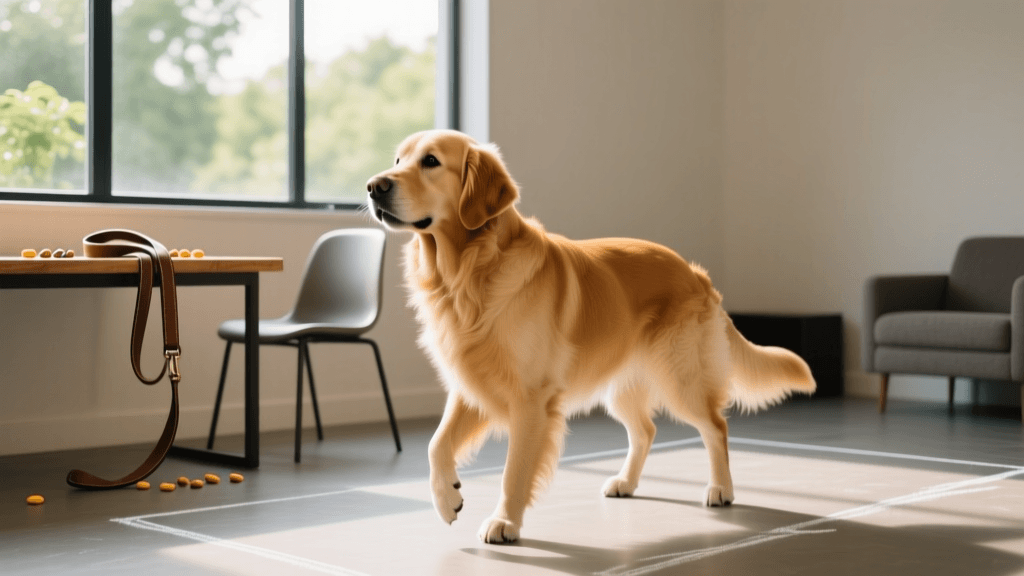
From Lunging to Loose-Leash: A Leash Reactivity Transformation
Discover how to transform your dog's leash reactivity into calm walking. Read our before-and-after guide with actionable steps, gear, and timelines.

The 'Before' Phase: Living in a State of High Alert
If you share your life with a leash-reactive dog, you already know the physical and emotional toll it takes. Your arms burn from constant tension, your heart races at the sound of an approaching pawstep, and your walks are less about enrichment and more about tactical evasion. This is the 'Before' phase. It is characterized by lunging, barking, spinning, and a dog who appears entirely deaf to your commands. But reactivity is not a life sentence. Through structured behavioral conditioning, counter-conditioning, and environmental management, profound transformations are entirely possible.
Consider the case of a 65-pound mixed-breed dog named Buster. Before training, Buster would hit the end of his leash and bark frantically at any dog within a 50-foot radius. His owner experienced immense embarrassment and physical strain, leading to shorter, less frequent walks, which only compounded Buster's pent-up energy and frustration. To achieve a true 'After' transformation, we must first understand the mechanics of the behavior.
Understanding the Root: Fear, Frustration, and the Amygdala
Reactivity is rarely about aggression or dominance; it is almost always an emotional response rooted in fear, anxiety, or barrier frustration. When a dog sees a trigger (another dog, a skateboard, a stranger), their amygdala hijacks their nervous system, flooding their body with cortisol and adrenaline. In this state, the dog is literally incapable of learning or processing complex obedience cues.
According to the ASPCA, many behaviors labeled as aggression or severe reactivity stem from underlying fear or inadequate early socialization. Therefore, the goal of our transformation protocol is not to suppress the barking through intimidation, but to change the dog's emotional response to the trigger from 'threat' to 'predictor of good things.'
The Transformation Toolkit: Gear, Costs, and Setup
Before stepping outside, you must set up your environment and your gear for success. Relying on a standard collar and a retractable leash will only reinforce pulling and increase physical harm to your dog's trachea. Here is the exact toolkit required for this transformation:
- Front-Clip Harness: A well-fitted front-clip harness (e.g., Ruffwear Front Range, approx. $40) gently redirects the dog's momentum toward you when they pull, without causing pain or choking.
- Fixed-Length Biothane Leash: A 10-to-15-foot Biothane long line (approx. $25). Biothane is waterproof, easy to clean, and doesn't cause rope burn. Avoid retractable leashes entirely, as they teach dogs that pulling extends the leash.
- High-Value Treat Pouch: A quick-release treat pouch (e.g., Doggone Good Trainer's Pouch, approx. $15) worn on your waist. Timing is everything, and fumbling in pockets ruins conditioning.
- High-Value Reinforcers: Boiled chicken breast, freeze-dried beef liver, or string cheese. Kibble will not work when competing against the adrenaline of a trigger.
- Environmental Management: Static cling frosted window film (approx. $12) for your home windows. If your dog spends all day barking at dogs through the living room window, their cortisol baseline remains too high for outdoor training to work.
The Core Protocol: The Engage-Disengage Game
The cornerstone of transforming leash reactivity is the Engage-Disengage game, a classical counter-conditioning exercise. This protocol requires you to work strictly under threshold—the distance at which your dog notices the trigger but does not react with barking or lunging.
Step 1: The Engage (Marking Awareness)
Stand at a distance where your dog can see the trigger (e.g., 40 feet away). The exact second your dog looks at the trigger, mark the behavior with a verbal 'Yes!' or a clicker. You are marking the moment of awareness, not the reaction.
Step 2: The Disengage (The Reinforcement)
Immediately after marking, present a high-value treat. The dog will turn away from the trigger to eat the treat. This creates a neurological association: Seeing a dog = Chicken appears.
Step 3: The Voluntary Check-In
After several weeks of consistent Step 1 and 2, pause after your dog looks at the trigger. Do not mark immediately. Wait to see if the dog voluntarily turns their head away from the trigger to look at you. When they do, mark with an enthusiastic 'Yes!' and deliver a jackpot of treats. This is the 'After' behavior: the dog using you as a safety cue rather than the trigger as a threat.
Reactivity modification requires patience. The American Veterinary Society of Animal Behavior (AVSAB) strongly advises against the use of punishment-based tools like prong or shock collars, as suppressing a warning growl or lunge through pain does not cure the underlying fear and can lead to unpredictable, unprovoked biting.
Before & After Transformation Metrics
Transformation is not an overnight event; it is a measurable shift in neuroplasticity and emotional regulation. Below is a data table tracking the typical progression of a moderately reactive dog over a 12-week structured training period.
| Metric | Week 1 (Before) | Week 6 (During) | Week 12 (After) |
|---|---|---|---|
| Trigger Distance Threshold | 50 feet (Lunging) | 20 feet (Stiffening) | 5 feet (Calm Observation) |
| Leash Tension | Constant pulling (15+ lbs of force) | Intermittent slack | Loose 'J' curve |
| Owner Nervous System | Elevated heart rate, shallow breathing | Conscious regulation | Calm, grounded presence |
| Treat Acceptance | Refuses food (Over threshold) | Takes food hesitantly | Eagerly eats high-value treats |
| Recovery Time | 15+ minutes of pacing post-walk | 5 minutes of sniffing | Immediate return to baseline |
The 'After' Phase: A New Reality
Fast forward 12 to 16 weeks of daily, 15-minute focused training sessions. The 'After' phase does not necessarily mean your dog wants to play with every dog they see. A successful transformation means your dog can exist in the same environment as a trigger while maintaining emotional regulation and a loose leash.
In the 'After' phase, when Buster sees a dog approaching on the sidewalk, he no longer hits the end of the leash. Instead, he looks at the dog, processes the information, and voluntarily turns his head up to his owner, effectively asking, 'Where is my chicken?' The owner marks the behavior, feeds the treat, and creates a wide arc to pass the trigger safely. The walk continues peacefully. This shift not only saves the owner's shoulders but vastly improves the dog's quality of life, allowing them to engage in enriching sniffing and exploring rather than being trapped in a cycle of chronic stress.
Navigating Setbacks and Spontaneous Recovery
It is vital to understand that behavioral transformation is rarely a perfectly straight line. You will experience setbacks. A sudden loud noise, a dog rushing your dog off-leash, or even changes in the weather can cause a temporary spike in reactivity. This is known in behavioral science as 'spontaneous recovery.'
When a setback occurs, do not panic, and do not revert to punitive measures. Simply increase your distance from triggers, lower your criteria, and return to the foundational Engage-Disengage game. Managing your environment is just as important as training. If you know a certain park is flooded with off-leash dogs on Sunday mornings, avoid it. The Centers for Disease Control and Prevention (CDC) emphasizes that proactive environmental management and recognizing canine stress signals are the most effective ways to prevent dog bites and ensure community safety.
Final Thoughts on the Journey
Transforming a leash-reactive dog requires a profound shift in the human's perspective. You must transition from being a disciplinarian demanding obedience to being an advocate providing safety. By investing in the right gear, respecting your dog's threshold distances, and consistently pairing triggers with high-value reinforcement, you can guide your dog out of the 'Before' nightmare and into a calm, connected 'After' reality. The journey takes months, but the payoff is a lifetime of peaceful walks together.
hannah-wickes
All our authors care for dogs every day — read more of their work on the authors page.