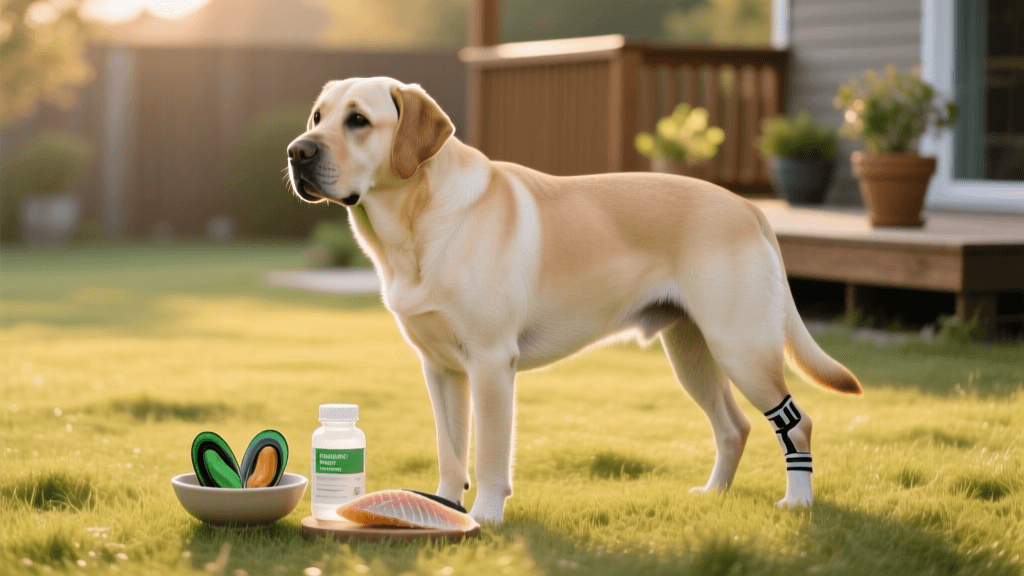
Best Joint Supplements For Large Dogs In 2026: Vet Guide
Discover the best joint supplements for large breed dogs in 2026. Compare glucosamine, green-lipped mussel, and omega-3s to support your dogs mobility.
Navigating Canine Joint Health in 2026
Sharing your life with a large breed dog—whether it is a majestic Great Dane, an active German Shepherd, or a gentle Golden Retriever—brings immense joy, but it also comes with unique health responsibilities. As our canine companions age, the wear and tear on their weight-bearing joints becomes increasingly apparent. In 2026, the veterinary and pet nutrition communities have made significant strides in managing canine osteoarthritis (OA) and joint degradation. The market is now flooded with advanced formulations that go far beyond the basic glucosamine chews of the past decade. Today, we are looking at highly bioavailable, multi-modal joint supplements designed specifically for the heavy frames and high activity levels of large breed dogs.
If you are noticing your dog hesitating before jumping into the SUV, exhibiting stiffness after a long nap, or lagging behind on your daily walks, it is time to evaluate their joint support regimen. This comprehensive guide breaks down the science of modern joint supplements, compares the leading ingredient profiles available this year, and provides actionable advice on integrating these supplements into your dog's daily routine for maximum efficacy.
The Science of Joint Degeneration in Large Breeds
Large and giant breed dogs are genetically and biomechanically predisposed to joint issues. The sheer physics of moving a 70-to-150-pound body places exponential stress on articular cartilage, the smooth tissue that cushions the ends of bones within a joint. Over time, this cartilage can fray and thin, leading to bone-on-bone friction, inflammation, and the painful condition known as osteoarthritis. According to the American Kennel Club, osteoarthritis is a progressive, degenerative joint disease that affects a significant percentage of senior large-breed dogs, making early intervention absolutely critical.
Modern veterinary science emphasizes that joint care should not merely be reactive; it must be proactive. The goal of a high-quality joint supplement in 2026 is threefold: to provide the building blocks for cartilage repair, to lubricate the synovial fluid, and to aggressively modulate the inflammatory pathways that cause pain and further tissue destruction. Understanding the specific ingredients that achieve these goals is the first step in selecting the right product for your dog.
The 2026 Gold Standard: Key Ingredients to Look For
When reading the label of a joint supplement, the ingredient list and the guaranteed analysis are your best tools. Here are the most effective, scientifically backed ingredients dominating the premium joint care market this year:
Glucosamine Hydrochloride (HCl) and Chondroitin Sulfate
These remain the foundational building blocks of any joint supplement. Glucosamine HCl is preferred over Glucosamine Sulfate due to its higher concentration of active glucosamine and superior stability in chewable formats. Chondroitin sulfate helps inhibit the enzymes that break down cartilage while drawing water into the joint matrix, keeping the tissue spongy and resilient. For large dogs, a minimum daily maintenance dose of 1,000 mg of Glucosamine and 800 mg of Chondroitin is generally recommended by veterinary orthopedic specialists.
New Zealand Green-Lipped Mussel (Perna canaliculus)
Green-Lipped Mussel (GLM) has become a superstar ingredient in premium 2026 formulations. Unlike standard marine oils, GLM contains a unique omega-3 fatty acid called eicosatetraenoic acid (ETA). ETA is a potent anti-inflammatory that works differently than standard EPA and DHA, specifically targeting the enzymes responsible for joint inflammation without suppressing the dog's overall immune response. Furthermore, GLM naturally contains a complex matrix of glycosaminoglycans (GAGs), amino acids, and minerals that support connective tissue health.
Advanced Curcumin and Boswellia Serrata
Inflammation is the primary driver of joint pain. While NSAIDs (non-steroidal anti-inflammatory drugs) are prescribed for acute flare-ups, long-term daily management requires natural alternatives. Curcumin (the active compound in turmeric) and Boswellia resin are powerful botanical anti-inflammatories. The challenge with curcumin has always been poor bioavailability. However, 2026 formulations utilize phytosome technology—binding curcumin to phospholipids—increasing absorption rates by up to 30 times compared to standard turmeric powder.
Omega-3 Fatty Acids (EPA and DHA)
High concentrations of EPA (eicosapentaenoic acid) and DHA (docosahexaenoic acid) derived from wild-caught fish oil or microalgae are essential for lubricating joints and reducing systemic inflammation. Look for supplements that explicitly list the EPA and DHA milligram counts, rather than just stating 'fish oil' on the label.
Comparison Chart: Top Joint Support Profiles for Large Dogs
To help you navigate the options, we have analyzed the leading joint supplement profiles available in 2026. Note that prices are estimated monthly costs for a 75-pound dog based on current retail averages.
| Supplement Profile Type | Key Active Ingredients | Format | Best For | Est. Monthly Cost |
|---|---|---|---|---|
| Clinical-Grade Advanced (e.g., Dasuquin Advanced profile) | Glucosamine HCl, Chondroitin, ASU, Boswellia, Hyaluronic Acid | Soft Chew / Capsule | Severe OA, post-surgery recovery, giant breeds | $65 - $85 |
| Whole-Food Marine Blend (e.g., GlycoFlex Plus profile) | Green-Lipped Mussel, MSM, Glucosamine, Manganese | Soft Chew | Active working dogs, early-stage stiffness, athletic breeds | $45 - $60 |
| Broad-Spectrum Daily Support (e.g., Cosequin DS profile) | Glucosamine HCl, Chondroitin Sulfate, MSM | Capsule / Chew | Maintenance for aging large breeds, budget-conscious owners | $30 - $45 |
| Liquid Omega & Botanical (e.g., Premium Fish Oil + Curcumin) | High-EPA Fish Oil, Phytosome Curcumin, Vitamin E | Liquid Pump | Dogs with pill aversion, concurrent skin and joint issues | $40 - $55 |
When selecting a brand, always look for the National Animal Supplement Council (NASC) Quality Seal. This seal indicates that the manufacturer undergoes rigorous third-party auditing, ensuring that the ingredients listed on the label are actually present in the bottle in the stated amounts, and that the product is free from heavy metals and harmful contaminants.
Optimizing Absorption and Daily Routines
Buying the right supplement is only half the battle; how you administer it dictates its success. Joint supplements are not fast-acting painkillers; they are structural supports that require time to accumulate in the body's tissues.
The Loading Phase
Almost all high-quality joint supplements require a 'loading dose' for the first 4 to 6 weeks. This typically means giving your dog double the standard maintenance dose. This initial saturation period is crucial for flooding the joint environment with the necessary building blocks to initiate cartilage repair and synovial fluid thickening. Do not skip the loading phase, or you may incorrectly conclude that the supplement is ineffective.
Timing and Fat-Soluble Absorption
Many of the most potent anti-inflammatory ingredients—specifically Omega-3s, Curcumin, and the ETA found in Green-Lipped Mussel—are fat-soluble. This means they require dietary fat to be properly absorbed through the intestinal wall. Always administer these supplements with your dog's largest meal of the day. If you feed a low-fat kibble, consider adding a teaspoon of high-quality, dog-safe olive oil or a pump of pure salmon oil to the bowl to ensure maximum bioavailability.
Environmental and Lifestyle Synergies
Supplements work best when paired with environmental modifications and lifestyle management. According to veterinary experts at Texas A&M University, managing the physical environment is just as important as medical and nutritional interventions for dogs with joint disease.
Weight Management: The Ultimate Joint Saver
No supplement on the market can outwork the damage caused by excess body weight. Every extra pound your dog carries places four pounds of additional pressure on their joints. Keeping your large breed dog at a lean, athletic body condition score (where ribs are easily felt but not prominently seen) is the single most effective way to slow the progression of osteoarthritis. Use a digital kitchen scale to measure their daily food intake, and factor the calories from their joint supplement chews into their daily limit.
Home Modifications for Large Breeds
Adapting your home can drastically reduce daily joint strain. Invest in an orthopedic dog bed featuring high-density memory foam (at least 4 inches thick with a density of 4 lbs per cubic foot) to prevent pressure sores and support heavy joints during sleep. Furthermore, eliminate the need for your dog to jump into vehicles or onto high furniture. A sturdy, wide ramp with a high-traction surface and a gentle incline (ideally less than 20 degrees) will protect their hips and spine from explosive, high-impact movements that can trigger acute OA flare-ups.
Conclusion
Managing joint health in large breed dogs requires a proactive, multi-faceted approach. By understanding the advanced ingredient profiles available in 2026—such as bioavailable curcumin, ETA-rich Green-Lipped Mussel, and clinical-grade glucosamine—you can make informed decisions that significantly enhance your dog's quality of life. Combine a high-quality, NASC-certified supplement with strict weight management and thoughtful home modifications, and you will give your gentle giant the gift of pain-free mobility for years to come. Always consult with your primary veterinarian before starting any new supplement regimen, especially if your dog is currently taking prescription NSAIDs or other medications.
tom-renshaw
All our authors care for dogs every day — read more of their work on the authors page.