2026 Joint Care Guide for Mobility Service Dogs: Top Supplements
Discover the best 2026 joint supplements, orthopedic gear, and daily routines to protect your mobility service dog's hips and knees from injury.
The Unique Biomechanical Demands on Mobility Service Dogs
Mobility service dogs perform extraordinary, life-changing tasks for their handlers, ranging from bracing for balance to pulling wheelchairs and retrieving heavy objects. However, these critical duties place immense, unnatural biomechanical stress on a dog's skeletal and muscular systems. As we navigate 2026, veterinary sports medicine and canine rehabilitation have advanced significantly, offering handlers and trainers better tools to preserve the working lifespan of these vital partners. Unlike typical companion animals, a mobility dog must often support a portion of a human's body weight, which can lead to accelerated wear and tear on the carpal joints, shoulders, hips, and stifles (knees).
According to the Cornell University College of Veterinary Medicine, early intervention and consistent joint support are paramount in delaying the onset of canine osteoarthritis. For a working mobility dog, joint care is not merely a senior concern; it is an active, daily occupational health requirement that must begin the moment the dog enters formal harness training.
Top Joint Supplement Profiles for Working Dogs in 2026
The canine supplement market in 2026 is heavily regulated and scientifically rigorous, moving away from basic glucosamine powders toward multi-modal joint support matrices. When selecting a supplement for a mobility service dog, veterinarians recommend looking for synergistic ingredients that address both cartilage degradation and synovial inflammation.
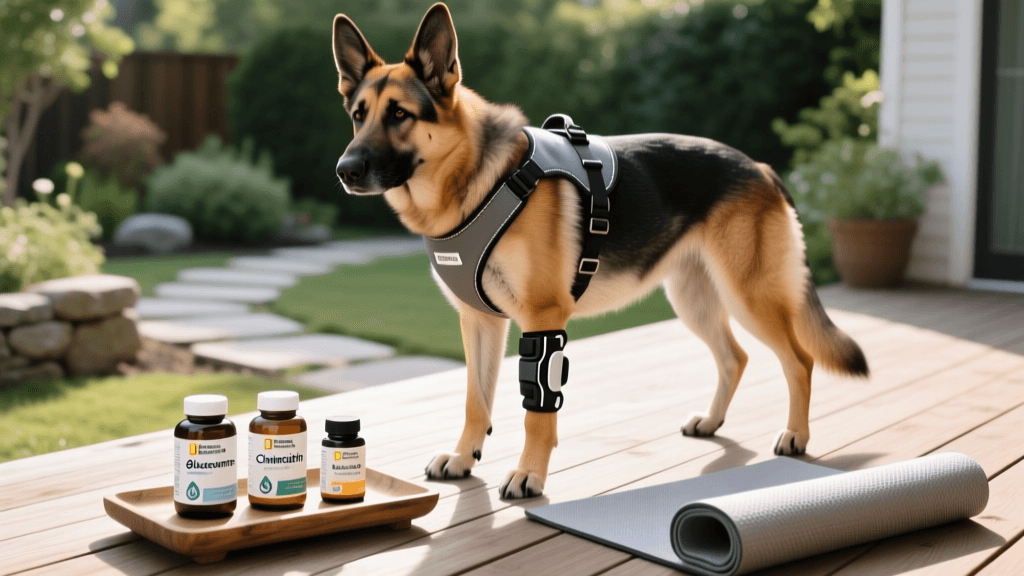
- Glucosamine HCl & Chondroitin Sulfate: The foundational building blocks for glycosaminoglycans, essential for cartilage repair.
- ASU (Avocado Soybean Unsaponifiables): A plant-derived extract that has been shown to inhibit cartilage breakdown and reduce the need for NSAIDs.
- Omega-3 Fatty Acids (EPA/DHA): Crucial for modulating joint inflammation. In 2026, high-concentration, triglyceride-form fish oils or microalgae-derived DHA are preferred for their superior bioavailability.
- Green Lipped Mussel (Perna canaliculus): A natural source of ETA (eicosatetraenoic acid), which uniquely blocks the inflammatory pathways associated with joint degradation.
- Undenatured Type II Collagen (UC-II): Works via oral tolerance to prevent the immune system from attacking joint cartilage, a common issue in high-stress working joints.
The American Kennel Club's veterinary experts emphasize that consistency is more important than megadosing. Daily administration of a well-formulated, multi-ingredient supplement yields far better synovial fluid viscosity than intermittent, high-dose therapies.
2026 Joint Supplement Category Comparison
The following table outlines the three primary categories of joint supplements available in 2026, helping handlers match the product to their dog's specific occupational demands and life stage.
| Supplement Category | Key Active Ingredients | Best Use Case for Mobility Dogs | Estimated Monthly Cost (2026) |
|---|---|---|---|
| Veterinary Prescription Matrix | High-dose ASU, UC-II, Boswellia, Prescription Omega-3s | Dogs currently showing mild-to-moderate lameness or those over 7 years old in active harness work. | $85 - $120 |
| Premium Over-the-Counter | Glucosamine HCl, MSM, Green Lipped Mussel, Standard EPA/DHA | Young adult dogs (2-5 years) in peak working condition requiring preventative cartilage support. | $45 - $70 |
| Whole-Food / Preventative | Bone broth concentrates, natural collagen peptides, turmeric extract | Dogs in light-duty training, off-duty decompression periods, or as an adjunct to prescription diets. | $30 - $50 |
Essential Orthopedic Gear and Environmental Modifications
Supplements alone cannot counteract the physical toll of a poor recovery environment. In 2026, the standard for mobility service dog rest areas requires specialized orthopedic bedding. Standard pet beds compress under the weight of large-breed working dogs (such as Labrador Retrievers, Golden Retrievers, and German Shepherds), allowing painful pressure points to form on the hocks and elbows.
Handlers must invest in high-density, medical-grade memory foam beds with a minimum thickness of 4 inches. Many top-tier 2026 models now incorporate phase-change cooling gel layers, which are critical for preventing localized heat buildup in inflamed joints after a long day of bracing work. Furthermore, environmental modifications in the handler's home are non-negotiable. Ramps used for vehicle loading must maintain an incline of no more than 18 to 20 degrees to prevent excessive carpal hyperextension, and all ramp surfaces must feature high-traction, rubberized treads rather than standard sandpaper grip tape, which can cause pad abrasions.
Daily Decompression and Physical Therapy Routines
A working mobility dog requires a structured 'cool-down' protocol immediately following harness work. The UC Davis Veterinary Medical Teaching Hospital rehabilitation guidelines highlight the importance of active recovery in flushing lactic acid and maintaining joint mobility.
Post-Work Decompression Protocol
- Active Cool-Down (10 Minutes): A slow, leash-guided walk on a flat, forgiving surface (like grass or rubberized track) to gradually lower the heart rate and prevent muscle stiffening.
- Targeted Cold Therapy (5 Minutes): Application of flexible, gel-based cold packs to the shoulders and hips if the dog has performed heavy bracing or pulling tasks. Never apply ice directly to the skin; use a neoprene sleeve.
- Passive Range of Motion (PROM): Gently cycling the dog's major joints through their natural range of motion while they are in a lateral recumbent (lying on their side) position. This stimulates synovial fluid production without bearing weight.
- Proprioception Exercises: Having the dog stand on an inflatable balance disc or peanut for 3-5 minutes. This engages the deep stabilizing muscles around the joints, which is vital for preventing workplace injuries.
Handler Education: Recognizing Early Signs of Joint Fatigue
Because service dogs are bred and trained to possess a high 'willingness to please' and an exceptional pain tolerance, they will rarely vocalize discomfort until a joint issue has become severe. It is the handler's responsibility to monitor for micro-changes in biomechanics. Early warning signs of joint fatigue in a mobility dog include:
- Reluctance to Brace: The dog may shift its weight backward or step out of position when asked to perform a stationary brace.
- Asymmetrical Gait: A slight 'bunny hopping' gait in the hindquarters, or a shortened stride length in one of the front limbs.
- Increased Panting: Panting during low-exertion tasks or in cool environments can be a primary indicator of hidden orthopedic pain.
- Post-Work Stiffness: Difficulty rising from a resting position after a period of inactivity, often improving after the dog 'warms up' with movement.
"The longevity of a mobility service dog is directly tied to the handler's ability to act as a proactive advocate for their dog's physical health. In 2026, we have the veterinary science and the ergonomic equipment to keep these dogs working pain-free well into their senior years, but it requires vigilant, daily management."
Conclusion: Investing in Your Partner's Longevity
A mobility service dog is a dedicated partner that sacrifices its own physical comfort to grant independence to its handler. By implementing a rigorous 2026-standard joint care protocol—combining premium multi-modal supplements, ergonomic resting environments, and daily physical therapy routines—handlers can significantly extend their dog's working career and ensure a high quality of life long after the harness is retired. Always consult with a board-certified veterinary sports medicine specialist to tailor a joint health protocol to your specific dog's weight, breed, and daily occupational demands.
robin-maitland
All our authors care for dogs every day — read more of their work on the authors page.