How To Introduce A New Puppy To Your Resident Dog Safely
Learn how to safely introduce a new puppy to your resident dog. Discover expert tips on socialization, feeding schedules, and preventing resource guarding.

Preparing Your Multi-Dog Home for a New Puppy
Bringing an 8-week-old puppy into a home with a resident adult dog is a thrilling milestone, but it requires meticulous planning to ensure a harmonious multi-pet household. Puppies are bursting with energy, lack boundaries, and are still learning canine social cues, which can quickly overwhelm an older, established dog. According to the American Kennel Club, a structured, slow introduction process is the most critical factor in preventing long-term behavioral issues and resource guarding between dogs.
Before your puppy crosses the threshold, you must establish physical boundaries. Invest in a sturdy, hardware-mounted baby gate, such as the Carlson Pet Products Walk-Thru Gate (approximately $45). Avoid pressure-mounted gates for multi-dog homes, as an excited adult dog or a determined puppy can easily dislodge them. Additionally, purchase a second crate. If your resident dog uses a 42-inch Midwest iCrate ($65), acquire a 36-inch model for the puppy. This provides both animals with a secure, private sanctuary where they can retreat without being bothered.
The 14-Day Scent and Visual Introduction Protocol
Do not allow the dogs to meet face-to-face on the first day. Instead, utilize a 14-day phased approach to build positive associations.
Phase 1: Scent Swapping (Days 1-3)
Keep the puppy isolated in a designated "puppy zone" equipped with their own bedding, water bowl, and potty pads. Swap blankets between the puppy and the resident dog every 12 hours. This allows both dogs to process each other's scent in a low-stress environment. Feed both dogs high-value treats, like freeze-dried liver, while they investigate the swapped blankets to build a positive Pavlovian response to the new scent.
Phase 2: Visual Barriers (Days 4-7)
Use the baby gate to allow the dogs to see each other without physical contact. Keep these sessions brief—no more than 10 minutes at a time. Watch the resident dog's body language closely. Stiff posture, hard staring, or raised hackles indicate stress. If you observe these signs, calmly redirect the adult dog's attention with a squeaky toy and end the session. The Humane Society of the United States emphasizes that punishing a resident dog for growling or showing discomfort can suppress warning signs and lead to sudden, unprovoked aggression later.
Phase 3: Neutral Territory Meetings (Days 8-14)
Once both dogs are relaxed at the baby gate, orchestrate a meeting on neutral territory, such as a quiet local park or a neighbor's driveway. Both dogs should be on 6-foot non-retractable leashes, handled by separate adults. Walk the dogs parallel to each other at a distance of 10 feet, gradually decreasing the distance over a 20-minute walk. Only allow them to sniff each other's hindquarters for a maximum of 3 seconds before cheerfully calling them away.
Managing Feeding Schedules and Resource Guarding
Food and high-value chews are the primary triggers for resource guarding in multi-dog homes. Puppies require frequent, smaller meals to support their rapid growth and maintain stable blood sugar levels, whereas adult dogs typically thrive on two meals a day. You must feed the dogs in completely separate areas—preferably inside their respective crates with the doors closed—to eliminate competition and anxiety.
Below is a structured feeding and management chart for a medium-to-large breed puppy (e.g., Labrador Retriever) living with an adult dog:
| Puppy Age | Meals Per Day | Portion Size (Example: 50lb Adult Target) | Resident Adult Dog Schedule |
|---|---|---|---|
| 8-12 Weeks | 4 Meals | 1/2 cup per meal (Puppy Formula) | 2 Meals (AM/PM, Separate Room) |
| 3-6 Months | 3 Meals | 3/4 cup per meal (Puppy Formula) | 2 Meals (AM/PM, Separate Room) |
| 6-12 Months | 2 Meals | 1 to 1.5 cups per meal (Transitioning to Adult) | 2 Meals (AM/PM, Separate Room) |
Note: Always consult your veterinarian for exact caloric needs based on your specific puppy's breed, metabolism, and the caloric density of your chosen food (e.g., Purina Pro Plan Large Breed Puppy, approx. $55 for a 30lb bag).
When offering long-lasting chews like bully sticks or yak cheese, never leave the dogs unattended. Pick up all bowls and chews immediately after the dogs finish to prevent the puppy from scavenging the older dog's leftovers, which can trigger a defensive reaction.
Navigating Puppy Teething Around Older Pets
Between 3 and 6 months of age, puppies will lose their baby teeth and experience intense gum discomfort. This drives them to chew relentlessly. In a multi-pet home, a teething puppy will often target the resident dog's ears, tail, or favorite toys. This is a leading cause of older dogs developing aversions to the new puppy.
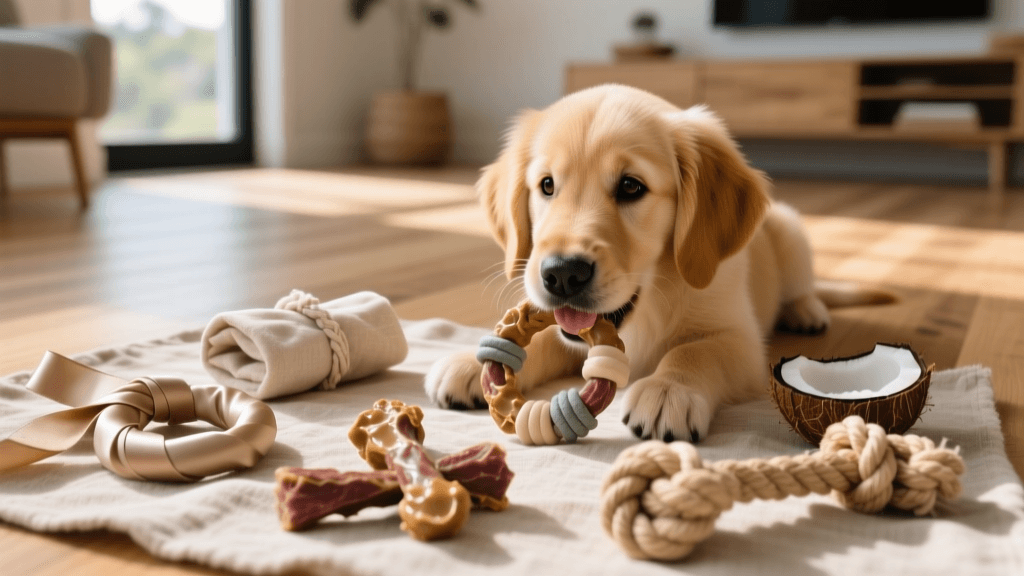
To protect your resident dog and your belongings, you must proactively manage the puppy's chewing needs. Stock up on puppy-specific teething toys, such as the KONG Puppy Teething Ring ($12) or Nylabone Puppy Chew Keys. Keep the adult dog's plush toys and expensive interactive puzzles locked in a bin that the puppy cannot access. Furthermore, invest in an enzymatic cleaner like Nature's Miracle ($10) to thoroughly eliminate any potty training accidents in shared spaces; lingering ammonia scents can trigger territorial marking from the resident dog.
Early Socialization, Play, and Rest Requirements
While socialization is vital during the puppy's first year, overstimulation is a severe risk in multi-dog households. Puppies require 18 to 20 hours of sleep per day for proper neurological and physical development. An adult dog's invitation to play can easily push a puppy past its exhaustion threshold, resulting in cranky, nippy behavior.
Implement the "15-Minute Rule" for supervised play. Allow the dogs to wrestle and chase for a maximum of 15 minutes, then gently separate them. Guide the puppy to their crate for a mandatory nap with a frozen, peanut-butter-stuffed toy to soothe their teething gums. According to the American Veterinary Medical Association, ensuring puppies receive adequate, uninterrupted rest is just as critical to their behavioral development as active socialization and training.
By enforcing strict boundaries, managing feeding resources meticulously, and respecting the physical limitations of both the puppy and the resident dog, you will lay a foundation of mutual respect. The first year requires immense patience, but the reward is a lifelong, peaceful bond between your canine companions.
beth-carrasco
All our authors care for dogs every day — read more of their work on the authors page.