Curing Canine Separation Anxiety: 2026 Departure Protocol
Discover the 30-day graduated departure protocol to ease your dog's separation anxiety in 2026. Includes timing charts, smart tech tips, and expert advice.
Understanding Canine Separation Anxiety in 2026
Separation anxiety remains one of the most pervasive and distressing behavioral challenges for dog owners in 2026. As hybrid work schedules and flexible remote arrangements continue to evolve, many dogs are experiencing fluctuating routines that trigger intense panic when left alone. Unlike simple boredom or isolation distress, true separation anxiety is a clinical panic disorder. Dogs suffering from this condition experience a profound psychological crisis the moment they realize their primary attachment figure is leaving or has left.
According to the ASPCA's comprehensive guide on separation anxiety, symptoms often include destructive behavior directed at exit points, excessive vocalization, inappropriate elimination, and self-mutilation. Understanding the psychology behind this panic is the first step toward rehabilitation. Dogs are highly associative learners; they do not just react to your absence, they react to the subtle pre-departure cues that predict your absence.
The Psychology of Departure Cues and Trigger Stacking
Before you can implement a successful training protocol, you must understand 'trigger stacking.' This occurs when a dog observes a sequence of events that historically lead to isolation. Putting on socks, picking up keys, opening the garage door, and saying 'be a good boy' are all environmental triggers. For an anxious dog, the panic attack begins the moment you reach for your shoes, not when the front door closes.
To successfully treat separation anxiety, we must decouple these triggers from the actual event of departure. This requires a systematic, science-backed approach known as Graduated Departure Desensitization. By breaking the departure process into microscopic, non-threatening steps, we can rewire the dog's neurological response from panic to neutrality.
The 30-Day Graduated Departure Protocol
The following protocol is designed to be executed over 30 days. It requires patience, consistency, and a commitment to never pushing the dog past their threshold of panic. If your dog shows signs of stress (panting, pacing, whining, lip licking), you have moved too fast and must return to the previous successful step.
Phase 1: Neutralizing Pre-Departure Triggers (Days 1-10)
The goal of Phase 1 is to make your pre-departure routine entirely meaningless to your dog. You will perform your usual departure actions, but you will not actually leave.
- Days 1-3: Pick up your keys, jingle them, and set them back down. Do this 10 to 15 times a day while watching television or working at your desk. Your dog may initially perk up or pace, but eventually, they will realize the keys no longer predict your exit and will stop reacting.
- Days 4-6: Put on your coat and shoes. Sit on the couch and read a book for 20 minutes. Then, take the coat and shoes off. Repeat this multiple times daily.
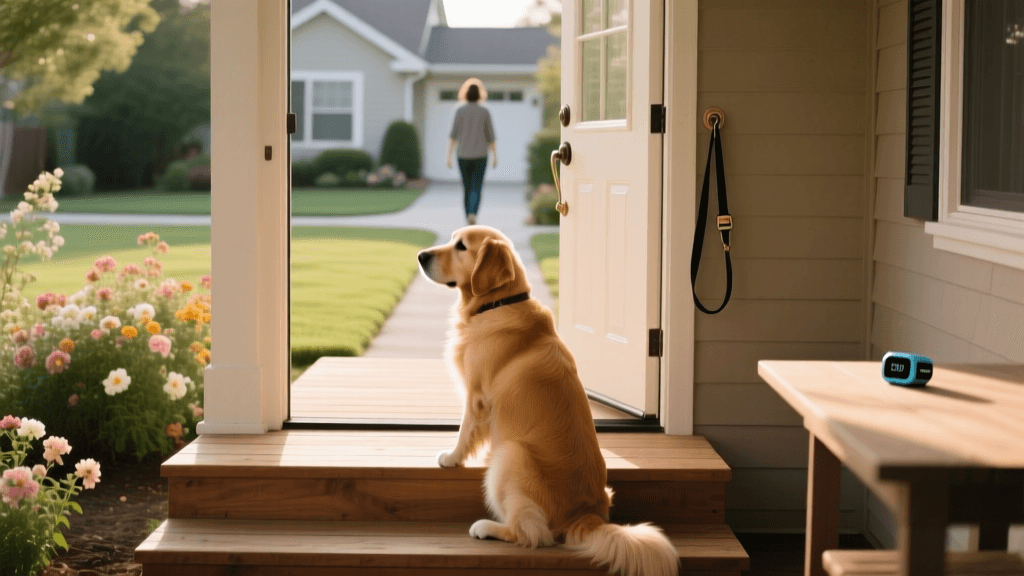
- Days 7-10: Walk to the front door, touch the handle, and walk back to the kitchen. Do not open the door. This breaks the association between the door handle and the panic of isolation.
Phase 2: Micro-Departures and Threshold Testing (Days 11-20)
Once your dog remains completely relaxed during Phase 1, you can begin Micro-Departures. This involves actually leaving the home, but for durations so short that the dog does not have time to experience anxiety. The American Kennel Club emphasizes that keeping the dog under their anxiety threshold is the most critical component of behavioral modification.
During micro-departures, do not make a fuss when leaving or returning. Ignore your dog for five minutes before you leave and five minutes after you return. This lowers the emotional contrast between your presence and absence.
Phase 3: Duration Building and Smart Tech Integration (Days 21-30)
In Phase 3, you begin to stretch the time you are out of the house. This is where modern 2026 pet technology becomes invaluable. Using a smart pet camera like the Furbo 360 or a Wyze Pet Camera allows you to monitor your dog's body language in real-time from your smartphone. If you notice pacing or panting at the three-minute mark, you know your dog's current threshold is roughly two minutes, and you must adjust your training accordingly.
Micro-Departure Timing Chart
Use the following structured chart to guide your micro-departures during Phase 2 and Phase 3. Always ensure your dog is calm before increasing the duration.
| Day Range | Target Action | Duration Outside | Success Metric |
|---|---|---|---|
| Days 11-12 | Step out and close door | 3 to 5 seconds | Dog remains seated or standing calmly |
| Days 13-14 | Step out, lock door, unlock | 10 to 15 seconds | No whining or scratching at the door |
| Days 15-17 | Walk to the end of the driveway | 30 to 45 seconds | Heart rate remains normal (via smart collar) |
| Days 18-20 | Drive around the block | 1 to 2 minutes | Dog settles onto their designated mat |
| Days 21-25 | Run a quick local errand | 5 to 10 minutes | No destructive behavior or elimination |
| Days 26-30 | Short walk or coffee run | 15 to 30 minutes | Dog is resting or sleeping upon return |
Environmental Enrichment and Biological Support
While desensitization addresses the root psychological triggers, providing environmental enrichment and biological support can significantly lower your dog's baseline anxiety levels.
Long-Lasting Enrichment Tools
Anxious dogs cannot engage with food puzzles if their sympathetic nervous system is in 'fight or flight' mode. Therefore, enrichment must be introduced only when the dog is under their anxiety threshold. The LickiMat Soother, smeared with plain pumpkin puree or low-sodium bone broth and frozen overnight, provides repetitive licking behavior which has been scientifically shown to release endorphins and soothe the canine nervous system. Scatter feeding in a snuffle mat can also encourage natural foraging instincts, promoting mental fatigue.
Pheromones and Calming Supplements
Synthetic pheromones, such as the Adaptil Calm Home Diffuser, mimic the dog-appeasing pheromone (DAP) produced by nursing mothers. Plugging this diffuser into the room where your dog rests can create a baseline of environmental security. Additionally, veterinary-recommended nutraceuticals containing L-theanine, L-tryptophan, or milk-derived bioactive peptides (like Zylkene) can help modulate neurotransmitters associated with stress.
What to Avoid: Common Mistakes in 2026
When dealing with the destruction and noise caused by separation anxiety, frustration is natural. However, certain common reactions will actively worsen the condition.
Warning: Punishing a dog for anxiety-driven destruction only increases their overall stress levels. The dog does not understand they are being punished for chewing the doorframe; they only learn that your return is unpredictable and potentially dangerous, which heightens their panic the next time you leave.
- Do not crate an anxious dog: Unless your dog has been meticulously crate-trained and views the crate as a safe haven, confining a panicking dog will result in severe injuries to their teeth and nails as they attempt to escape.
- Do not get a second dog: Most dogs with separation anxiety are hyper-attached to their specific human caregiver, not just suffering from general loneliness. Introducing a second dog often results in two anxious dogs rather than one calm one.
- Do not rely solely on 'cry-it-out' methods: Ignoring a dog in a state of clinical panic will not teach them independence; it will only lead to learned helplessness and a severe deterioration of their mental health.
When to Seek Professional Veterinary Behaviorists
If your dog is injuring themselves, escaping through windows, or if you have diligently followed the 30-day graduated departure protocol without seeing a reduction in panic, it is time to consult a board-certified veterinary behaviorist. In severe cases, behavioral modification must be paired with psychopharmacological interventions. Medications such as fluoxetine (Prozac) or clomipramine alter serotonin and norepinephrine levels in the brain, effectively lowering the dog's panic threshold enough for the desensitization training to actually take hold.
Treating separation anxiety is a marathon, not a sprint. By combining the 2026 graduated departure protocol with smart monitoring technology and compassionate biological support, you can help your canine companion find peace, even when you are not in the room.
anouk-beaumont
All our authors care for dogs every day — read more of their work on the authors page.