2026 Separation Anxiety Protocol: Smart Cameras & Puzzles
Discover our 2026 step-by-step separation anxiety protocol using the Furbo 3 camera and interactive puzzle feeders to build your dog's alone-time confidence.
Overcoming Canine Separation Anxiety in the 2026 Hybrid Era
As remote and hybrid work models continue to evolve in 2026, millions of dog owners are facing a persistent and heartbreaking challenge: canine separation anxiety. While the initial wave of post-pandemic adoptions has stabilized, the behavioral conditioning of dogs who were raised with constant human presence remains a significant hurdle. Separation anxiety is not merely a case of a dog missing its owner; it is a profound state of panic that can lead to destructive behavior, excessive vocalization, and even self-injury.
According to the ASPCA, separation anxiety is triggered when a dog becomes upset because of separation from the people they are attached to. Traditional training methods often fall short if they do not incorporate modern behavioral science and real-time monitoring. Fortunately, the integration of 2026 smart home technology—specifically AI-enhanced pet cameras and advanced cognitive puzzle feeders—has revolutionized how we approach alone-time training.
In this comprehensive guide, we will walk you through a structured, 30-day departure desensitization protocol. By leveraging the latest iteration of the Furbo 3 Dog Camera alongside targeted cognitive enrichment, you can systematically rebuild your dog's confidence and turn alone time into a positive, stress-free experience.
The 2026 Tech Stack for Alone-Time Training
To successfully execute this protocol, you need the right tools. Guessing your dog's stress levels based on the state of your living room when you return is an outdated approach. In 2026, real-time data and remote intervention are the gold standards for behavioral conditioning.
1. Furbo 3 Dog Camera (2026 Edition)
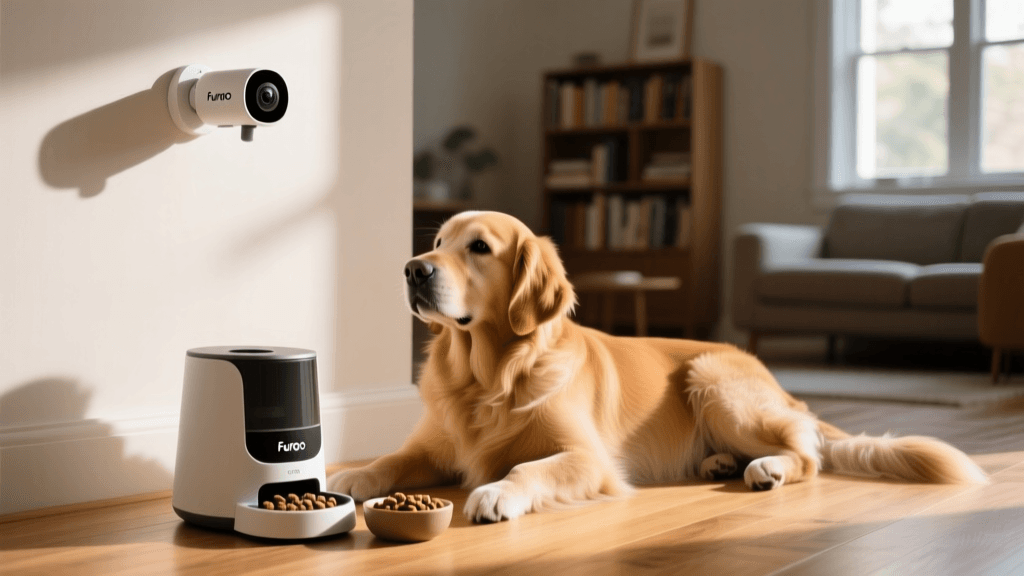
The Furbo 3 remains the premier choice for separation anxiety training due to its specialized canine-focused AI. The 2026 edition features enhanced 'Doggie Daycare' livestreaming, auto-treat tossing based on calm behavior recognition, and highly sensitive distress sound alerts (crying and howling). This allows you to monitor your dog's exact threshold of anxiety and intervene before a full-blown panic attack occurs.
2. Outward Hound Nina Ottosson Dog Brick Puzzle
Cognitive fatigue is just as effective as physical exercise in promoting relaxation. The Dog Brick puzzle requires your dog to use their nose and paws to uncover hidden treats. When paired with high-value, dog-safe spreads (like unsalted peanut butter or plain Greek yogurt) and frozen, it provides a long-lasting distraction that creates a positive association with your departure.
3. Adaptil Calm Smart Diffuser
Pheromone therapy remains a highly recommended adjunct treatment. The Adaptil Smart Diffuser connects to your home network, allowing you to monitor usage and ensure the synthetic dog-appeasing pheromones are actively creating a biologically soothing environment in your dog's primary resting space.
The 30-Day Departure Desensitization Protocol
This protocol is designed to systematically desensitize your dog to the triggers that predict your departure, while simultaneously counter-conditioning them to enjoy the time they spend alone. The American Kennel Club emphasizes that patience and consistency are paramount; never rush the timeline if your dog is showing signs of distress.
Phase 1: Decoupling Pre-Departure Cues (Days 1-7)
Dogs are masters of pattern recognition. Picking up your keys, putting on your shoes, and grabbing your coat are all 'pre-departure cues' that can trigger an immediate spike in your dog's cortisol levels. During Week 1, your goal is to strip these actions of their meaning.
- Action: Pick up your keys, then sit down on the couch and watch TV.
- Action: Put on your shoes, then make a cup of coffee and take them off.
- Action: Open the front door, close it, and walk to the kitchen.
- Frequency: Perform 10-15 randomized cue sessions per day. Do not actually leave the house during this phase.
Phase 2: Micro-Departures and AI Monitoring (Days 8-14)
Now we introduce actual departures, but at a micro-level. Set up your Furbo 3 camera to monitor your dog's primary resting area. Ensure your phone notifications are enabled for bark and distress alerts.
- Step 1: Give your dog a high-value chew (e.g., a Yak cheese stick).
- Step 2: Walk out the front door, close it, and immediately walk back in (1 to 3 seconds total).
- Step 3: Ignore your dog upon re-entry. Wait until they are completely calm before offering quiet praise.
- Progression: Gradually increase the time outside to 10 seconds, then 30 seconds, then 1 minute. If the Furbo alerts you to whining or pacing, you have pushed too far too fast. Return to a shorter duration the next day.
Phase 3: Cognitive Distraction with Puzzle Feeders (Days 15-21)
With your dog now tolerating micro-departures, it is time to introduce the Nina Ottosson Dog Brick puzzle to build duration and positive associations.
- Preparation: Freeze the puzzle with a mix of wet food and low-sodium broth 12 hours in advance.
- Departure: Present the frozen puzzle 5 minutes before you plan to leave. This engages their parasympathetic nervous system (rest and digest) through licking and foraging.
- Execution: Leave the house for 5 to 10 minutes. Use the Furbo app to observe. The goal is for the dog to be so engrossed in the puzzle that they barely register your exit.
- Return:Return quietly. Pick up the puzzle (even if not finished) to maintain its high value.
Phase 4: Real-World Duration Building (Days 22-30)
During the final phase, you will begin to simulate real-world absences. Vary your departure times and routines so the dog cannot predict the exact duration of your absence.
- Day 22-24: 15 to 20-minute absences. Incorporate a short walk before leaving to lower baseline energy.
- Day 25-27: 30 to 45-minute absences. Utilize the Furbo's auto-toss feature to dispense a treat if the camera's AI detects your dog resting calmly on their mat.
- Day 28-30: 1 to 2-hour absences. Continue to provide safe, long-lasting enrichment toys.
2026 Smart Camera Comparison for Anxiety Training
Choosing the right camera is critical for monitoring stress signals without being physically present. Below is a comparison of the top pet cameras available in 2026, evaluated specifically for separation anxiety training utility.
| Camera Model (2026) | Treat Tossing Capability | AI Distress & Bark Alerts | Two-Way Audio | Approx. Price |
|---|---|---|---|---|
| Furbo 3 (2026 Edition) | Yes (Manual & Auto-Reward) | Yes (Advanced Canine AI) | Yes (HD) | $219 |
| Petcube Bites 2 Lite | Yes (Manual Only) | Yes (Sound Detection) | Yes (HD) | $149 |
| Wyze Cam Pan v3 | No | Yes (General Pet Motion) | Yes (Standard) | $59 |
Note: While the Wyze Cam is an excellent budget option for general monitoring, the lack of a treat-tossing mechanism makes it less ideal for active counter-conditioning during the desensitization protocol. The Furbo 3's ability to auto-toss treats for calm behavior is a game-changer for solo training sessions.
Critical Mistakes to Avoid
Even with the best technology and a structured plan, owners frequently undermine their own progress by falling into common behavioral traps. Avoid these critical errors:
- Making a Fuss at Departures and Arrivals: Emotional goodbyes and overly enthusiastic greetings validate the dog's belief that your absence is a major event. Keep departures boring and arrivals completely neutral until the dog is calm.
- Using Punishment: Scolding a dog for destructive behavior or accidents upon your return is entirely counterproductive. The dog cannot connect your anger with the panic they experienced hours ago; they will only learn to fear your return, exacerbating the anxiety loop.
- Rushing the Threshold: If your dog can handle 5 minutes but panics at 10 minutes, do not repeatedly test the 10-minute mark. Drop back to 3 minutes, build success, and increase the duration in micro-increments (e.g., 30-second intervals).
- Over-Reliance on Technology: The Furbo camera is a monitoring and reinforcement tool, not a substitute for physical exercise and mental enrichment. A dog with pent-up physical energy will have a much lower threshold for anxiety.
When to Consult a Veterinary Behaviorist
It is vital to recognize the difference between mild isolation distress and severe clinical separation anxiety. If your dog is engaging in severe self-mutilation (e.g., chewing through their own skin to escape a crate), refusing to eat high-value treats when left alone, or exhibiting panic behaviors that do not improve after 30 days of consistent desensitization, you must seek professional help.
In 2026, the standard of care for severe cases involves a combination of behavioral modification and psychopharmacological intervention. A board-certified veterinary behaviorist can prescribe medications such as fluoxetine or clomipramine, which lower the dog's baseline anxiety enough to allow the training protocols to actually take root in the brain. Medication is not a failure of training; it is a necessary bridge for dogs whose neurochemistry prevents them from learning in a state of sheer terror.
Conclusion
Curing separation anxiety is a marathon, not a sprint. By combining the structured, science-backed desensitization protocol outlined above with the real-time monitoring capabilities of modern smart cameras like the Furbo 3, you are giving your dog the best possible chance at overcoming their fear. Remember to celebrate the micro-victories, respect your dog's emotional thresholds, and leverage cognitive puzzles to transform alone time from a source of panic into a period of peaceful, rewarding rest.
aaron-whyte
All our authors care for dogs every day — read more of their work on the authors page.