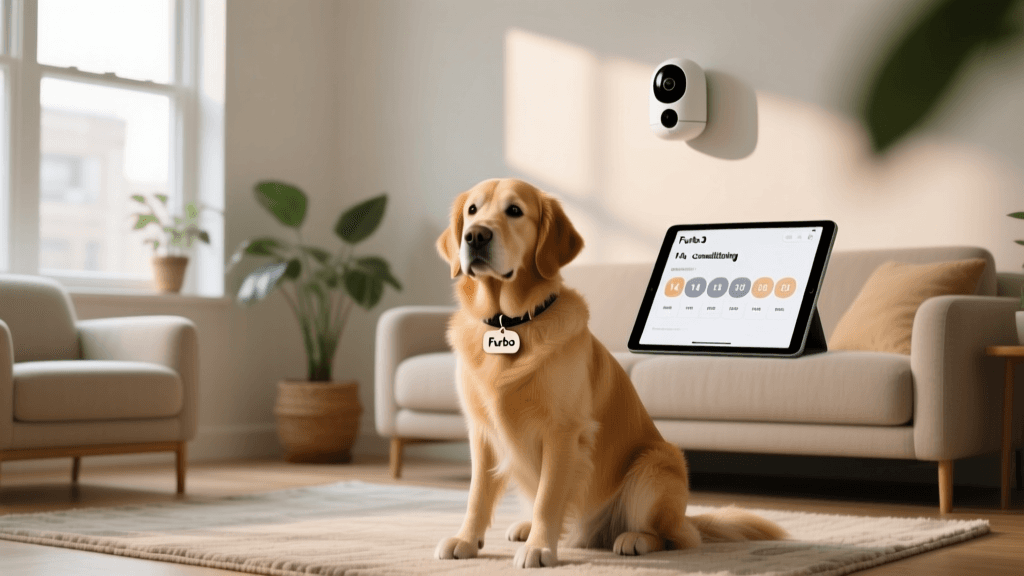
Overcoming Departure Cue Anxiety Using Furbo 3 In 2026
Learn how to countercondition your dog's departure cue anxiety in 2026 using the Furbo 3 camera, behavioral science, and a structured 14-day protocol.
Understanding the Psychology of Departure Cues
For dogs suffering from separation anxiety, the actual moment you walk out the front door is rarely the initial trigger for their panic. Instead, the anxiety cascade begins much earlier, sparked by a sequence of seemingly mundane actions known as departure cues. Picking up your car keys, putting on your work shoes, grabbing your coat, or even the specific sound of your garage door opening are all environmental signals that your dog's brain has classically conditioned to predict isolation. According to the ASPCA's comprehensive guide on separation anxiety, these pre-departure rituals can cause a dog's cortisol and adrenaline levels to spike minutes or even hours before you actually leave the house.
The Neuroscience of Canine Anticipatory Anxiety
To effectively treat separation-related behaviors in 2026, we must look at the canine brain. When a dog repeatedly experiences the pattern of 'keys jingling' followed by 'owner disappearing for eight hours,' the amygdala—the brain's fear and threat-processing center—begins to associate the sound of the keys with the aversive event of isolation. This is textbook classical conditioning. The jingling keys become a conditioned stimulus that elicits a conditioned response of panic. By the time you actually step outside, your dog is already in a state of hyperarousal, making it nearly impossible for them to settle down. Understanding this psychological timeline is crucial for implementing a successful behavioral modification plan.
Why Traditional 'Fake Departures' Often Fail
Many well-meaning owners attempt to desensitize their dogs by performing 'fake departures.' They put on their shoes, pick up their keys, and then sit back down on the couch. While this is a recognized desensitization technique, it often fails in practice for two reasons. First, the dog may still experience a spike in anxiety during the cue presentation, even if you don't leave. Second, dogs are incredibly adept at pattern recognition; they quickly learn the difference between a 'fake' departure (where you stay home) and a 'real' departure (where you grab your travel mug and open the front door). Without a mechanism to actively change the dog's emotional response to the cue, mere exposure is rarely enough to rewire the anxious association.
The 2026 Tech-Integrated Approach: Leveraging the Furbo 3
This is where modern smart home technology intersects with applied animal behaviorism. In 2026, the Furbo 3 Dog Camera (retailing around $210) has evolved beyond a simple treat-tossing novelty into a legitimate tool for counterconditioning. Counterconditioning is the process of changing an animal's emotional response to a stimulus by pairing that stimulus with a high-value positive outcome. By integrating your departure cues with the Furbo 3's automated treat-dispensing and AI-driven activity tracking, you can systematically rewire your dog's brain to view your departure cues as predictors of good things, rather than predictors of abandonment.
Key Features of the Furbo 3 for Behavioral Modification
- Auto-Play & Scheduled Tossing: The 2026 firmware allows you to schedule treat tosses or trigger them via smart home routines, removing your physical presence from the reward equation.
- AI Separation Anxiety Alerts: The camera's updated AI can differentiate between a casual bark, a whine, and pacing, sending you real-time push notifications if your dog's anxiety threshold is breached during training.
- Two-Way Audio with Voice Cloning: While you should avoid using the microphone to soothe an actively panicking dog (which can reinforce the panic), the crisp audio is excellent for delivering calm, pre-recorded 'settle' cues during the early phases of desensitization.
The 14-Day Departure Cue Counterconditioning Protocol
Before beginning this protocol, ensure your dog is comfortable with the Furbo 3. Spend the first few days manually tossing treats and playing games through the camera so the device itself becomes a positive stimulus. Once your dog is happily engaging with the camera, begin the 14-day counterconditioning schedule below. The goal is to pair a low-intensity departure cue with an immediate, high-value reward delivered by the camera.
| Phase | Days | Departure Cue Action | Furbo 3 Response & Owner Action |
|---|---|---|---|
| 1: Baseline | 1-3 | Pick up car keys and hold them quietly. | Immediately trigger a treat toss via the app. Sit back down and ignore the dog until they finish eating. |
| 2: Movement | 4-7 | Pick up keys, walk to the front door, and touch the handle. | Trigger a multi-treat toss sequence. Walk away from the door and sit down. Do not open the door. |
| 3: The Threshold | 8-11 | Open the front door, step outside, and immediately close it. | Use the Furbo 3 'Auto-Toss' feature set to activate 10 seconds after the door closes. Return inside after 30 seconds. |
| 4: Short Absences | 12-14 | Complete your full morning routine and leave for 5-10 minutes. | Schedule a treat toss for 2 minutes after departure. Monitor via AI alerts. Return before anxiety escalates. |
The critical rule of this protocol is timing. The treat must be delivered immediately after the departure cue occurs. If you jingle your keys and wait two minutes before tossing a treat, the dog will not form the neurological association between the sound and the reward. The American Kennel Club emphasizes that precise timing in counterconditioning is what ultimately alters the dog's underlying emotional state, shifting them from a sympathetic nervous system response (fight or flight) to a parasympathetic state (rest and digest).
Adjunctive Support: Pheromones and Environmental Setup
Technology and training protocols are most effective when paired with a supportive environment. In 2026, veterinary behaviorists widely recommend the use of synthetic pheromones to lower a dog's baseline anxiety threshold, making them more receptive to counterconditioning. The Adaptil Optimum Diffuser utilizes a newer, enhanced pheromone complex that mimics the comforting messages a mother dog produces while nursing. Plugging this in near your dog's designated 'safe space' 48 hours before starting the Furbo 3 protocol can significantly reduce anticipatory panting and pacing.
Additionally, auditory masking is crucial. Dogs with separation anxiety often experience 'trigger stacking,' where the sound of a neighbor walking down the hall or a car door slamming outside pushes them over their anxiety threshold. Using a dedicated white noise machine, or a smart speaker playing continuous brown noise (which is deeper and better at masking low-frequency environmental sounds than white noise), can help insulate your dog from unpredictable acoustic triggers while you are away.
When to Seek Professional Veterinary Behaviorist Help
It is vital to distinguish between mild isolation distress and severe separation anxiety. If your dog is engaging in destructive behavior that results in self-injury (such as breaking teeth on window frames or tearing out drywall), excessive vocalization that results in hoarseness, or inappropriate elimination despite being fully house-trained, technology alone will not solve the problem. The Humane Society notes that severe cases of separation anxiety require a multimodal approach, often including prescription anti-anxiety medications like fluoxetine or clomipramine, alongside behavioral modification.
If your dog's panic attacks are immediate and intense the moment you pick up your keys, pause the Furbo 3 protocol and consult a board-certified veterinary behaviorist (DACVB). Medication can help lower the neurological panic response enough for your dog to actually process the counterconditioning treats. Remember, the goal of using smart cameras in behavioral modification is not to distract a panicking dog, but to proactively change how they feel about being left alone. By respecting the psychology of departure cues and leveraging 2026's advanced pet tech, you can help your dog build the confidence they need to relax in their own company.
priya-sutaria
All our authors care for dogs every day — read more of their work on the authors page.