Best No-Pull Dog Harnesses For Joint Health In 2026
Discover how front-clip no-pull harnesses affect your dog's shoulder joints and gait. Read our 2026 veterinary guide to protect your pup's orthopedic health.
The Biomechanics of Walking: Why Harness Choice Matters for Canine Health
When your dog pulls on the leash, the physical toll extends far beyond a strained arm for the owner. For the dog, improper walking equipment can lead to severe orthopedic and respiratory issues over time. In 2026, veterinary physical therapists and canine biomechanics experts are increasingly vocal about the long-term joint degradation caused by restrictive walking gear. While the shift away from traditional neck collars has been a massive win for canine respiratory health, not all harnesses are created equal when it comes to protecting your dog's shoulder joints and natural gait.
A dog's shoulder joint is unique; unlike humans, dogs do not have a collarbone attaching their front limbs to their axial skeleton. Instead, their front legs are attached entirely by a sling of muscles and ligaments. This means that any harness wrapping horizontally across the chest or restricting the scapula (shoulder blade) can severely alter their stride, leading to compensatory joint stress, early-onset arthritis, and soft tissue injuries. Choosing the right no-pull dog harness is no longer just a behavioral training decision—it is a critical component of your dog's preventive orthopedic healthcare.
The Hidden Dangers of Collars and Restrictive T-Strap Harnesses
Before diving into the best no-pull solutions, it is vital to understand why certain popular options are being phased out by veterinary professionals. Traditional flat collars and choke chains place immense pressure on the trachea and cervical spine. According to VCA Hospitals, tracheal collapse is a serious, progressive condition exacerbated by the repetitive pressure of a dog pulling against a neck collar, particularly in small and brachycephalic breeds.
To avoid neck injuries, many owners switched to standard back-clip harnesses. However, many of these early designs featured a horizontal strap across the chest (often called a T-strap or Roman-style harness). While they save the trachea, they act as a physical barrier to the dog's shoulder extension. When a dog wears a restrictive horizontal-strap harness, their stride length is artificially shortened. Over thousands of steps, this altered biomechanics forces the dog to shift their weight backward, placing undue stress on the hips, lower back, and hind limb joints.
The 2026 Standard: Y-Shaped Front-Clip Harnesses
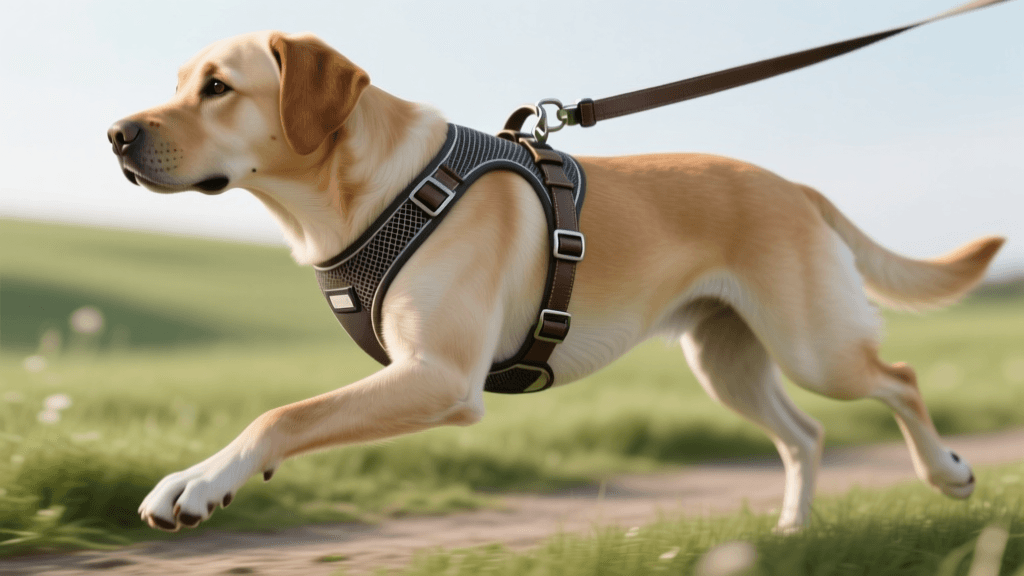
The gold standard for canine joint health in 2026 is the Y-shaped front-clip harness. The Y-shape ensures that the straps sit safely on the sternum and wrap around the ribcage, leaving the scapula entirely free to rotate and extend. The front-clip (located on the chest) provides a gentle steering mechanism. When the dog pulls, the front attachment point redirects their momentum sideways or back toward the handler, naturally discouraging pulling without applying painful pressure or restricting shoulder movement.
As noted by the American Kennel Club (AKC), front-clip harnesses are highly recommended for dogs that pull, as they offer superior control while minimizing the risk of tracheal damage and joint restriction, provided the harness is fitted correctly to avoid chafing and gait alteration.
Top 3 Joint-Safe No-Pull Harnesses for 2026
Based on current veterinary physical therapy guidelines, material durability, and biomechanical clearance, here are the top three no-pull harnesses for protecting your dog's orthopedic health this year.
| Harness Model | Strap Design | Front-Clip Hardware | Best For | Est. 2026 Price |
|---|---|---|---|---|
| Blue-9 Balance Harness | True Y-Strap (No shoulder pads) | Welded Steel O-Ring | Maximum shoulder mobility & custom fits | $48.00 |
| Ruffwear Front Range (2026 Ed.) | Padded Y-Strap | Aluminum V-Ring | Active dogs, hiking, and daily walks | $45.95 |
| Kurgo Tru-Fit Enhanced | Broad Chest Y-Plate | Reinforced Nylon Loop | Deep-chested breeds & car safety | $34.99 |
1. Blue-9 Balance Harness
The Blue-9 Balance remains the undisputed favorite among canine rehabilitation specialists. Its minimalist, true Y-shaped design offers zero interference with the scapula. It features five points of adjustment, allowing for a highly customized fit that prevents the armpit chafing common in barrel-chested breeds like French Bulldogs or Greyhounds. The 2026 hardware updates include lighter, rust-proof welded steel rings that reduce the overall weight burden on smaller dogs.
2. Ruffwear Front Range (2026 Edition)
For owners who transition from urban sidewalks to rugged trails, the 2026 iteration of the Ruffwear Front Range offers a slightly padded Y-strap that distributes pressure evenly across the sternum during sudden lunges. The aluminum V-ring on the chest is angled slightly downward to align naturally with the dog's sternum, preventing the harness from twisting into the armpit when the dog pulls. Its closed-cell foam padding is highly resistant to moisture, preventing the bacterial skin infections that can occur under damp harness straps.
3. Kurgo Tru-Fit Enhanced Strength
The Kurgo Tru-Fit utilizes a broader, vest-like Y-plate on the chest. This is particularly beneficial for deep-chested breeds (like German Shepherds or Dobermans) that require more surface area to distribute the kinetic force of a sudden pull. Furthermore, it doubles as a crash-tested car harness, making it a versatile investment for holistic safety.
Step-by-Step Fitting Guide to Protect Shoulder Joints
Even the most biomechanically sound harness will cause joint and soft-tissue issues if fitted improperly. A harness that is too loose will shift and chafe the axillary (armpit) region, while a harness that is too tight will restrict ribcage expansion and shoulder extension. Follow this 2026 veterinary fitting protocol:
- The Scapula Check: Run your fingers along your dog's shoulder blade while they are standing. The strap of the harness must sit at least one inch behind the posterior edge of the scapula. If the strap rests on the shoulder blade, the harness is too tight or the wrong size.
- The Two-Finger Rule: You should be able to comfortably slide two flat fingers under the girth strap behind the front legs. This ensures the ribcage can fully expand during heavy panting and aerobic exercise.
- The Armpit Clearance: Check the skin in the armpit after a 20-minute walk. Any redness or hair loss indicates that the straps are cutting into the brachial plexus nerves or causing friction burns. Adjust the neck strap to pull the girth strap further back, away from the delicate armpit tissue.
- The Sternum Alignment: Ensure the front-clip ring sits directly on the center of the sternum (breastbone), not off to one side or up on the soft throat tissue.
Behavioral Wellbeing: Reducing Leash Frustration
Orthopedic health is deeply intertwined with mental wellbeing. Dogs that constantly pull often experience "leash frustration" or barrier reactivity, which spikes cortisol levels and creates a negative feedback loop during walks. The ASPCA emphasizes that using the right equipment, combined with positive reinforcement, is key to making walks an enriching experience rather than a stressful battle of strength.
When you use a front-clip Y-harness, the physical redirection naturally breaks the dog's forward momentum without causing pain or fear. This momentary pause gives the handler a window of opportunity to reward the dog for re-engaging and offering a loose leash. Over time, the dog learns that maintaining a loose leash allows them to move forward and explore, while pulling results in a gentle, painless turn back toward the handler. This reduces chronic stress, lowers baseline anxiety during outdoor excursions, and promotes a healthier, more harmonious bond between dog and owner.
Final Thoughts on Canine Orthopedic Longevity
Investing in a high-quality, Y-shaped front-clip no-pull harness is one of the most cost-effective preventive health measures you can take for your dog in 2026. By prioritizing unrestricted scapular movement, protecting the trachea, and utilizing humane behavioral redirection, you are safeguarding your dog's joints for thousands of miles of happy, pain-free walking. Always consult with a certified canine rehabilitation therapist or your primary veterinarian if your dog exhibits a persistent limp, gait asymmetry, or reluctance to walk, as these may be signs of underlying orthopedic issues requiring medical intervention beyond equipment changes.
hannah-wickes
All our authors care for dogs every day — read more of their work on the authors page.