Best Front-Clip No-Pull Dog Harnesses For 2026 Reviewed
Discover the best front-clip no-pull dog harnesses for 2026. Learn how to stop leash pulling and enjoy peaceful urban walks with your reactive dog.
The Urban Walking Revolution: Why Front-Clip Harnesses Dominate in 2026
Walking a strong, reactive, or highly enthusiastic dog in a bustling city environment can often feel like an extreme sport. As we navigate the busy sidewalks, crowded parks, and unpredictable urban wildlife of 2026, having the right walking equipment is no longer just a luxury—it is an absolute necessity for both your physical safety and your dog's behavioral well-being. For years, the traditional back-clip harness was the default choice for pet owners wanting to avoid the tracheal damage associated with flat collars. However, veterinary behaviorists have long noted that back-clip harnesses often encourage a sled-dog mentality, triggering the canine opposition reflex and inadvertently making pulling worse.
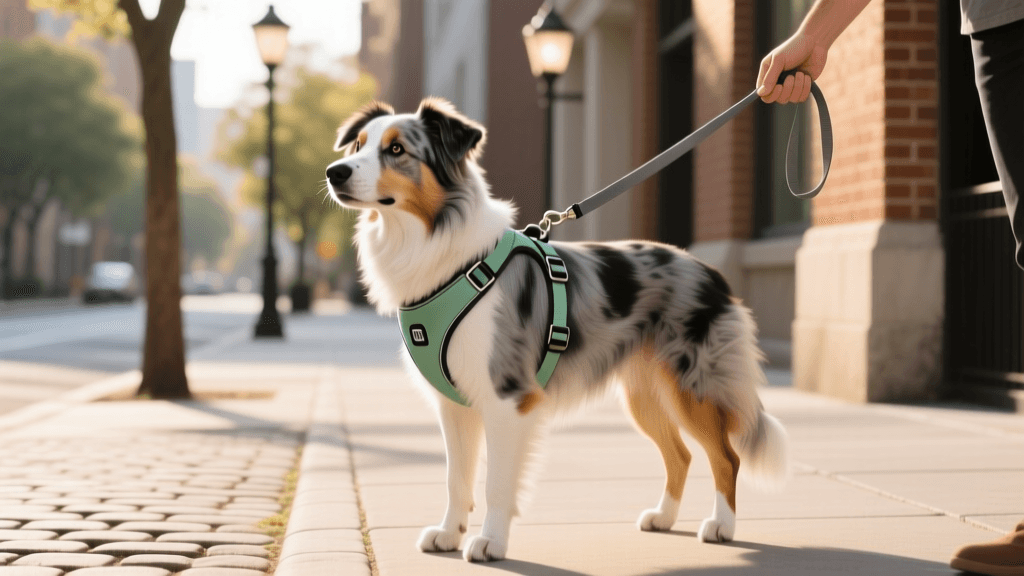
Enter the front-clip no-pull dog harness. By shifting the leash attachment point to the dog's sternum, these innovative designs have completely transformed daily routines for multi-pet households and reactive dog owners alike. In this comprehensive guide, we will explore the biomechanics behind front-clip harnesses, review the top three models leading the market in 2026, and provide actionable training protocols to help you achieve peaceful, loose-leash urban walks.
The Biomechanics of Front-Clip Harnesses
When a dog pulls on a back-clip harness, the force is distributed evenly across their chest and shoulders. This allows them to lean into their weight, engage their powerful hindquarters, and pull harder. A front-clip harness, however, features a reinforced leash attachment ring located right on the dog's chest. When the dog pulls forward, the tension on the front clip gently redirects their momentum sideways or back toward the handler.
This biomechanical advantage disrupts the dog's center of gravity without causing pain, choking, or tracheal damage. It essentially makes pulling physically inefficient for the dog. According to leading canine behaviorists, when paired with positive reinforcement training, a front-clip harness serves as a brilliant communication tool rather than a punitive restraint, making it the gold standard for reactive dog walking in 2026.
Top 3 Front-Clip No-Pull Dog Harnesses for 2026
The pet gear industry has seen massive innovations in sustainable materials and ergonomic design over the past year. Here are the top three front-clip harnesses that stand out for durability, comfort, and pulling deterrence in 2026.
1. Ruffwear Front Range (2026 Edition)
The Ruffwear Front Range has long been a staple in the dog walking community, but the 2026 edition introduces significant, highly requested upgrades. Priced around $45.95, this model now features an ultra-breathable, recycled ripstop shell designed to handle the increasingly erratic summer heatwaves we have experienced this year. The front aluminum V-ring has been reinforced with a dual-layer webbing anchor, ensuring it will not warp even under the sudden lunging force of a 90-pound reactive breed. The padded chest and belly panels prevent chafing during long urban hikes, and the new reflective trim integrates seamlessly into the fabric for nighttime visibility.
2. Kurgo Tru-Fit Smart Harness (2026 Update)
For dogs that double as car passengers, the Kurgo Tru-Fit Smart Harness remains the undisputed champion. For 2026, Kurgo has updated their crash-test certification to meet the latest global pet travel safety standards, utilizing a reinforced steel nesting buckle system that is both lightweight and incredibly strong. Priced at approximately $34.99, it includes a 10-inch seatbelt loop for car travel and a sturdy front D-ring for no-pull walking. The Tru-Fit's unique neckline design mimics a horse halter, taking pressure off the dog's throat and distributing it safely across the chest. It is an excellent choice for deep-chested breeds like Greyhounds and German Shepherds.
3. PetSafe 3-in-1 No-Pull Harness
For budget-conscious owners, professional dog walkers, or those fostering multiple dogs, the PetSafe 3-in-1 No-Pull Harness (retailing around $29.95 in 2026) offers incredible versatility. The standout feature of this harness is its martingale-style front clip. When the dog pulls, the front martingale loop tightens slightly across the chest, providing a gentle, corrective squeeze that mimics the calming pressure of a swaddle. It also features a back-clip option and a built-in handle on the top, which is invaluable for quickly securing a reactive dog when another dog approaches on a narrow city sidewalk.
2026 Harness Comparison Chart
| Brand & Model | Front Clip Type | Best Use Case | 2026 Est. Price | Weight Capacity |
|---|---|---|---|---|
| Ruffwear Front Range | Reinforced Aluminum V-Ring | Long urban hikes & active breeds | $45.95 | Up to 100+ lbs |
| Kurgo Tru-Fit Smart | Heavy-Duty Steel D-Ring | Car travel & deep-chested breeds | $34.99 | Up to 110 lbs |
| PetSafe 3-in-1 | Martingale Squeeze Loop | Reactive dogs & multi-dog walkers | $29.95 | Up to 90 lbs |
How to Measure Your Dog for a Perfect Fit
A no-pull harness can only work if it fits correctly. A poorly fitted harness can cause gait abnormalities, chafing, or allow the dog to slip out and bolt into traffic. In 2026, manufacturers have standardized their sizing charts, but you must still take precise measurements.
- The Girth Measurement: Use a soft tailor's tape measure and wrap it around the deepest part of your dog's ribcage, just behind their front legs. This is the most critical measurement for any harness.
- The Neck Measurement: Measure the base of the neck where it meets the shoulders. Ensure the tape is snug but not tight.
- The Two-Finger Rule: Once the harness is on, you should be able to comfortably slide two fingers under any strap. If you can fit your whole hand, it is too loose and risks escape. If you cannot fit two fingers, it is too tight and will restrict breathing and shoulder extension.
Transitioning to the Dual-Clip Leash Technique
If your dog is a severe puller, simply switching to a front-clip harness might not be enough to break the habit immediately. In 2026, the most recommended technique by professional trainers is the Dual-Clip Leash Method. This involves using a specialized Y-shaped leash or a standard leash with two carabiner clips. You attach one clip to the front chest ring and the other to the back ring.
When the dog pulls, you apply gentle upward and backward pressure on the front clip to steer them, while the back clip provides stability and prevents the harness from twisting. This dual-point contact gives you the steering control of a front-clip harness with the security of a back-clip setup, making it ideal for navigating high-distraction environments like outdoor farmer's markets or busy transit stations.
Training Protocols to Maximize Your Harness
It is vital to remember that a harness is a tool, not a magic wand. To achieve true loose-leash walking, you must pair your new front-clip harness with positive reinforcement training. The American Kennel Club (AKC) highly recommends the 'Be a Tree' method for dogs that pull. When your dog reaches the end of the leash and pulls, you simply stop walking and stand completely still. You do not yank the leash or yell. The moment the dog turns to look at you or takes a step back to create slack in the leash, you mark the behavior with a 'Yes!' and reward them with a high-value treat near your knee. This teaches the dog that pulling results in a cessation of movement, while staying near your leg results in forward progress and rewards.
Additionally, practice the 'Check-In' game in low-distraction environments like your living room or backyard before hitting the busy streets. Reward your dog every time they voluntarily make eye contact with you while wearing the harness. This builds a habit of engagement that will carry over to your outdoor walks.
Final Thoughts on Urban Walking in 2026
Sharing your life with a dog in a modern urban environment requires patience, the right gear, and a commitment to ongoing training. Upgrading to a front-clip no-pull harness is one of the most effective, humane investments you can make for your daily routine. It protects your dog's delicate trachea, saves your shoulders from strain, and transforms stressful marches into enjoyable bonding experiences. For more comprehensive tips on canine enrichment and safe outdoor exploration, the Humane Society of the United States offers excellent resources on reading your dog's body language and managing environmental stressors during walks.
By combining a high-quality 2026 harness model with consistent, reward-based training, you and your canine companion will be ready to conquer the city sidewalks together, one relaxed, slack-leash step at a time.
priya-sutaria
All our authors care for dogs every day — read more of their work on the authors page.