Force-Free Robot Vacuum Training for Anxious Dogs in 2026
Discover force-free, positive reinforcement methods to help your anxious dog conquer their fear of robot vacuums with our 2026 step-by-step guide.
Conquering the Robotic Monster: A Force-Free Approach
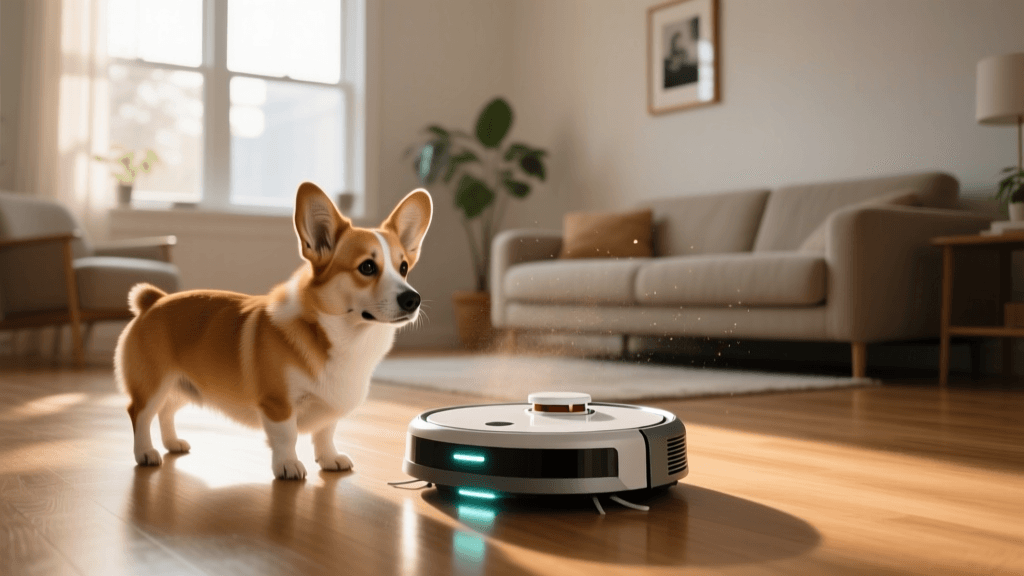
In 2026, robot vacuums are smarter, more autonomous, and more prevalent than ever. Models like the Roborock Saros Z70 and the Roomba Combo j9+ can map homes, avoid pet waste, and mop floors simultaneously. However, for many dogs, these autonomous machines remain a source of profound anxiety. The erratic movements, sudden mechanical whirring, and unpredictable bumping can trigger a dog's prey drive or noise phobia. As a responsible pet parent, relying on outdated 'tough love' methods or forcing your dog to endure the noise is not only ineffective but deeply damaging to your bond. Instead, modern canine behavioral science champions positive reinforcement and force-free desensitization.
This comprehensive guide will walk you through a scientifically backed, force-free protocol to help your dog view the robot vacuum not as a home invader, but as a predictor of wonderful things. By utilizing classical counter-conditioning and operant conditioning, we can rewire your dog's emotional response to the vacuum.
The Science of Force-Free Counter-Conditioning
Before diving into the training steps, it is crucial to understand why force-free methods are the gold standard in 2026. The American Veterinary Society of Animal Behavior (AVSAB) explicitly advocates for positive reinforcement techniques, noting that punishment-based training or forced exposure (known as 'flooding') can exacerbate fear, lead to learned helplessness, and trigger defensive aggression.
When a dog fears a robot vacuum, their amygdala (the brain's fear center) is highly active. Our goal is to bypass the fear response by creating a positive Pavlovian association. In simple terms: Vacuum Appears = High-Value Rewards Flow. Over time, the vacuum becomes a reliable cue that treats, play, and praise are imminent.
Phase 1: Static Desensitization and Scent Work (Days 1-5)
We never start with the vacuum turned on. The first phase is entirely about changing the dog's emotional response to the physical presence of the machine.
Step-by-Step Instructions:
- Placement: Place the powered-off robot vacuum in the center of a familiar room.
- Distance: Bring your dog into the room on a loose leash or allow them to enter freely if they are confident. Stop at a distance where your dog notices the vacuum but remains under their 'threshold' of fear (usually 10 to 15 feet). Signs of being under threshold include a relaxed posture, soft eyes, and willingness to eat.
- The Scent Game: Scatter high-value, aromatic treats around the perimeter of your safe zone. In 2026, top-tier options include Stella & Chewy's freeze-dried raw turkey or The Honest Kitchen's human-grade dehydrated chicken. The goal is to engage the dog's olfactory system, which naturally lowers their heart rate.
- Repetition: Conduct three 5-minute sessions per day. After the session, put the vacuum away in a closet. The vacuum's presence must always predict the game, and its removal ends the game.
Phase 2: Acoustic Desensitization (Days 6-14)
Once your dog happily approaches the powered-off vacuum, it is time to introduce sound. Modern 2026 robot vacuums often feature 'Pet-Friendly Quiet Modes' that reduce motor noise to around 45 decibels. We will use this to our advantage.
Step-by-Step Instructions:
- Environmental Setup: Place the dog behind a baby gate in an adjacent room with a long-lasting enrichment item, such as a Lickimat Soother Pro smeared with frozen goat milk and pumpkin puree. Licking releases endorphins, naturally soothing the canine nervous system.
- Sound Introduction: Start the vacuum on its quietest setting in the main room. Ensure the dog cannot physically access the vacuum.
- Mark and Reward: If the dog remains calm and continues licking their mat, verbally praise them ('Good boy/girl') and toss a high-value treat through the gate. If the dog stops eating, paces, or whines, you have moved too fast. Turn the vacuum off immediately and increase the distance for the next session.
Phase 3: Movement and the Engage-Disengage Game (Days 15-25)
This phase introduces the unpredictable movement of the vacuum while utilizing the 'Engage-Disengage' protocol, a staple in modern force-free behavioral modification.
Step-by-Step Instructions:
- Engage: With the vacuum turned on and moving slowly in a controlled pattern, wait for your dog to look at the vacuum. The exact second they look, use a marker word like 'Yes!' or click a clicker.
- Disengage: Immediately toss a treat away from the vacuum, encouraging the dog to turn their head and move toward you to eat it.
- Shaping Calmness: As days progress, wait for your dog to look at the vacuum and then voluntarily look back at you before marking and rewarding. This teaches the dog that checking in with you is more rewarding than fixating on the scary machine.
Essential Force-Free Tools for 2026
Having the right equipment can drastically shorten your training timeline. Below is a comparison of the most effective force-free tools for vacuum desensitization available this year.
| 2026 Force-Free Tool | Average Cost | Best Used For | Force-Free Benefit |
|---|---|---|---|
| Roborock Saros Z70 (Pet Mode) | $1,399 | Low-noise movement | Reduces initial acoustic trigger |
| Furbo 360 Dog Camera | $249 | Remote treat tossing | Rewards calm behavior from afar |
| Lickimat Soother Pro | $15 | Prolonged licking | Releases calming endorphins naturally |
| Zuke's Mini Naturals | $12 | Rapid-fire marking | High-value, low-calorie repetition |
Reading Canine Body Language: The Key to Success
Force-free training requires deep empathy and observation. You must be able to read your dog's subtle stress signals before they escalate into a full-blown panic attack. According to resources provided by Fear Free Pets, recognizing early signs of anxiety is critical to preventing emotional flooding.
Flooding—forcing a dog to confront their fear without an escape route—can lead to learned helplessness and heightened aggression. Positive reinforcement builds confidence, trust, and a willing partnership between human and hound.
Watch for these early stress signals:
- Whale Eye: Showing the whites of the eyes while looking away from the vacuum.
- Lip Licking: Rapid, out-of-context tongue flicks.
- Panting: Shallow, rapid breathing when the room is not hot.
- Displacement Behaviors: Sudden scratching, sniffing the ground, or shaking off as if wet.
If you observe any of these behaviors, calmly increase the distance between your dog and the vacuum, or turn the machine off entirely. End the session on a positive note with a simple trick your dog knows well, like 'sit' or 'touch', reward generously, and try again tomorrow with a larger buffer zone.
Phase 4: Smart Home Integration and Maintenance (Days 26+)
Once your dog can comfortably rest in the same room while the vacuum operates on its standard cleaning mode, it is time to integrate the vacuum into your daily 2026 smart home routines. The ASPCA emphasizes that consistent, predictable routines are foundational to a dog's sense of security.
Creating a 'Vacuum Day' Ritual:
- The Cue: Use a specific verbal cue before starting the vacuum, such as 'Time for the robo-buddy!' This prepares the dog for the noise.
- The Enrichment Station: Set up a designated 'Vacuum Day' station in a comfortable room. Provide a snuffle mat loaded with kibble and a frozen Kong Wobbler.
- Smart Camera Rewards: If you are running the vacuum while at work, use a smart treat camera like the Furbo 360 to remotely toss treats to your dog when they exhibit calm behavior near the operating vacuum.
Final Thoughts on Force-Free Living
Desensitizing an anxious dog to a robot vacuum is not an overnight process. It requires patience, consistency, and a steadfast commitment to force-free methodologies. By respecting your dog's emotional thresholds and utilizing high-value positive reinforcement, you are not just teaching them to tolerate a household appliance; you are teaching them that they are safe, heard, and protected in your home. In 2026, we have the tools, the science, and the understanding to ensure that every member of the household—two-legged and four-legged alike—can live in harmony.
aaron-whyte
All our authors care for dogs every day — read more of their work on the authors page.