Force-Free Leash Walking: Front-Clip Harness Guide 2026
Master force-free loose leash walking in 2026 with our front-clip harness protocol. Learn positive reinforcement techniques to stop pulling without aversives.
The 2026 Shift Toward Force-Free Canine Biomechanics
As we navigate the dog training landscape in 2026, the veterinary and behavioral science communities have reached a definitive consensus: aversive tools like prong collars, choke chains, and electronic shock collars are not only outdated but actively detrimental to canine welfare and the human-animal bond. Modern force-free methodologies prioritize positive reinforcement (R+) and negative punishment (P-), focusing on teaching dogs what we want them to do rather than punishing them for natural behaviors. One of the most common challenges dog owners face is leash pulling. Fortunately, the combination of a well-fitted front-clip harness and a structured positive reinforcement protocol offers a highly effective, force-free solution for loose leash walking.
According to the American Veterinary Society of Animal Behavior (AVSAB), reward-based training methods are the most effective and humane approach to canine behavioral conditioning. When applied to leash walking, this means utilizing biomechanically sound equipment that naturally discourages pulling without causing pain or fear.
Why Front-Clip Harnesses Outperform Aversive Tools
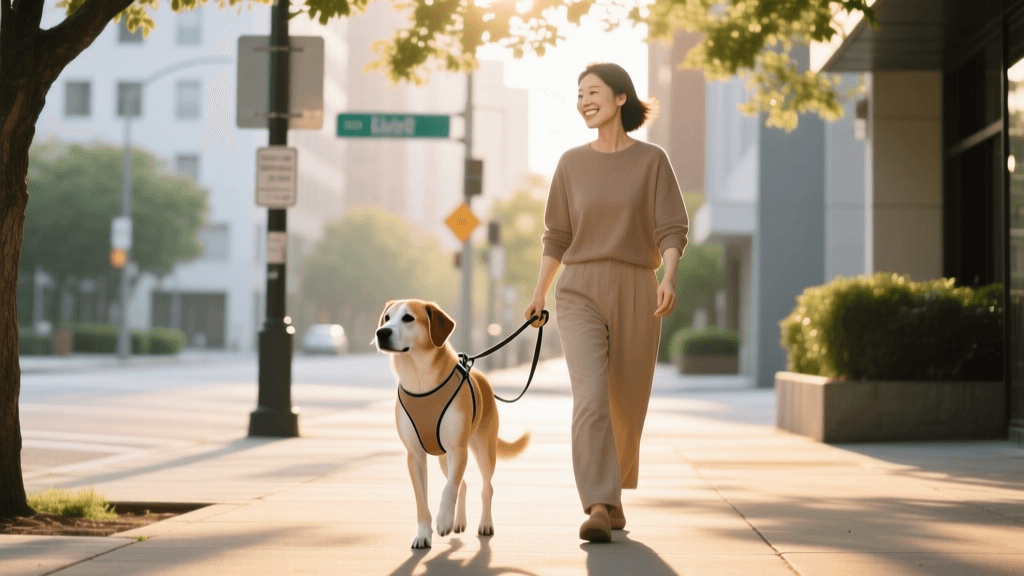
A front-clip no-pull harness features a leash attachment ring located on the chest strap, directly over the dog's sternum. When a dog pulls forward, the front-clip design gently redirects their momentum sideways, turning them back toward the handler. This biomechanical redirection breaks the dog's forward drive without applying pressure to the trachea or cervical spine.
In contrast, back-clip harnesses can actually encourage pulling by engaging the dog's opposition reflex—the same instinct that allows sled dogs to pull heavy loads. Aversive collars rely on positive punishment (P+), introducing a painful stimulus to suppress behavior. While this may temporarily suppress pulling, it often leads to leash reactivity, fear-based aggression, and elevated cortisol levels.
2026 Harness Clip Configuration Comparison
| Clip Position | Biomechanical Effect | Force-Free Rating | Best Use Case |
|---|---|---|---|
| Front-Clip (Chest) | Redirects forward momentum sideways, breaking opposition reflex. | Excellent | Leash pulling, loose leash training, mild reactivity. |
| Back-Clip (Shoulders) | Aligns with forward drive, engaging the opposition reflex. | Poor for Pulling | Small breeds, hiking, running, dogs already trained to walk loose. |
| Dual-Clip (Front & Back) | Allows handler to switch based on environment and distraction level. | Excellent | Transitioning from high-distraction to low-distraction environments. |
| Martingale/Choke | Applies constriction pressure to the trachea and neck. | Not Recommended | None in modern force-free training. |
The 4-Step Positive Reinforcement Protocol
To successfully train loose leash walking using a front-clip harness, you must pair the equipment with a clear communication system. The American Kennel Club (AKC) emphasizes that timing and consistency are the cornerstones of positive reinforcement. Follow this 4-step protocol to build a reliable loose leash walk in 2026.
Step 1: Harness Desensitization and Consent
Before attaching a leash, ensure your dog is comfortable wearing the harness. Many dogs develop a negative conditioned emotional response (-CER) to harnesses if they are forced over the head. Use a step-in or overhead harness that allows for gradual desensitization. Hold the harness out, mark the moment your dog sniffs it with a 'Yes!' or a clicker, and deliver a high-value treat. Repeat this until the dog voluntarily pushes their head through the neck opening. This consent-based approach lowers baseline stress and primes the dog for learning.
Step 2: The Engagement Marker and Reward Zone
Define the 'reward zone' as the area right next to your leg, specifically at the seam of your pants. When the leash is loose and the dog is in the reward zone, use a marker word like 'Yes!' and deliver the treat directly to that seam. This teaches the dog that proximity to your leg is the most reinforcing place to be. In high-distraction environments, use ultra-high-value rewards like freeze-dried beef liver or boiled chicken breast to maintain focus.
Step 3: The 180-Degree Redirect (Negative Punishment)
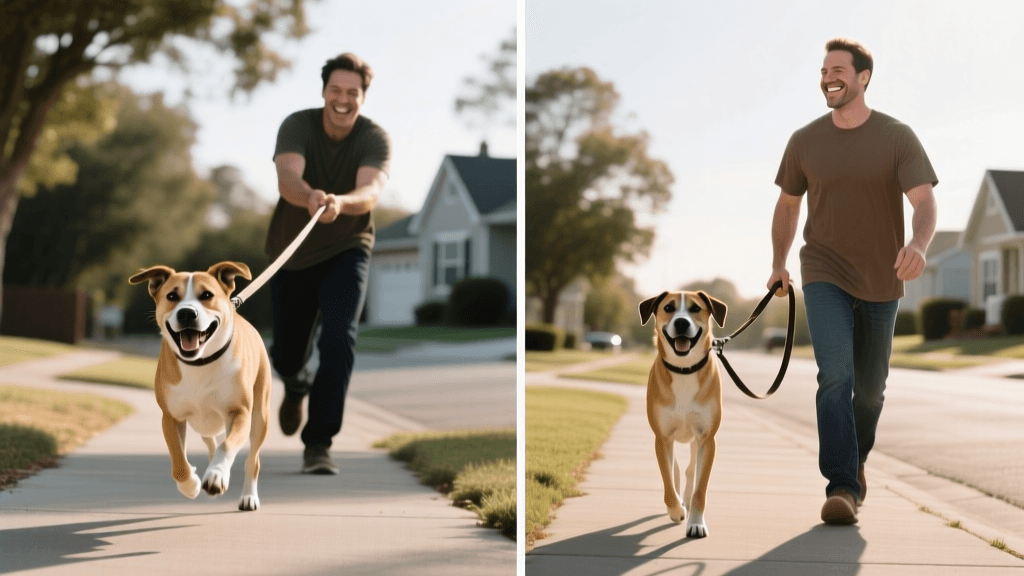
When the dog hits the end of the leash and pulling begins, the front-clip will naturally turn them toward you. The moment they turn, take three steps backward or execute a 180-degree turn away from the trigger. This utilizes negative punishment (P-)—removing the opportunity to move forward (the thing the dog wants) when the leash goes tight. The moment the leash goes slack again, mark 'Yes!', invite them back to the reward zone, and resume walking forward. Forward movement becomes the reward for a loose leash.
Step 4: Variable Ratio Reinforcement Schedule
Once your dog understands that a loose leash equals forward movement and treats, begin fading the continuous reinforcement schedule. Move to a variable ratio schedule, where you reward the dog after an unpredictable number of steps (e.g., 3 steps, then 8 steps, then 5 steps). This creates a 'slot machine' effect, making the behavior highly resistant to extinction. By mid-2026, behavioral researchers continue to validate that variable reinforcement schedules yield the most robust and reliable obedience in unpredictable outdoor environments.
The Role of Environmental Management in Early Training
Before you even step outside, environmental management plays a crucial role in setting your dog up for success. In 2026, certified professional dog trainers heavily emphasize the concept of 'setting the stage.' If you live in a high-traffic urban area, attempting your first loose leash training session on a busy sidewalk is a recipe for frustration. Instead, start in your living room, then move to the backyard, then the driveway, and finally the quietest street in your neighborhood. This systematic desensitization ensures that the dog's arousal levels remain below threshold, allowing the prefrontal cortex to remain engaged for learning.
Utilize the 'Find It' game to manage environmental arousal. If you see a distraction approaching (like a jogger or another dog), toss a handful of high-value treats into the grass before your dog reacts. This engages their natural foraging instinct, lowers their heart rate through sniffing, and keeps their attention on you rather than the trigger. This proactive management prevents the rehearsal of unwanted pulling behaviors, which is a core tenet of modern force-free methodology.
Recommended High-Value Rewards and Gear for 2026
Successful force-free training relies heavily on the economy of reinforcement. If your rewards are not valuable enough to compete with environmental distractions, the training will fail. Here is a breakdown of top-tier training gear and treats for this year:
- Harness: The 2026 iterations of the Ruffwear Front Range and the Kurgo Tru-Fit Smart Harness offer padded chest plates that prevent chafing during the redirection process.
- Leash: A 6-foot biothane or leather leash is ideal. Avoid retractable leashes entirely, as they inherently teach the dog that pulling extends the leash, directly contradicting your loose-leash goals.
- Treat Pouch: A magnetic-closure treat pouch allows for sub-second treat delivery, which is critical for accurate marking.
- High-Value Treats: Ziwi Peak air-dried venison, Stella & Chewy's freeze-dried turkey, or plain boiled chicken breast. Keep pieces pea-sized to prevent satiation during a 20-minute training session.
Troubleshooting Common Leash Reactivity Hurdles
Even with a front-clip harness and positive reinforcement, you may encounter hurdles. If your dog becomes 'stuck' or refuses to move, they may be over threshold. In force-free training, we never drag or force a dog forward. Instead, increase your distance from the trigger (the mail truck, another dog, a loud noise) until your dog can re-engage with you. This is known as managing the dog's threshold.
Additionally, ensure you are not inadvertently creating tension on the leash. Many handlers hold the leash too short, creating constant pressure that the dog learns to lean against. Keep your hands relaxed, holding the leash in a 'J-shape' to provide clear, immediate feedback when the dog pulls. For further reading on foundational reward-based methods, the ASPCA's comprehensive guide to dog training reinforces that patience, high-value rewards, and proper equipment are the triad of successful behavioral modification.
Conclusion: Building Trust Through Force-Free Methods
Transitioning to a force-free loose leash walking protocol using a front-clip harness is an investment in your dog's physical health and psychological well-being. By leveraging canine biomechanics and the science of operant conditioning, you can eliminate pulling without ever resorting to pain or intimidation. As the dog training industry continues to evolve in 2026, the evidence is clear: dogs trained with positive reinforcement are not only better behaved but are significantly happier, more confident, and more deeply bonded to their handlers. Grab your front-clip harness, stock up on high-value treats, and enjoy the journey of force-free training.
jonas-cole
All our authors care for dogs every day — read more of their work on the authors page.