Force-Free Dog Dental Care: Positive Toothbrushing 2026
Discover force-free dog dental care techniques for 2026. Learn positive reinforcement toothbrushing steps, top enzymatic pastes, and stress-free handling.
The Shift Toward Cooperative Canine Dental Care in 2026
For decades, the standard advice for maintaining canine dental hygiene involved physical restraint. Owners were routinely instructed to pin their dogs down, pry open their jaws, and forcefully scrub their teeth. However, the veterinary and behavioral science communities have undergone a massive paradigm shift. In 2026, force-free cooperative care is the undisputed gold standard for canine husbandry. Positive reinforcement toothbrushing is no longer just a trendy alternative; it is a scientifically backed methodology that prioritizes your dog's emotional wellbeing alongside their physical health.
According to the American Animal Hospital Association (AAHA), periodontal disease remains one of the most prevalent conditions seen in veterinary clinics, yet home care is the most effective preventative measure. By utilizing force-free methods, we can ensure that daily dental care is a bonding experience rather than a daily battle, leading to higher compliance rates and significantly better oral health outcomes for our canine companions.
The Hidden Health Costs of Forceful Restraint
Why does the methodology of toothbrushing matter for overall health? The answer lies in the endocrine system. When a dog is physically restrained against their will, their brain perceives a threat. This triggers the amygdala, resulting in a flood of stress hormones, primarily cortisol and adrenaline. While a brief spike in cortisol is normal, the chronic elevation of stress hormones from daily forceful handling has severe systemic consequences.
Chronic stress suppresses the immune system, disrupts gastrointestinal health, and accelerates cellular aging. The Fear Free Pets initiative has extensively documented how reducing fear, anxiety, and stress (FAS) during husbandry procedures directly correlates to better physiological outcomes, faster healing times, and a longer healthspan. Force-free dental care is not merely about being "nice" to your dog; it is a critical component of holistic preventative medicine in 2026.
Recognizing Canine Stress Signals During Dental Care
Before beginning any positive reinforcement protocol, it is vital to understand canine body language. Dogs communicate discomfort long before they resort to growling or biting. If you observe any of the following "calming signals" or stress indicators during dental handling, you must immediately pause, release the pressure, and take a step back in your training:
- Lip Licking and Yawning: When not tired or eating, these are primary indicators of psychological discomfort.
- Whale Eye: Showing the whites of the eyes while turning the head away.
- Freezing: A complete cessation of movement, often mistaken for "compliance" but actually a high-stress fear response.
- Ear Pinning and Tail Tucking: Classic signs of submission and anxiety.
- Leaning Away: Attempting to shift body weight away from the toothbrush or handler's hands.
Essential Tools for Positive Reinforcement Dental Care
Setting up for success requires the right equipment. The 2026 market offers exceptional tools designed specifically for cooperative care and canine anatomy.
1. Virbac C.E.T. Enzymatic Toothpaste (Poultry or Seafood)
This remains a top-tier recommendation among veterinary dentists. The dual-enzyme system works synergistically with the mechanical action of brushing to inhibit plaque formation. More importantly for force-free training, the highly palatable flavors act as a built-in primary reinforcer, making the taste of the paste a reward in itself.
2. Mindful Pet Bamboo Angled Dog Toothbrush
Ergonomics matter. Angled brushes allow you to reach the maxillary fourth premolars (the large chewing teeth) without awkwardly twisting your wrist or invading the dog's personal space unnecessarily. The bamboo handle is also biodegradable, aligning with the eco-conscious values of many modern pet owners.
3. High-Value Reinforcers
Keep a separate pouch of high-value treats, such as freeze-dried beef liver or boiled chicken breast, to reward consent behaviors. The toothpaste is for the teeth; the liver is for the brain.
The 5-Phase Force-Free Desensitization Protocol
Transitioning to a force-free routine requires patience. This protocol utilizes classical counter-conditioning and operant conditioning to build a positive emotional response to dental care.
Phase 1: The Consent Chin Rest
Before introducing a toothbrush, teach your dog to rest their chin on your palm or a designated mat. Mark the behavior with a clicker or a verbal "yes" and reward heavily. The chin rest is a "consent behavior." If the dog lifts their head, the procedure stops. This gives the dog agency, which drastically reduces anxiety and builds trust.
Phase 2: Taste Desensitization
Place a pea-sized amount of Virbac enzymatic toothpaste on your finger. Allow the dog to lick it off. Do not attempt to touch their teeth or gums yet. Repeat this until the dog exhibits excited, happy body language the moment the toothpaste tube appears.
Phase 3: Tool Introduction
Introduce the bamboo toothbrush without paste. Let the dog sniff it, then reward. Next, touch the brush to the dog's shoulder, then their chest, then their cheek, rewarding after every single touch. This process, known as systematic desensitization, ensures the tool is never perceived as a threat.
Phase 4: Touch and Release
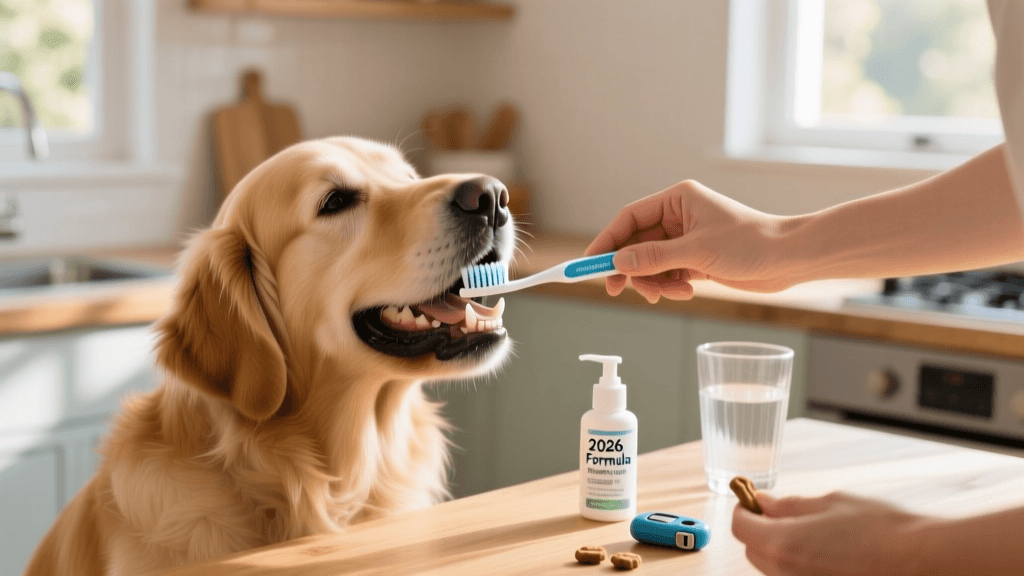
Apply a small amount of toothpaste to the brush. Ask for the chin rest. Gently lift the upper lip (the "flews") and touch the brush to the canine tooth for exactly one second, then remove the brush and deliver a high-value treat. Gradually increase the duration of the touch over multiple sessions, always respecting the dog's threshold.
Phase 5: Rhythmic Brushing
Once the dog comfortably accepts the touch, begin making small, gentle circles on the outer surfaces of the teeth. Focus primarily on the buccal (outer) surfaces of the upper premolars and canines, where plaque accumulates most rapidly. Keep sessions under 60 seconds initially, ending on a positive note with a jackpot reward.
Comparison: Traditional Restraint vs. Cooperative Care
Understanding the physiological and behavioral differences between these two approaches highlights why the veterinary community has universally adopted force-free methods in 2026.
| Feature | Traditional Restraint | Force-Free Cooperative Care |
|---|---|---|
| Cortisol Levels | High (Spikes during handling) | Baseline (Remains calm and regulated) |
| Long-Term Compliance | Decreases over time (Learned helplessness) | Increases over time (Positive anticipation) |
| Risk of Injury | High (Bites, scratches, struggling) | Minimal (Dog can opt-out at any time) |
| Immune System Impact | Suppressed via chronic stress | Supported via low-stress environment |
| Human-Animal Bond | Damaged through negative associations | Strengthened through trust and agency |
Alternative Force-Free Dental Supports for 2026
Some dogs, particularly senior rescues with severe handling trauma or those with existing oral pain, may not be ready for a toothbrush in 2026. It is crucial never to force the issue. Instead, utilize Veterinary Oral Health Council (VOHC) accepted alternatives while you continue your desensitization journey. The Cornell University Companion Animal Hospital notes that while brushing is optimal, VOHC-approved chews and water additives can significantly reduce plaque and calculus indices when used consistently.
- ProDen PlaqueOff Powder: A VOHC-accepted seaweed-based supplement that softens existing tartar and prevents new plaque adhesion. Simply sprinkle it over their daily meals.
- Purina Pro Plan Veterinary Supplements Dental Chewz: These feature a specialized texture that mechanically scrubs the teeth as the dog chews, promoting saliva flow and reducing gingivitis.
- HealthyMouth Water Additive: An unflavored, VOHC-approved liquid that reduces plaque formation when added to the dog's daily drinking water, requiring zero physical handling.
Conclusion
Force-free dog dental care is a testament to how far our understanding of canine cognition and welfare has progressed. By abandoning outdated restraint techniques and embracing positive reinforcement, chin rests, and systematic desensitization, we protect not only our dogs' teeth but also their hearts, minds, and immune systems. In 2026, a healthy mouth should never come at the cost of a fearful mind. Grab your enzymatic toothpaste, stock up on high-value treats, and start building a cooperative, stress-free dental routine today.
beth-carrasco
All our authors care for dogs every day — read more of their work on the authors page.