2026 Force-Free Dog Grooming: Cooperative Care Guide
Master force-free dog grooming in 2026 with cooperative care. Learn positive reinforcement techniques for stress-free nail grinding and brushing.
The Evolution of Canine Grooming: Why 2026 is the Year of Cooperative Care
Life with a dog is filled with joy, companionship, and the inevitable reality of routine maintenance. For decades, the standard approach to dog grooming—particularly nail trimming and bathing—relied heavily on physical restraint. Owners and groomers were often taught to pin dogs down to get the job done, leading to widespread anxiety, fear, and even aggression. However, as we navigate 2026, the veterinary and behavioral communities have overwhelmingly rejected forced restraint in favor of positive reinforcement and force-free methodologies.
According to the American Veterinary Society of Animal Behavior (AVSAB), positive reinforcement should be the primary method for all animal training and care, emphasizing that force-free methods significantly reduce stress and improve the human-animal bond. This shift has brought 'cooperative care' to the forefront of daily dog ownership. Cooperative care transforms grooming from a battleground into a collaborative activity where your dog is an active, willing participant. By utilizing operant conditioning and desensitization, you can teach your dog to voluntarily present their paws, tolerate brushing, and even enjoy bath time.
Understanding Cooperative Care and Consent Testing
At its core, cooperative care is about giving your dog agency. In 2026, modern force-free trainers emphasize the concept of 'consent testing' or 'start-button behaviors.' A start button is a specific behavior your dog performs to signal they are ready and willing to proceed with a grooming task. If they stop performing the behavior, or move away, they are withdrawing consent, and the handler must immediately pause the procedure.
Two of the most popular start-button behaviors in cooperative care are the 'chin rest' and the 'bucket game.' In a chin rest, the dog is trained to rest their chin on a target (like your lap or a stool) to receive treats; lifting their chin means 'stop.' The bucket game involves the dog placing their front paws on an overturned bucket, which provides stability and a clear, voluntary posture for grooming. By honoring these opt-out signals, you build profound trust. Your dog learns that they have control over their environment, which paradoxically makes them much more likely to tolerate and even enjoy the grooming process.
Essential Force-Free Grooming Tools for Your 2026 Toolkit
Success in force-free grooming relies heavily on the right equipment. Outdated, loud, or painful tools will undermine your positive reinforcement efforts. Here are the top-rated, force-free tools recommended by certified behaviorists in 2026:
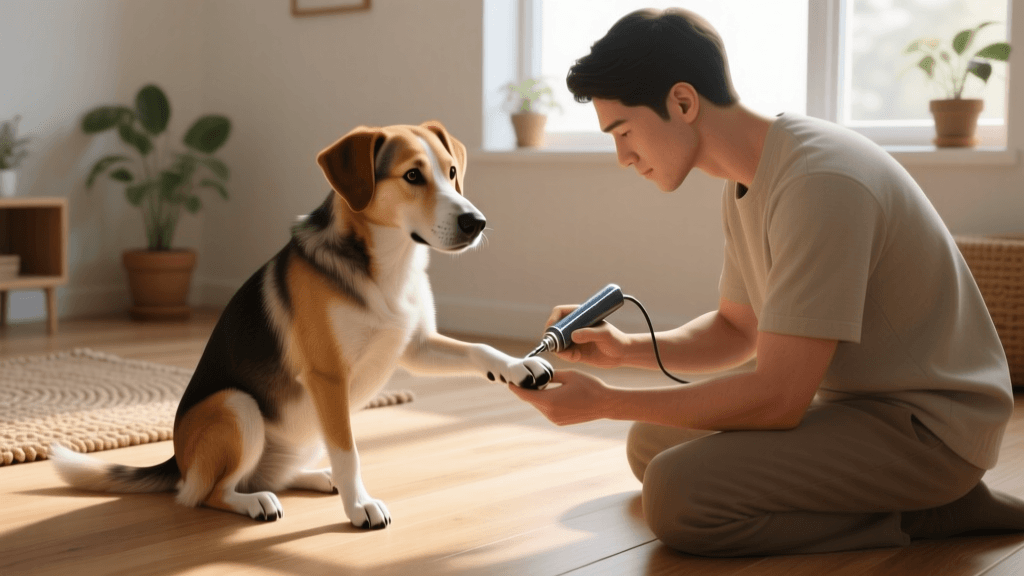
- Dremel 7300-PT Pet Nail Grinder: Priced around $40 in 2026, this cordless, low-vibration rotary tool is vastly superior to traditional guillotine clippers. It quietly files the nail down, eliminating the painful 'crush' sensation and reducing the risk of quicking the dog.
- LickiMat Soother: Costing roughly $12, this textured silicone mat is essential for spreading high-value, long-lasting treats like plain pumpkin puree, low-sodium bone broth, or plain Greek yogurt. It provides a continuous reinforcement schedule during desensitization.
- Scratch Board (DIY or Commercial):strong> A wooden board covered in heavy-grit sandpaper. This allows the dog to file their own front nails through a trained scratching behavior, completely removing the need for the handler to touch their paws.
- Long-Handled Silicone Bath Brush: Tools like the Kong ZoomGroom allow you to massage and clean your dog while maintaining a respectful distance, which is crucial for dogs who are sensitive to close-proximity handling.
Step-by-Step Force-Free Nail Grinding Protocol
Rushing the process is the most common mistake owners make. Force-free nail grinding is a shaping exercise that may take weeks or months, depending on your dog's baseline fear levels. Follow this progressive protocol:
Phase 1: Sound Desensitization
Turn the Dremel on in a completely different room while your dog is eating a high-value meal or engaging in play. Over several days, gradually move the running Dremel closer to the dog's eating area. The goal is to classically condition the sound of the motor: Dremel noise predicts delicious food. Never bring the tool near the dog's paws during this phase.
Phase 2: Vibration Mapping
Once the dog is relaxed with the sound, introduce the physical sensation of the tool without it touching their paws. While the dog is licking a LickiMat, gently touch the back of the vibrating Dremel to their shoulder, then their back, then their hind leg. This 'vibration mapping' teaches the dog that the buzzing sensation is safe and unrelated to their sensitive toes.
Phase 3: The Paw and The Nail
With the Dremel turned off, practice gently handling the paw and touching a single nail with the tip of the tool. Mark with a clicker or a verbal 'yes' and deliver a treat. Once the dog is comfortable, turn the Dremel on, touch the nail for exactly one second, mark, and treat. Repeat this one-second touch, gradually increasing the duration to two, then three seconds as the dog remains relaxed.
Comparing Force-Free Nail Maintenance Methods
Not every dog will tolerate a rotary grinder, and that is perfectly fine. Force-free training is about adapting to the individual dog's needs. Below is a comparison of the three primary force-free nail care methods utilized in 2026.
| Method | Pros | Cons | Best For |
|---|---|---|---|
| Rotary Grinder (Dremel) | Smooth edges, no crushing, highly precise. | Noise and vibration can trigger sensory sensitivities. | Dogs comfortable with handling but sensitive to the 'snap' of clippers. |
| Scratch Board | Zero paw handling required, empowers the dog, great exercise. | Only works for front nails; requires initial shaping training. | Highly reactive dogs or those with severe handling aversions. |
| Scissor-Style Clippers | Quick, silent, inexpensive. | Requires immense stillness, risks quicking, can pinch. | Dogs who are completely desensitized to handling and hate motor noises. |
Note that guillotine-style clippers are widely discouraged by force-free professionals and organizations like Fear Free Pets due to the tendency of the blade to pull the nail downward, causing discomfort and nail splintering.
Expanding Cooperative Care to Brushing and Bathing
The principles of consent and positive reinforcement extend far beyond nail care. Brushing and bathing are frequent pain points in multi-pet households and daily routines. To make brushing force-free, implement a 'start-button' chin rest. Place a towel on your lap and cue your dog to rest their chin on it. Begin brushing their back with a soft-bristled brush. If the dog lifts their chin off the towel, immediately stop brushing and wait. When they replace their chin, resume. This clear communication loop prevents the dog from feeling trapped.
For bathing, the ASPCA recommends using lukewarm water and dog-specific shampoos to prevent skin irritation, but the force-free approach adds environmental modification. Place a non-slip silicone mat in the tub to prevent panic from slipping. Smear a LickiMat with peanut butter on the tiled wall at the dog's eye level. The act of licking releases endorphins that naturally soothe the canine nervous system, turning a potentially terrifying bath into a rewarding enrichment activity.
Troubleshooting Common Setbacks
Even with meticulous planning, setbacks happen. If your dog suddenly refuses to participate in a grooming session they previously tolerated, do not force the issue. In 2026, behavioral science tells us that 'stubbornness' is almost always a mask for pain, fear, or environmental stress. First, rule out underlying medical issues such as osteoarthritis, which can make lifting a paw onto a grooming table excruciating. Second, evaluate your treat history; if you have been using low-value kibble, upgrade to freeze-dried liver or boiled chicken. Finally, take a step back in your training protocol. If the dog is failing at the one-second grind, return to simply touching the paw with the turned-off tool. By prioritizing your dog's emotional welfare over a perfectly manicured nail, you are investing in a lifetime of trust, proving that living with a dog can be harmonious, respectful, and entirely force-free.
priya-sutaria
All our authors care for dogs every day — read more of their work on the authors page.