First-Day Dog Essentials: A First-Time Owner Shopping Guide
Discover the ultimate first-day dog essentials checklist. Learn what to buy, budget costs, and how to prepare your home for your new furry friend.
Welcome Home: Preparing for Your New Dog
Bringing a new dog home is one of the most exciting milestones in life, but for first-time owners, the sheer volume of available pet products can be overwhelming. Walking into a pet supply store or browsing online retailers reveals thousands of items, many of which are unnecessary gimmicks. According to the ASPCA's New Dog Guide, preparing your home before your dog arrives is crucial for a smooth transition and helps establish a safe, structured environment from day one. This guide cuts through the noise, providing a practical, actionable shopping list tailored specifically for first-time dog owners. We will cover exact product types, sizing measurements, and realistic budget expectations so you can focus on bonding with your new best friend rather than making last-minute pet store runs.
The Ultimate First-Day Essentials Checklist
Nutrition and Hydration
Proper nutrition and hydration are the foundations of your dog's health. Avoid purchasing bulky bags of food before meeting your dog. Instead, ask the shelter or breeder for a small bag of the food the dog is currently eating. Sudden dietary changes can cause severe gastrointestinal upset. When you do transition to a new brand, do so gradually over seven to ten days.
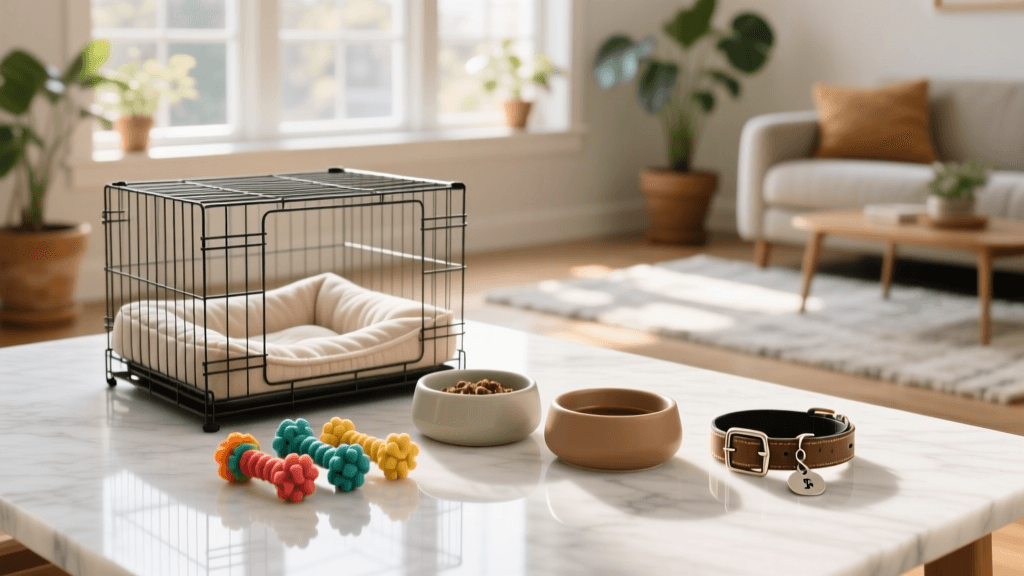
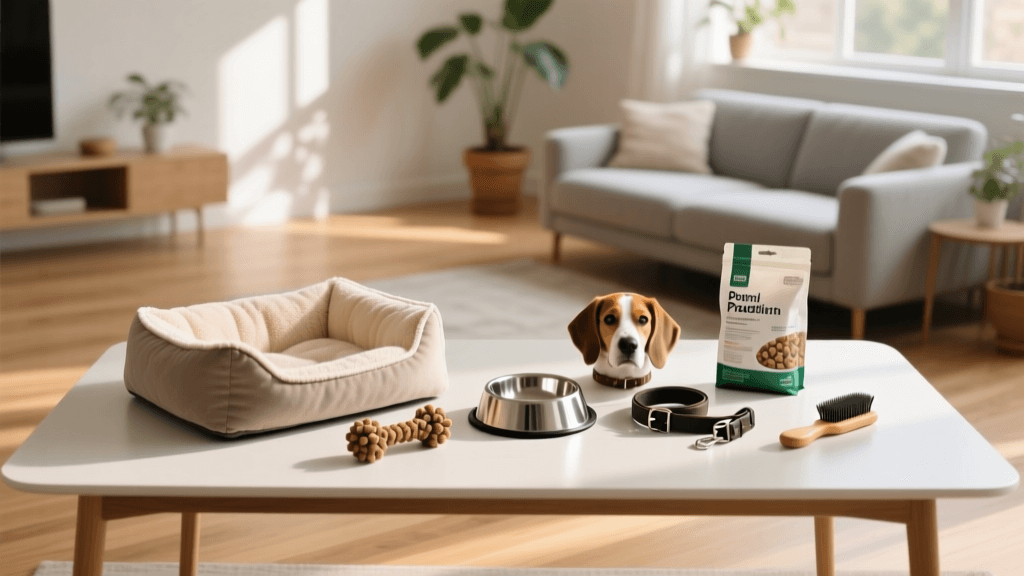
Food and Water Bowls: Ditch the plastic bowls, which can harbor bacteria and cause canine acne. Opt for stainless steel or ceramic bowls. A standard medium-sized dog requires a bowl that holds at least 32 to 64 ounces of water. For large or giant breeds, consider an elevated feeder to promote better digestion and reduce neck strain, though recent studies suggest consulting your vet regarding elevated feeders and bloat risk for specific deep-chested breeds.
Food Storage: Invest in an airtight food storage container with a tight-sealing lid to keep kibble fresh and prevent pests. Brands like Vittles Vault offer excellent moisture barriers.
Comfort and Confinement
A crate is not a punishment; it is a den that provides your dog with a safe, personal space. Crate training is highly recommended by veterinary behaviorists for housebreaking and preventing destructive behavior when you are away.
Crate Sizing: The golden rule for crate sizing is to measure your dog from the tip of their nose to the base of their tail, and add two to four inches. They should be able to stand up, turn around, and lie down comfortably. For growing puppies, purchase a wire crate with a movable divider panel, such as the MidWest iCrate series, so you can adjust the space as they grow.
Bedding: Avoid plush, easily shredded beds for teething puppies or aggressive chewers. Instead, use a durable, chew-resistant cot like the Coolaroo Elevated Pet Bed, or a heavy-duty canvas bed. For adult dogs or senior rescues, an orthopedic memory foam bed, such as those from Big Barker or FurHaven, provides essential joint support.
Safety, Travel, and Identification
Before your dog even steps paw outside your front door, safety gear must be properly fitted.
Collar and ID Tags: A lightweight, adjustable nylon or biothane collar is ideal for holding ID tags. The collar should be snug enough that it will not slip over the dog's ears, but loose enough to fit two fingers underneath. Always include a rabies tag and a personalized ID tag with your current phone number.
Harness and Leash: For first-time owners, a front-clip no-pull harness is a game-changer. The Kurgo Tru Fit or Ruffwear Front Range harnesses gently redirect pulling without putting dangerous pressure on the dog's trachea. Pair this with a standard four-to-six-foot leather or biothane leash. Avoid retractable leashes, which offer poor control and can cause severe friction burns or injuries to both you and your dog.
Car Restraint: A roaming dog in a car is a projectile hazard. Use a crash-tested car harness that clicks directly into the seatbelt buckle, or a secured, hard-sided travel crate.
Potty Training and Cleanup
Accidents are an inevitable part of bringing a new dog home, regardless of their age or previous training.
Enzymatic Cleaner: Standard household cleaners will not break down the uric acid in dog urine, meaning your dog will still smell it and be inclined to mark the same spot. You must use an enzymatic cleaner like Nature's Miracle or Rocco & Roxie Professional Strength Stain & Odor Eliminator. Saturate the area completely and allow it to air dry to neutralize the scent.
Poop Bags and Dispenser: Buy biodegradable, leak-proof waste bags in bulk. Keep a dispenser attached to your leash at all times so you are never caught off guard on a walk.
Potty Bells: If you plan to bell-train your dog, hang a set of sturdy, jingle-free potty bells on the door handle you use most frequently for outdoor bathroom breaks.
Toys and Mental Enrichment
The American Kennel Club emphasizes that mental stimulation is just as tiring and important as physical exercise. A bored dog is a destructive dog.
Chew Toys: Provide a variety of textures. The classic red KONG rubber toy is virtually indestructible and can be stuffed with peanut butter or plain yogurt and frozen to soothe teething puppies and keep adult dogs occupied for hours. Nylabone DuraChews are excellent for aggressive chewers.
Interactive Toys: Snuffle mats (like those from Outward Hound) and puzzle feeders slow down fast eaters and engage your dog's natural foraging instincts. Avoid toys with easily detachable parts, like plastic eyes or squeakers, which can become dangerous choking hazards.
Budgeting for Your First-Day Essentials
Understanding the upfront costs of dog ownership helps prevent financial stress. Below is a realistic breakdown of what you can expect to spend on day-one essentials, categorized by budget level.
| Item Category | Budget-Friendly ($) | Mid-Range ($$) | Premium ($$$) |
|---|---|---|---|
| Crate & Divider | $40 - $60 | $70 - $100 | $120 - $200+ |
| Bedding | $20 - $35 | $50 - $80 | $150 - $300+ |
| Harness & Leash | $25 - $40 | $50 - $75 | $80 - $120 |
| Bowls & Storage | $15 - $25 | $30 - $50 | $60 - $100 |
| Enzymatic Cleaner | $12 - $15 | $18 - $25 | $30+ (Bulk) |
| Toys & Puzzles | $15 - $25 | $35 - $60 | $75 - $150 |
| Estimated Total | $127 - $200 | $253 - $390 | $515 - $900+ |
Note: This table excludes ongoing costs like premium dog food, veterinary care, pet insurance, and grooming, which should be factored into your monthly budget.
Setting Up Your Space Before Arrival
According to the Humane Society of the United States, creating a designated safe room or confined area is vital for the first few days. Do not give a new dog free roam of the entire house immediately; this leads to overstimulation and increases the likelihood of accidents and destructive chewing.
Set up the crate in a quiet, low-traffic area of your home, such as a corner of the living room or a spare bedroom. Place the water bowl, a few chew toys, and an unwashed t-shirt that smells like you inside the crate to provide comfort. Use baby gates to block off hazardous areas like the kitchen, stairs, or rooms with fragile items and toxic houseplants.
Common First-Time Owner Mistakes to Avoid
Overbuying Perishables: Do not buy a 30-pound bag of food or a massive box of treats before knowing your dog's preferences or allergies. Start small.
Skip-Proofing the Yard: Inspect your fencing for gaps, loose boards, or low spots where a determined dog could dig out or squeeze through. Ensure all gates have secure latches.
Ignoring Toxic Hazards: Common household items like xylitol (found in sugar-free gum), grapes, onions, chocolate, and certain cleaning supplies are highly toxic to dogs. Store these securely out of reach in high cabinets or behind childproof locks.
Final Thoughts
Preparing for your new dog's arrival is about more than just buying supplies; it is about creating an environment where your dog can thrive. By focusing on high-quality, functional essentials and avoiding unnecessary gadgets, you set the stage for a successful transition. Take the time to puppy-proof your home, establish a consistent routine, and remember that patience is your most valuable tool. Welcome to the incredible journey of dog ownership!
priya-sutaria
All our authors care for dogs every day — read more of their work on the authors page.