Engage-Disengage Protocol for Urban Leash Reactivity: 2026 Guide
Discover how to master the Engage-Disengage protocol for urban leash reactivity in 2026. Expert tips, gear guides, and step-by-step training for anxious dogs.
Understanding Urban Leash Reactivity in 2026
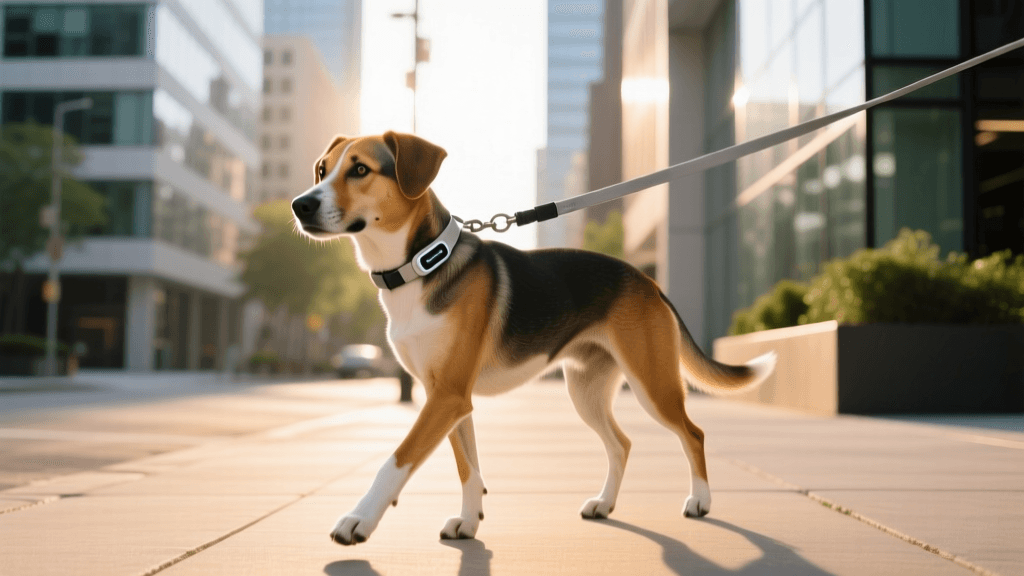
Walking a reactive dog through a bustling city environment is one of the most exhausting and emotionally taxing experiences a pet parent can face. In 2026, the proliferation of silent electric scooters, dense urban apartment living, and unpredictable delivery drones have introduced new variables that constantly test the nerves of anxious dogs. Leash reactivity is not a sign of a 'bad' dog; it is a complex behavioral response rooted in fear, frustration, or overstimulation. According to the ASPCA, reactivity is often a distance-increasing behavior where the dog uses barking, lunging, and posturing to make a perceived threat go away.
For urban dwellers, avoiding triggers entirely is nearly impossible. You cannot control when a neighbor's off-leash dog rounds the corner or when a silent e-bike zooms past on the sidewalk. Therefore, the goal of modern reactive dog management is not to create a perfectly obedient robot, but to change your dog's emotional response to these unavoidable triggers. The most effective, science-backed method for achieving this is the Engage-Disengage protocol, a game originally developed by Leslie McDevitt in her groundbreaking 'Control Unleashed' program.
The Neurobiology of the Reactive Brain
Before diving into the training mechanics, it is vital to understand what happens inside your dog's brain when they encounter a trigger. When a reactive dog spots another dog, a skateboard, or a loud truck, their amygdala (the brain's threat-detection center) hijacks their nervous system. This triggers a massive release of adrenaline and cortisol, preparing the dog for a 'fight or flight' response.
Once this chemical cocktail is released, the dog's prefrontal cortex—the area responsible for learning and logical decision-making—effectively shuts down. This is why offering a treat to a dog who is already lunging and barking rarely works; they are physically incapable of processing the reward or learning a new behavior in that moment. The core objective of the Engage-Disengage protocol is to work with the dog under threshold—at a distance far enough away that the amygdala is not fully activated, allowing the dog to remain in a cognitive state where neuroplasticity and learning can occur.
The Engage-Disengage Protocol Explained
The Engage-Disengage protocol is a two-phase training game that combines classical conditioning (changing the emotional response) with operant conditioning (rewarding a specific behavior). Here is how to execute both phases effectively in an urban setting.
Phase 1: Engage (Classical Conditioning)
In the first phase, you are simply pairing the sight of the trigger with a high-value reward. You are teaching your dog that 'seeing a strange dog predicts that amazing things happen.'
- Spot the Trigger: Your dog notices a trigger (e.g., a person walking their dog across the street) while remaining under their reactivity threshold.
- Mark the Behavior: The exact second your dog looks at the trigger, use a marker word like 'Yes!' or a clicker.
- Deliver the Reward: Immediately feed a high-value treat. The dog does not need to look back at you; you are rewarding the act of looking at the trigger.
Repeat this process every time the dog looks at the trigger. Over time, the dog's emotional response shifts from 'Oh no, a threat!' to 'Oh boy, a treat predictor!'
Phase 2: Disengage (Operant Conditioning)
Once your dog is consistently anticipating a treat after looking at a trigger, you move to Phase 2. Now, you are waiting for the dog to voluntarily look away from the trigger and back at you.
- Spot the Trigger: Your dog looks at the trigger.
- Wait for Disengagement: Do not mark immediately. Wait for your dog to voluntarily turn their head away from the trigger and make eye contact with you.
- Mark and Reward: The moment they look at you, say 'Yes!' and deliver a jackpot reward (3-4 treats in a row).
This phase empowers the dog. They learn that they have the agency to remove themselves from a stressful situation by checking in with their handler, which drastically reduces feelings of trapped panic on a leash.
Essential Gear for Urban Reactivity Management
Success in reactive dog training relies heavily on having the right equipment. Using aversive tools like prong collars or e-collars is strongly discouraged, as the American Veterinary Society of Animal Behavior (AVSAB) warns that punishment-based tools can suppress warning signs while increasing underlying anxiety and aggression. Instead, invest in force-free, secure gear that gives you control without causing pain. Below is a curated list of essential gear for 2026, complete with estimated costs.
| Item | Brand / Model | Purpose & Benefit | 2026 Est. Cost |
|---|---|---|---|
| Front-Clip Harness | Ruffwear Front Range | Provides a secure front-clip to gently redirect lunging without neck pressure. | $48.00 |
| Bungee Leash | Ruffwear Roamer | Absorbs the shock of sudden lunges, protecting both the dog's spine and your shoulder. | $38.00 |
| Treat Pouch | Dog Gone Smart Reward Pouch | Features a wide, open top and magnetic closure for lightning-fast treat delivery. | $28.00 |
| High-Value Treats | Stella & Chewy's Freeze-Dried Raw | Highly aromatic and motivating; essential for breaking through urban distractions. | $34.00 |
| Calming Snuffle Mat | PAW5 Wooly Snuffle Mat | Used for post-walk decompression to lower cortisol through natural foraging. | $45.00 |
Step-by-Step Field Guide: Hitting the Pavement
Theory is only half the battle; executing the protocol in a chaotic city requires strategy and environmental management. Follow these steps for your next training walk.
1. Map Your 'Safe Zones'
Before starting, identify areas with predictable sightlines. Open parks, quiet suburban cul-de-sacs, or wide commercial plazas are ideal. Avoid narrow alleyways or crowded farmer's markets where you might get trapped by an off-leash dog or a fast-moving cyclist.
2. Find the 'Threshold Distance'
Your dog's threshold is the distance at which they notice a trigger but can still eat treats and respond to their name. For some dogs, this is 50 feet; for others, it is a full city block. If your dog refuses a piece of freeze-dried liver, you are too close. Increase the distance immediately.
3. Advocate for Your Dog
In 2026, urban density means you must be your dog's bodyguard. Do not hesitate to cross the street, duck behind a parked car, or step into a driveway to create space. Use visual cues like a yellow 'Nervous' leash sleeve or a vest that says 'Give Space' to signal to well-meaning but oblivious strangers that your dog needs a wide berth.
Executing the Emergency U-Turn
Despite your best efforts, surprises happen. A neighbor's dog might suddenly burst out of a front door, or a silent e-scooter might jump the curb. When a trigger appears suddenly and pushes your dog over threshold, the Engage-Disengage game is no longer viable. You must execute an Emergency U-Turn.
The Emergency U-Turn Maneuver:
1. Cheerfully say your cue word (e.g., 'Let's Go!' or 'Touchdown!').
2. Quickly pivot 180 degrees away from the trigger.
3. Pat your leg and encourage your dog to follow you by running a few steps away.
4. The moment your dog catches up to you, deliver a continuous stream of high-value treats for 5 to 10 seconds.
5. Do not jerk the leash; use your body language and vocal enthusiasm to draw the dog away from the threat.
Practicing this maneuver at home in your living room, and then in empty parking lots, ensures that when the real emergency happens, your dog recognizes the cue and follows you on autopilot.
Decompression: The Hidden Key to Success
Many handlers focus entirely on the walk and forget about the aftermath. When a dog experiences a reactive outburst, their cortisol levels spike. Studies in canine behavioral endocrinology show that it can take up to 72 hours for a dog's nervous system to return to baseline after a severe trigger event. If you take your reactive dog on a stressful walk every single day, they are living in a state of chronic 'cortisol stacking,' making them more likely to react explosively on day three.
After a stressful walk, prioritize decompression. Skip the next day's urban walk and replace it with indoor enrichment. Use the snuffle mat listed in the gear table, provide a frozen lick mat, or engage in scent work in your backyard. Allowing the dog's nervous system to reset is just as critical as the active training itself.
When to Enlist a Certified Professional
While the Engage-Disengage protocol is highly effective for mild to moderate reactivity, severe cases involving redirected aggression, bite histories, or extreme panic require professional intervention. If your dog is injuring themselves on the leash, injuring you, or if you feel entirely overwhelmed, it is time to seek help. Look for a certified behavior consultant who adheres to force-free, science-based methodologies. The International Association of Animal Behavior Consultants (IAABC) maintains a directory of rigorously vetted professionals who can help you design a customized behavior modification plan tailored to your specific urban environment.
Frequently Asked Questions
How long will it take to see results?
Behavior modification is a marathon, not a sprint. For a dog with a multi-year history of leash reactivity, you should expect to dedicate at least 3 to 6 months of consistent, daily threshold work before seeing a significant reduction in explosive outbursts. Progress is rarely linear; you will have great days and terrible days.
Can I use a treat to lure my dog away from the trigger?
During the Engage-Disengage protocol, avoid putting the treat directly on your dog's nose to pull them away. This can create frustration and barrier frustration. Instead, mark the behavior, and deliver the treat near your body or toss it on the ground behind the dog to encourage them to turn away and sniff, which naturally lowers their heart rate.
What if my dog won't eat the treats?
Refusal to eat is the ultimate indicator that your dog is over threshold. Their digestive system has shut down in favor of survival mode. Do not force the treat. Simply increase your distance from the trigger until your dog feels safe enough to eat again. Next time, start your training session further away from the distraction.
beth-carrasco
All our authors care for dogs every day — read more of their work on the authors page.