Goldendoodle vs Labradoodle vs Bernedoodle: Best Doodle for You
Compare Goldendoodle, Labradoodle, and Bernedoodle traits, costs, and grooming needs to find the perfect hypoallergenic family dog for your lifestyle.
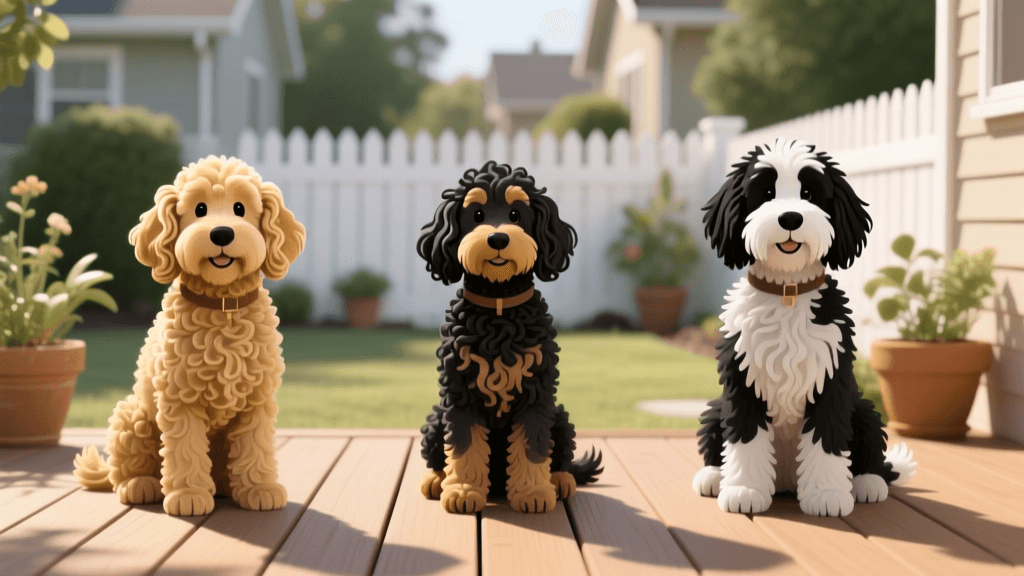
The Rise of the Doodle: Understanding Poodle Crossbreeds
Over the past two decades, 'designer dogs' have taken the canine world by storm, with Poodle crosses leading the charge. The appeal is easy to understand: by crossing the highly intelligent, low-shedding Standard Poodle with other beloved purebreds, breeders aim to create the ultimate family companion. However, choosing the right Doodle for your household requires more than just picking a cute name. Each crossbreed inherits a unique blend of physical traits, energy levels, and temperaments from its non-Poodle parent. In this comprehensive guide, we will compare the three most popular large Doodle breeds—the Goldendoodle, the Labradoodle, and the Bernedoodle—to help you make an informed, lifelong commitment.
Goldendoodle: The Cheerful and Social Extrovert
The Goldendoodle is a cross between the Poodle and the Golden Retriever. Known for their perpetually happy expressions and eager-to-please attitudes, Goldendoodles are widely considered the quintessential family dog. They are exceptionally social, thriving in environments where they are included in daily activities. Standard Goldendoodles typically weigh between 50 and 90 pounds and stand 20 to 26 inches tall at the shoulder.
Because of their Golden Retriever lineage, these dogs are highly empathetic and make excellent therapy or emotional support animals. However, their deep devotion comes with a caveat: they are highly prone to separation anxiety. A Goldendoodle is not well-suited for a household where they will be left alone in a crate or empty house for eight to ten hours a day. They require 45 to 60 minutes of daily exercise, including brisk walks, games of fetch, and interactive play. Early socialization during the critical 8-to-16-week window is vital to ensure their natural friendliness does not turn into fearful reactivity.
Labradoodle: The Active and Intelligent Companion
Originally bred in Australia in the 1980s to serve as hypoallergenic guide dogs, the Labradoodle combines the Poodle with the Labrador Retriever. While they share a similar size and weight profile with the Goldendoodle (50 to 85 pounds), their temperament is distinctly different. Labradoodles tend to be slightly more independent, highly energetic, and wonderfully 'goofy.'
This breed is built for action. A Standard Labradoodle requires 60 to 90 minutes of vigorous daily exercise. They excel in canine sports such as agility, dock diving, and advanced obedience. If you are an avid runner, hiker, or live near a lake where your dog can swim, the Labradoodle is your perfect match. Mentally, they are incredibly sharp but can become destructive if bored. Investing in puzzle toys, snuffle mats, and daily training sessions is non-negotiable for this breed. They are fantastic with children, though their exuberant jumping and boisterous play style may require careful management around toddlers.
Bernedoodle: The Gentle and Calm Giant
The Bernedoodle is the newest of the three, crossing the Poodle with the majestic Bernese Mountain Dog. Bred primarily for companionship rather than fieldwork or retrieving, the Bernedoodle offers a significantly calmer demeanor. Standard Bernedoodles are true giants, often weighing between 70 and 110 pounds, with some males exceeding this range. Despite their imposing size, they are notorious couch potatoes.
A Bernedoodle typically requires only 30 to 45 minutes of moderate exercise, such as a leisurely neighborhood walk or a gentle hike in the woods. They are deeply loyal, often bonding closely with one or two family members, and can be somewhat aloof or wary of strangers compared to the universally friendly Goldendoodle. Puppies can be notoriously stubborn, requiring patient, positive-reinforcement-based training methods. Additionally, prospective owners must be prepared for a shorter lifespan; while smaller Doodles can live up to 15 years, giant Bernedoodles typically have a lifespan of 10 to 12 years.
Head-to-Head Comparison Chart
| Metric | Goldendoodle | Labradoodle | Bernedoodle |
|---|---|---|---|
| Weight Range | 50 - 90 lbs | 50 - 85 lbs | 70 - 110+ lbs |
| Energy Level | Moderate (45-60 mins) | High (60-90 mins) | Low to Moderate (30-45 mins) |
| Temperament | Social, Eager, Empathetic | Active, Goofy, Intelligent | Calm, Loyal, Stubborn |
| Grooming Needs | High (Daily brushing) | High (Daily brushing) | Very High (Thick, dense coat) |
| Average Lifespan | 12 - 15 years | 12 - 15 years | 10 - 12 years |
| Est. Puppy Cost | $2,000 - $3,500 | $2,000 - $3,500 | $2,500 - $4,500 |
The Hypoallergenic Myth and Grooming Realities
Important Note: No dog breed is 100% hypoallergenic. Pet allergies are triggered by dander (dead skin flakes), saliva, and urine, not just hair. However, low-shedding coats trap dander close to the skin, reducing airborne allergens.
When selecting a Doodle, you must understand generational breeding. An F1 Doodle is a 50/50 cross between a purebred Poodle and a purebred Retriever or Bernese. These dogs often have 'fleece' or 'shaggy' coats and may shed lightly. If you have severe allergies, you must seek an F1B Doodle, which is an F1 Doodle crossed back with a purebred Poodle, resulting in a dog that is 75% Poodle. F1B dogs typically have tight, curly coats that are virtually non-shedding.
Owning a Doodle is a significant financial and time commitment regarding grooming. You will need to budget for professional grooming every 6 to 8 weeks, which typically costs between $80 and $150 per session depending on your location and the dog's size. At home, you must brush your Doodle at least three to four times a week to prevent painful matting close to the skin. Essential tools include a high-quality slicker brush (such as the Chris Christensen Big G) and a stainless steel Greyhound comb to check for tangles down to the skin.
Health, Lifespan, and Veterinary Considerations
While crossbreeding can sometimes introduce 'hybrid vigor,' Doodles are still susceptible to the genetic health issues of their parent breeds. Because all three of these crosses involve large, deep-chested dogs, they are at risk for Gastric Dilatation-Volvulus (bloat). Feeding multiple small meals a day and avoiding vigorous exercise immediately after eating is crucial.
Furthermore, joint issues are a primary concern. The Orthopedic Foundation for Animals (OFA) notes that hip and elbow dysplasia are prevalent in Golden Retrievers, Labradors, and Bernese Mountain Dogs. When purchasing a Doodle puppy, it is imperative to demand proof that both parent dogs have been screened and cleared for hip and elbow dysplasia, as well as genetic DNA testing for conditions like Progressive Retinal Atrophy (PRA) and von Willebrand's disease. Expect to spend roughly $600 to $1,000 in the first year on veterinary care, including initial vaccination series, spay/neuter surgery, and heartworm/flea preventatives.
How to Select the Right Doodle for Your Home
Making the final decision comes down to an honest assessment of your lifestyle, living situation, and time availability:
- Choose the Goldendoodle if: You have a busy, social household, want a highly trainable therapy dog, and have the time to dedicate to a dog that craves constant human companionship.
- Choose the Labradoodle if: You lead an active, outdoor lifestyle, enjoy hiking or running, and want a highly intelligent dog that can participate in advanced canine sports and agility training.
- Choose the Bernedoodle if: You prefer a calmer, more relaxed home environment, have ample space for a giant breed, and want a deeply loyal, low-energy companion for cozy evenings.
Finally, while buying from a reputable, health-testing breeder is the most common route, consider adoption. Breed-specific rescues, such as Doodle rescues or Poodle rescues, frequently take in adult Doodles that have been surrendered due to their owners underestimating the grooming and exercise requirements. Adopting an adult Doodle allows you to bypass the destructive puppy phase and accurately assess the dog's adult size, coat type, and established personality.
Final Thoughts
Bringing a Doodle into your home is a 10-to-15-year commitment that brings immense joy, laughter, and companionship. By looking past the trendy names and focusing on the distinct energy levels, health requirements, and grooming realities of the Goldendoodle, Labradoodle, and Bernedoodle, you can confidently select the perfect canine partner for your family's unique lifestyle.
anouk-beaumont
All our authors care for dogs every day — read more of their work on the authors page.