The Psychology of Dog-Proofing: Creating a Stress-Free Home
Discover how canine psychology influences dog-proofing. Learn to design a low-stress, safe home environment that reduces anxiety and destructive behaviors.

Beyond Baby Gates: The Canine Perspective on Home Environments
When most new pet parents think of dog-proofing, they envision taping down loose electrical wires, elevating toxic houseplants, and hiding expensive leather shoes in the back of the closet. While physical safety is undeniably paramount, true dog-proofing requires a much deeper understanding of canine psychology. Dogs do not experience a home merely as a collection of rooms filled with furniture; they experience it as a complex sensory landscape filled with territorial markers, safe zones, and potential stressors.
To create a truly harmonious living space, we must shift our perspective from simply protecting our belongings to protecting our dog's mental well-being. A poorly designed environment can trigger chronic stress, barrier frustration, and anxiety-driven behaviors. Conversely, a psychologically optimized home can serve as a sanctuary that promotes relaxation, confidence, and emotional stability. By understanding how dogs perceive space, scent, and territory, we can design a low-stress environment that naturally curbs behavioral issues before they even begin.
The Link Between Environment, Anxiety, and Destructive Behavior
One of the most common misconceptions in dog ownership is that destructive behavior—such as chewing baseboards, digging at carpets, or shredding pillows—is an act of spite or revenge. In reality, destruction is almost always a coping mechanism for environmental stress, boredom, or anxiety. When a dog feels overwhelmed by their surroundings or suffers from separation distress, chewing provides a neurological release. The physical act of gnawing releases endorphins in the canine brain, effectively self-soothing their nervous system.
According to the American Society for the Prevention of Cruelty to Animals (ASPCA), destructive behavior is a primary symptom of separation anxiety and environmental stress. If a dog's environment lacks appropriate outlets for their natural instincts, or if the layout of the home constantly exposes them to stressors (like a front window overlooking a busy street), their anxiety will manifest physically. Psychological dog-proofing means identifying these triggers and removing the dog's access to them, while simultaneously providing appropriate, enriching alternatives.
Behavioral Insight: Dogs do not generalize well. If a dog chews a shoe that was left in the middle of the living room, they do not understand the concept of 'valuable property.' They only understand that the texture of the leather provided satisfying resistance and stress relief. Environmental management is always more effective than expecting a dog to simply 'know better.'
Designing the 'Safe Zone': Psychological Dog-Proofing
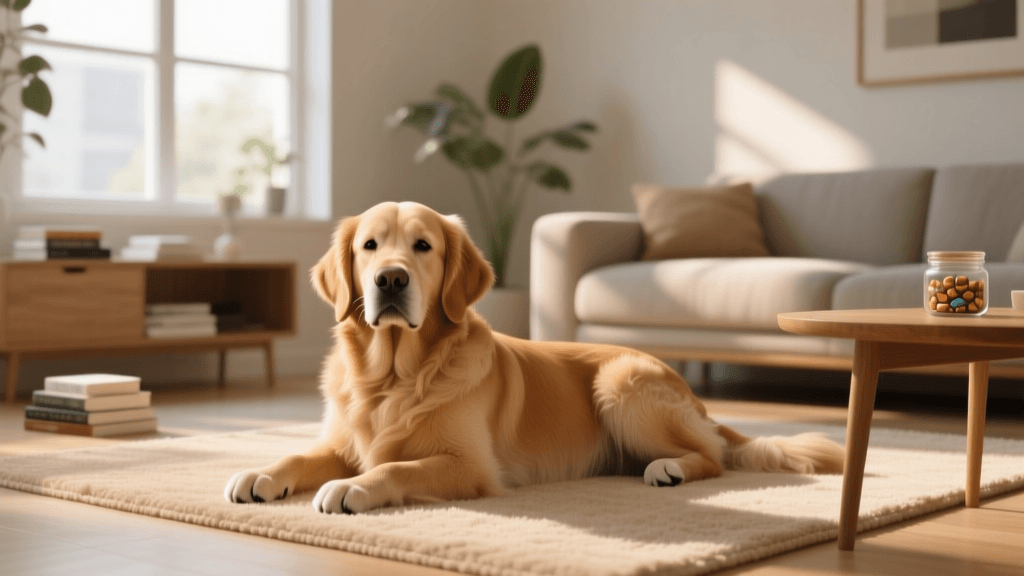
Every dog needs a designated sanctuary—a place where they can retreat when the environment becomes overwhelming. In the wild, canines seek out dens for protection and rest. In a modern home, we must artificially recreate this denning instinct. This is where crate training and designated 'safe zones' become critical components of dog-proofing.
The Humane Society of the United States emphasizes that a crate should never be used as a place of punishment, but rather as a secure, cozy den. To psychologically dog-proof a safe zone, consider the following environmental adjustments:
- Location Matters: Place the crate or dog bed in a low-traffic area that is still part of the family's general vicinity. Dogs are social animals; isolating them in a dark basement can increase anxiety, while placing them in the middle of a chaotic kitchen prevents rest.
- Sensory Buffering: Use a crate cover to reduce visual stimuli. For dogs sensitive to noise, placing a white noise machine or a fan near their safe zone can mask triggering outdoor sounds like sirens, delivery trucks, or neighborhood dogs.
- Scent Association: Place an unwashed t-shirt with your scent in their safe zone. Familiar olfactory cues provide immense psychological comfort to dogs when they are resting or left alone.
Managing Sensory Overload and Barrier Frustration
Visual triggers are a massive source of chronic stress for many dogs. A dog that spends hours barking at pedestrians, mail carriers, or other animals passing by the front window is experiencing 'barrier frustration.' This constant state of high arousal floods their system with cortisol and adrenaline, making it impossible for them to relax indoors.
The Solution: Apply frosted privacy window film (such as 3M Privacy Film) to the lower half of your windows. This allows natural light to enter the home while completely blocking the dog's line of sight to outdoor triggers. By removing the visual stimulus, you instantly lower the dog's baseline stress levels, effectively 'dog-proofing' their mental state against outdoor triggers.
Room-by-Room Psychological Dog-Proofing Guide
Physical hazards and psychological triggers often overlap. The table below outlines how to address both aspects of dog-proofing across different areas of your home.
| Room | Physical Hazard | Psychological Trigger | Dog-Proofing Solution |
|---|---|---|---|
| Living Room | Choking hazards, toxic houseplants, loose cords | Window reactivity, lack of clear resting boundaries | Apply window privacy film; provide a designated elevated dog cot or mat to establish a clear 'place' command zone. |
| Kitchen | Toxic foods (grapes, xylitol, onions), cleaning chemicals | Resource guarding, scavenging instinct, begging anxiety | Use baby gates to restrict access; store all food in airtight, dog-proof containers to eliminate scent temptation. |
| Bedroom | Medications, small jewelry, essential oil diffusers | Territorial insecurity, separation distress at night | Keep nightstands clear; provide a familiar-scented bed; use a DAP (Dog Appeasing Pheromone) diffuser to promote calm. |
| Entryway | Shoes, bags containing hazardous items | Over-arousal upon owner departure or arrival | Install closed storage cubbies; keep a jar of high-value treats near the door to practice calm departure routines. |
The Invisible Environment: Scent and Chemical Stressors
When we think of dog-proofing, we rarely think about the air our dogs breathe or the chemical residue left on our floors. A dog's sense of smell is exponentially more powerful than ours—estimates suggest they possess up to 300 million olfactory receptors compared to our 6 million. An environment that smells 'clean' to us might be overwhelmingly pungent and irritating to a dog.
According to the American Kennel Club (AKC), securing household chemicals is a vital step in puppy-proofing, but the psychological impact of harsh scents is equally important. Strong chemical cleaners, synthetic air fresheners, and essential oil diffusers (particularly those containing tea tree, eucalyptus, or citrus) can cause olfactory fatigue and respiratory irritation in dogs. A stressed dog is a dog that cannot settle.
Actionable Advice:
- Switch to Enzymatic Cleaners: When cleaning up accidents, avoid ammonia-based products. Ammonia smells like urine to a dog, which can psychologically encourage them to re-mark the same spot. Instead, use enzymatic cleaners like Nature's Miracle, which break down the uric acid crystals entirely.
- Embrace Olfactory Enrichment: Instead of masking odors with synthetic sprays, engage your dog's nose. Scatter feeding using a Snuffle Mat or hiding kibble around the living room taps into their natural foraging instincts. Fifteen minutes of sniffing can be as mentally tiring and satisfying for a dog as an hour of physical exercise, significantly reducing restless, destructive behaviors.
- Safe Chewing Alternatives: If your dog is prone to stress-chewing, provide long-lasting, safe alternatives. A Kong Classic stuffed with frozen plain pumpkin puree and a smear of dog-safe peanut butter provides both mental enrichment and the soothing physical act of chewing, redirecting their energy away from your furniture.
Conclusion: A Proactive Approach to Canine Well-Being
Ultimately, psychological dog-proofing is an exercise in empathy. It requires us to step outside our human perspective and view our living spaces through the eyes, ears, and noses of our canine companions. By managing visual triggers, creating secure sanctuaries, eliminating olfactory stressors, and providing appropriate outlets for natural instincts, we do more than just save our baseboards and shoes. We build a foundation of trust and security, ensuring our dogs feel as safe and comfortable in our homes as we do.
jonas-cole
All our authors care for dogs every day — read more of their work on the authors page.