Answering Google's Most-Asked Dog Dental Care Questions
Discover answers to Google's most-asked dog dental care questions. Learn about teeth cleaning costs, brushing routines, and the best dog toothpastes.
Answering Google's Most-Asked Dog Dental Care Questions
If you have ever typed "how to clean dog teeth" or "dog teeth cleaning cost" into a search engine, you are not alone. Canine dental health is one of the most searched topics among pet owners, and for good reason. According to the VCA Animal Hospitals, an estimated 80% of dogs show signs of periodontal disease by the time they reach three years of age. Left untreated, dental disease can lead to tooth loss, chronic pain, and even systemic infections affecting the heart, liver, and kidneys.
To help you navigate the overwhelming amount of information online, we have compiled answers to Google's most frequently asked questions about dog dental care. From exact product recommendations and cost breakdowns to step-by-step brushing guides, this comprehensive FAQ will give you the actionable advice you need to protect your pup's smile.
1. How Often Should I Brush My Dog's Teeth?
The gold standard for canine dental hygiene is brushing your dog's teeth once daily. Plaque, the sticky film of bacteria that forms on teeth, begins to harden into tartar (calculus) within 24 to 48 hours. Once tartar forms, it cannot be removed with a toothbrush and requires professional veterinary scaling.
However, we understand that daily brushing is not always realistic for every pet owner. If daily brushing is impossible, aim for a minimum of three to four times a week. Brushing less frequently than this will significantly reduce the effectiveness of your at-home routine and allow tartar to accumulate below the gumline, where it causes the most damage.
2. What Is the Best Dog Toothpaste to Buy?
Never use human toothpaste on your dog. Human toothpastes often contain fluoride and xylitol, both of which are highly toxic to dogs and can cause severe gastrointestinal distress, liver failure, or even death. Always choose an enzymatic toothpaste specifically formulated for canines.
Based on veterinary recommendations and widespread market success, here are the top-rated dog toothpastes:
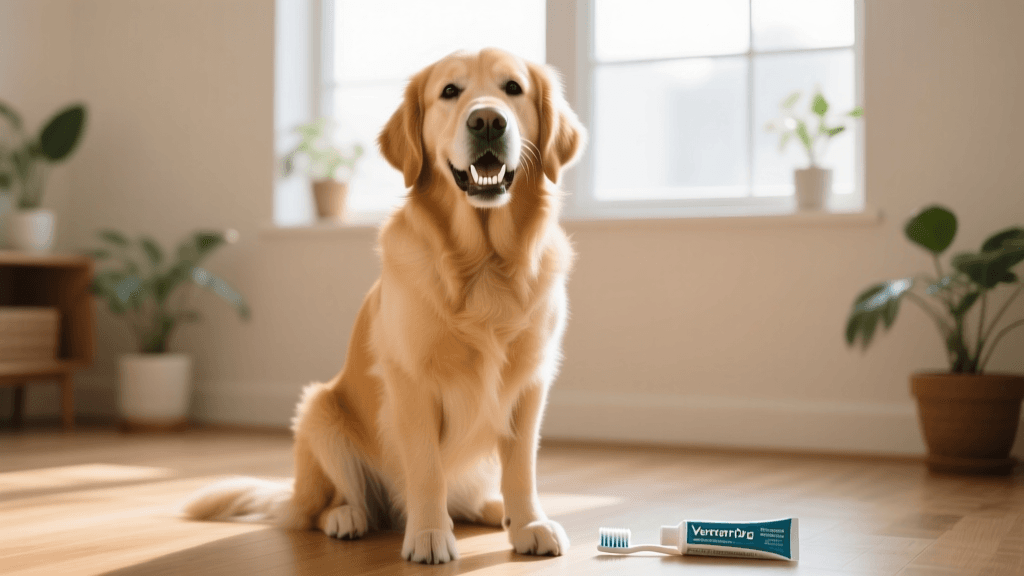
- Virbac C.E.T. Enzymatic Dog Toothpaste: This is widely considered the veterinary gold standard. It contains a dual-enzyme system (lactoperoxidase and glucose oxidase) that actively breaks down plaque. It costs around $12 to $15 for a 2.5 oz tube and comes in highly palatable flavors like Poultry, Beef, and Seafood.
- Sentry Petrodex Enzymatic Dog Toothpaste: A more budget-friendly option at roughly $8 to $10 for a 2.5 oz tube. It effectively reduces plaque and bad breath and is available in a malt flavor that many dogs find appealing.
- Arm & Hammer Clinical Dog Dental Care Kit: Priced around $7, this kit often includes a dual-head toothbrush and a baking soda-infused enzymatic toothpaste, making it a great starter kit for new puppy owners.
3. How Much Does a Professional Dog Teeth Cleaning Cost?
One of the most common Google searches is related to the cost of professional veterinary dental cleanings. The price can vary wildly based on your geographic location, the size of your dog, and the severity of their dental disease. On average, a comprehensive veterinary dental cleaning under anesthesia ranges from $500 to $1,500 or more.
According to guidelines supported by the American Veterinary Medical Association (AVMA), a proper veterinary dental cleaning must include general anesthesia, dental radiographs (X-rays), and ultrasonic scaling. Here is a detailed breakdown of what you are paying for:
Estimated Cost Breakdown for Professional Dental Cleaning
| Service Component | Estimated Cost | Purpose |
|---|---|---|
| Pre-Anesthetic Bloodwork | $80 - $150 | Ensures the liver and kidneys can safely process anesthesia. |
| General Anesthesia & IV Fluids | $150 - $350 | Keeps the dog pain-free, still, and protects the airway from water/debris. |
| Ultrasonic Scaling & Polishing | $200 - $400 | Removes tartar above and below the gumline; smooths the tooth surface. |
| Full Mouth Dental Radiographs | $100 - $250 | Identifies hidden root infections, bone loss, and resorptive lesions. |
| Tooth Extractions (if needed) | $100 - $500+ per tooth | Surgical removal of diseased, fractured, or dead teeth. |
Note: Always be wary of "anesthesia-free" dental cleanings offered by groomers. The AVMA and veterinary dental specialists strongly advise against these, as they only clean the visible crown of the tooth while leaving painful, disease-causing tartar hidden below the gumline completely untouched.
4. Are Dental Chews and Water Additives Effective?
Dental chews and water additives are excellent supplemental tools, but they are not a replacement for brushing. When shopping for these products, you should look for the VOHC (Veterinary Oral Health Council) Seal of Acceptance. The VOHC is an independent entity that evaluates pet dental products based on strict clinical trials to prove their efficacy in reducing plaque and tartar.
- Top VOHC-Approved Chews: Purina DentaLife Daily Oral Care Dental Chews, GREENIES Original TEENIE Dental Dog Treats, and Virbac C.E.T. VeggieDent FR3SH Chews. Expect to pay $20 to $35 for a month's supply depending on your dog's size.
- Top VOHC-Approved Water Additives: TROPICLEAN Fresh Breath Dental Health Kit and Oxyfresh Pet Dental Care Solution. These typically cost $10 to $15 per bottle and work by altering the pH of your dog's mouth or introducing enzymes that break down bacterial biofilms. Simply add one capful to your dog's daily water bowl.
5. What Are the Warning Signs of Dental Disease in Dogs?
Dogs are evolutionary masters at hiding pain. By the time your dog stops eating or cries when chewing, the dental disease is usually severe. The ASPCA recommends watching for these subtle, early warning signs:
- Persistent Halitosis (Bad Breath): While "dog breath" is common, a truly foul, rotting odor indicates bacterial overgrowth and infection.
- Red, Swollen, or Bleeding Gums: Known as gingivitis, this is the earliest stage of periodontal disease and is entirely reversible with professional cleaning and home care.
- Dropping Food or Chewing on One Side: This indicates localized pain, possibly from a fractured tooth or a severe root abscess.
- Pawing at the Mouth or Face Rubbing: A clear sign of oral discomfort or nerve pain.
- Visible Brown/Yellow Tartar Buildup: Especially near the gumline on the upper premolars and canine teeth.
Step-by-Step Guide to Brushing Your Dog's Teeth at Home
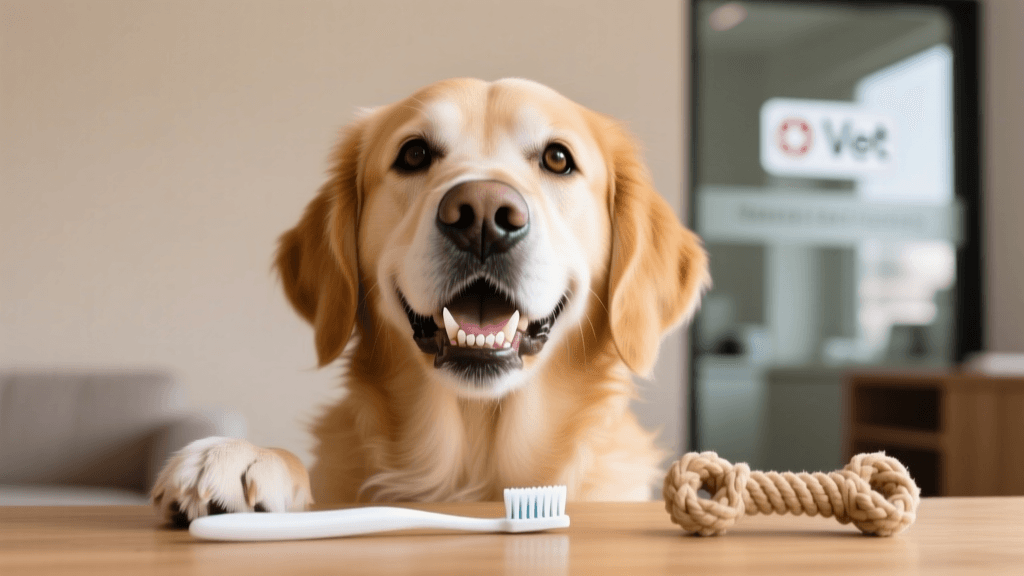
If you have never brushed your dog's teeth, do not simply shove a toothbrush into their mouth. You must desensitize them to the process over a period of one to two weeks.
- The Taste Test (Days 1-3): Put a pea-sized amount of Virbac or Sentry enzymatic toothpaste on your finger and let your dog lick it off like a treat. Do this once a day to build positive associations.
- Finger Rubbing (Days 4-7): Apply the toothpaste to your finger and gently rub it along the outside surfaces of your dog's teeth and gums. Praise them heavily and offer a high-value treat immediately after.
- Introduce the Brush (Days 8-10): Use a dog-specific dual-head toothbrush or a soft silicone finger brush. Put the toothpaste on the bristles and let them lick it, then gently touch the brush to their front teeth for just 5 seconds.
- Full Brushing Routine (Day 11+): Lift the upper lip to expose the teeth. Hold the brush at a 45-degree angle to the gumline. Use small, gentle circular motions. Focus primarily on the buccal surfaces (the outside of the teeth facing the cheeks), as this is where tartar accumulates fastest. You only need to brush for about 30 to 60 seconds total.
Comparison Chart: At-Home vs. Professional Dental Care
| Feature | At-Home Brushing & Chews | Professional Veterinary Cleaning |
|---|---|---|
| Primary Goal | Preventative maintenance; slowing plaque accumulation. | Curative; removing existing tartar and treating disease. |
| Frequency | Daily to 3x per week. | Every 1 to 3 years, depending on breed and genetics. |
| Cost | $5 - $20 per month. | $500 - $1,500+ per session. |
| Subgingival Cleaning | No (cannot reach below the gumline safely). | Yes (ultrasonic scalers clean deep periodontal pockets). |
| Diagnostics | Visual inspection only. | Full mouth radiographs to assess bone loss and roots. |
Final Thoughts on Preventive Dog Dental Care
Proactive dental care is one of the most impactful things you can do to extend your dog's lifespan and improve their daily quality of life. While the upfront cost of a professional veterinary dental cleaning may seem steep, it is far less expensive—and far less traumatic—than treating advanced heart disease or performing emergency oral surgery for a fractured, abscessed tooth.
Start an at-home brushing routine with a high-quality enzymatic toothpaste today, supplement with VOHC-approved chews, and schedule an annual oral exam with your veterinarian. Your dog relies on you to keep their smile healthy, pain-free, and ready for a lifetime of fetching, chewing, and playing.
tom-renshaw
All our authors care for dogs every day — read more of their work on the authors page.