Raising a Diabetic Alert Puppy: Early Scent Imprinting in 2026
Learn how to start early scent imprinting for diabetic alert puppies in 2026. Discover safe swabbing techniques, reward systems, and milestones.
Introduction to Diabetic Alert Dogs (DADs)
Welcome to the highly specialized world of working dog development. As we navigate 2026, the demand for Diabetic Alert Dogs (DADs) has surged, driven by a deeper understanding of how canine olfaction can mitigate life-threatening medical emergencies. Raising a DAD puppy is not like raising a standard family pet; it requires a meticulous, science-backed approach to early development. The foundation of a reliable medical alert dog is laid during the first few months of life, long before the puppy ever steps foot in a formal public access training class.
For puppy raisers and future handlers, understanding the nuances of Early Scent Imprinting (ESI) is critical. This guide will walk you through the exact protocols, modern reward systems, and developmental milestones required to raise a successful diabetic alert puppy in 2026, ensuring your puppy is prepared for the rigors of service work while maintaining their physical and mental well-being.
The Science of Canine Olfaction and Hypoglycemia
To train a diabetic alert puppy, you must first understand what they are smelling. When a person with insulin-dependent diabetes experiences a rapid drop in blood glucose (hypoglycemia), their body undergoes a biochemical shift. According to the American Diabetes Association, hypoglycemia can lead to confusion, loss of consciousness, and even seizures if left untreated. During these drops, the body releases specific Volatile Organic Compounds (VOCs), most notably isoprene, through the breath and sweat.
Dogs possess up to 300 million olfactory receptors, compared to our mere 6 million. This biological advantage allows them to detect the subtle chemical changes of dropping blood sugar long before a continuous glucose monitor (CGM) might trigger an alarm. By introducing these specific scent profiles during the puppy's critical neurological development windows, we can wire their brain to associate the smell of hypoglycemia with a high-value reward, transforming a biological odor into a trigger for a life-saving alert behavior.
Step-by-Step Scent Swab Collection Protocol
The integrity of your scent samples is the most critical factor in DAD training. If a sample is contaminated with lotions, food odors, or normal baseline sweat, the puppy will learn the wrong scent profile. In 2026, professional service dog organizations adhere to strict collection protocols to ensure sample purity.
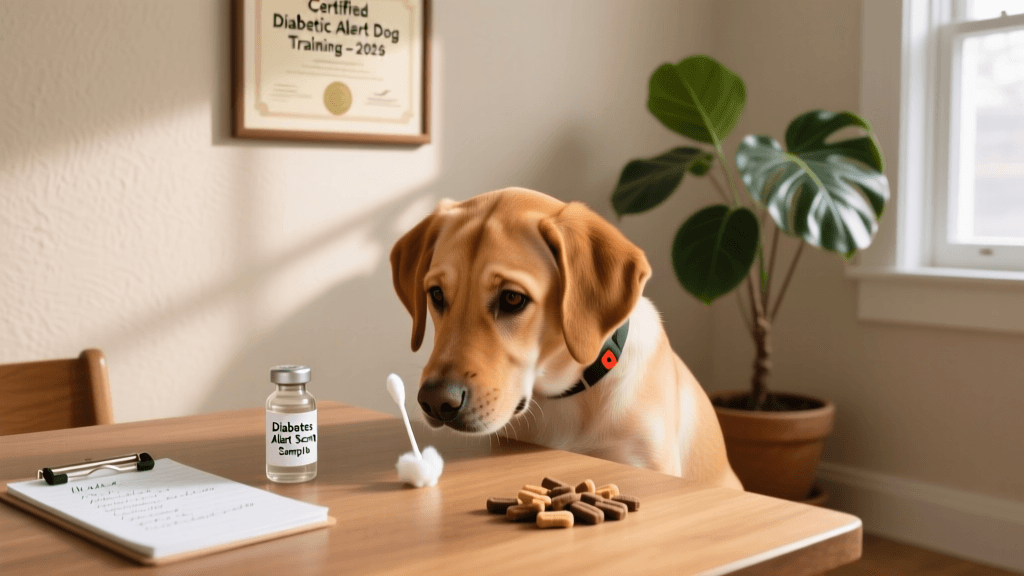
- Preparation: Use only sterile, individually wrapped cotton swabs and 2ml amber glass vials with PTFE-lined septa caps. Amber glass prevents UV light from degrading the VOCs, and PTFE liners ensure no chemical leaching from the cap.
- Collection Timing: Swabs must be collected exactly when the handler's blood sugar is dropping rapidly, ideally between 55 mg/dL and 70 mg/dL. Do not collect samples when blood sugar is stable or high.
- The Swabbing Process: Wearing powder-free nitrile gloves, swab the back of the neck, the sternum, and the armpits. These areas produce apocrine sweat, which carries the highest concentration of VOCs.
- Storage: Immediately place the swab into the glass vial, seal it tightly, and place it in a dedicated medical-grade freezer (-20°C) that contains absolutely no food items. Label the vial with the date, time, and exact blood glucose reading.
The 2026 Imprinting Schedule: Week 3 to Week 12
Early Scent Imprinting should begin as early as 3 weeks of age, while the puppy is still in the whelping box, and continue through the primary socialization period. Below is a structured milestone chart for the first 12 weeks of a DAD puppy's life.
| Puppy Age | Imprinting Stage | Session Duration | Target Behavior & Goal |
|---|---|---|---|
| 3 - 4 Weeks | Passive Exposure | 10-15 seconds | Introduce the open vial near the whelping box while puppies are nursing or sleeping. Goal: Familiarization without pressure. |
| 5 - 6 Weeks | Active Association | 3-5 seconds | Present vial right before feeding time or high-value play. Goal: Puppy begins to anticipate positive outcomes when the scent is present. |
| 7 - 9 Weeks | Targeted Engagement | 5-10 seconds | Present vial and wait for any interaction (sniff, look, paw). Mark and reward heavily. Goal: Active seeking of the scent source. |
| 10 - 12 Weeks | Alert Shaping | 1-2 minutes | Hide the vial in a scent wheel or on a low shelf. Reward only specific alert behaviors (e.g., nose nudge). Goal: Formalizing the alert. |
Shaping the Alert Behavior
Once the puppy reliably seeks out the scent of the hypoglycemia swab, you must shape a specific, unobtrusive alert behavior. The Assistance Dogs International (ADI) recommends that medical alert behaviors be clear to the handler but subtle enough not to draw unwanted attention in public settings.
For DADs, the two most common alerts are the nose nudge (bumping the handler's hand or leg) and the bring-a-bringel (fetching a specific toy or medical pouch). Avoid training a pawing alert, as this can become destructive or painful as a medium-to-large breed puppy grows into an adult working dog. Use a clicker or a distinct verbal marker like 'Yes!' the exact millisecond the puppy's nose makes contact with your skin, followed immediately by a jackpot reward.
Choosing High-Value Rewards for Working Puppies
Working puppies require a higher rate of reinforcement than pet dogs, especially during the demanding cognitive load of scent work. However, you must balance high-value rewards with the nutritional needs of a growing puppy to prevent rapid growth spurts that can damage developing joints.
In 2026, top service dog trainers recommend single-ingredient, freeze-dried proteins that can be broken into pea-sized pieces. Excellent options include freeze-dried beef liver, green tripe, or wild-caught minnows. Avoid commercial treats with high carbohydrate fillers or artificial preservatives. Calculate the puppy's daily caloric intake and deduct the calories used during training sessions from their regular meals to prevent obesity, which is detrimental to a working dog's longevity.
Public Access Prep in a Modern 2026 Environment
A diabetic alert dog must be able to perform their task in highly distracting environments. The landscape of public access has evolved, and modern puppy socialization must account for 2026's unique urban stimuli. Puppies must be systematically desensitized to automated delivery robots, silent electric scooters, digital signage, and the hum of modern transit hubs.
Under the guidelines set forth by the Americans with Disabilities Act (ADA), service dogs in training must eventually be exposed to public spaces, though local laws vary regarding 'in-training' access rights. Start by socializing your puppy in low-traffic outdoor plazas, gradually working up to busy grocery stores and medical clinics. Always pair novel, potentially frightening stimuli with high-value treats to build a confident, resilient temperament.
Orthopedic Care and Veterinary Partnerships
Because DADs are often selected from sporting or herding breeds like Labrador Retrievers, Golden Retrievers, and German Shepherds, orthopedic health is a primary concern. At 16 weeks of age, schedule a PennHIP evaluation with your veterinarian to assess joint laxity and predict the likelihood of hip dysplasia. Early detection allows you to modify the puppy's exercise regimen, avoiding high-impact activities like fetch on hard surfaces or repetitive jumping, which can degrade developing cartilage.
Common Pitfalls to Avoid
Scent Contamination
The fastest way to ruin a DAD puppy's training is through scent contamination. Never handle the hypoglycemia swabs after applying hand sanitizer, eating, or using scented lotions. Always use fresh nitrile gloves when handling the glass vials.
Alert Fatigue and False Alerts
If you present the scent too frequently without allowing the puppy to succeed, or if you accidentally reward the puppy when they alert to a 'normal' blood sugar baseline, you will create false alerting behaviors. Keep sessions incredibly short—no more than 3 to 5 repetitions per session—and always end on a massive success. If the puppy seems confused or frustrated, put the scent away and play a simple game of tug to rebuild their confidence.
Conclusion
Raising a diabetic alert puppy is a profound responsibility that blends rigorous science with deep compassion. By adhering to strict swabbing protocols, utilizing modern high-value rewards, and carefully navigating the 2026 public access landscape, you are laying the groundwork for a dog that will one day save a life. Patience, consistency, and an unwavering commitment to the puppy's physical and mental health will ensure your DAD candidate matures into a reliable, confident, and heroic working partner.
aaron-whyte
All our authors care for dogs every day — read more of their work on the authors page.