Preparing Your Dog for a New Baby: Decoding Stress Signals in 2026
Learn how to decode your dog's stress signals and body language when welcoming a newborn in 2026. Expert tips for a safe, smooth family transition.
The Psychology of the Pack Shift
Bringing a newborn baby into your home is one of the most joyful life transitions a family can experience, but for your dog, it represents a massive disruption to their established environment. As we navigate pet care and behavioral science in 2026, veterinary behaviorists emphasize that understanding your dog's psychological response to this transition is the absolute key to a harmonious household. Dogs are creatures of profound habit. They map their world through olfactory cues, auditory baselines, and predictable daily routines. When a baby arrives, the home is suddenly flooded with new scents (lotions, diapers, formula), high-pitched noises, and a drastic shift in the owners' attention and energy.
According to the ASPCA, gradual desensitization to these new stimuli is critical for preventing behavioral fallout. If a dog is not prepared for this transition, the sudden environmental shift can trigger chronic stress, anxiety, and unpredictable behavior. To manage this, we must look beyond basic obedience commands and dive deep into canine body language, learning to read the subtle signals our dogs use to communicate their internal emotional state long before a situation escalates into a safety concern.
Decoding Canine Stress Signals
Many well-meaning parents assume their dog is 'fine' because they aren't growling or barking. However, canine communication is incredibly nuanced. By the time a dog vocalizes a warning, they have likely been exhibiting subtle stress signals for weeks or even months. Understanding these signals is vital during the vulnerable transition period of bringing a newborn home.
Subtle Calming and Appeasement Signals
Originally documented by canine behaviorist Turid Rugaas, calming signals are subtle body language cues dogs use to self-soothe and de-escalate potential conflict. In a home with a crying newborn, you might notice your dog exhibiting these behaviors more frequently:
- Lip Licking and Tongue Flicks: If your dog rapidly flicks their tongue out and licks their nose while the baby is nearby, they are signaling internal discomfort and attempting to calm themselves down.
- Yawning Out of Context: A dog that yawns when they are not tired—especially when the baby is being held or making sudden movements—is experiencing cognitive dissonance and stress.
- Whale Eye: This occurs when a dog turns their head slightly away but keeps their eyes fixed on the stressor (the baby), exposing the whites of their eyes (the sclera). This is a significant indicator of anxiety and a plea for space.
- Pinned Ears and Tucked Tail: While obvious, a lowered tail and ears pulled tightly back against the skull indicate a dog that feels overwhelmed and submissive to the new environmental pressures.
Displacement Behaviors
Displacement behaviors occur when a dog experiences conflicting emotions—such as wanting to investigate the baby but feeling anxious about the new rules and scents. The brain 'short-circuits,' resulting in an out-of-context action. The American Kennel Club notes that sudden, intense scratching, sniffing the ground obsessively, or abruptly shaking off (as if wet) when there is no physical reason are classic displacement behaviors. If your dog suddenly starts grooming themselves intensely every time you sit in the nursery rocking chair, they are using displacement to cope with the emotional weight of the transition.
Distance-Increasing Red Flags
These are the signals that require immediate intervention and separation. They indicate that the dog's stress threshold has been breached, and they are asking for the stressor to move away. Red flags include a stiff, frozen body posture, a hard, unblinking stare directed at the infant, a closed and tense mouth, and low, rumbling growls. In 2026, modern behavioral science strictly advises against punishing these warning signs, as suppressing a dog's growl removes their early warning system, potentially leading to a bite without prior warning. Instead, calmly remove the dog from the situation and give them a decompression break.
2026 Tech and Tools for Safe Transitions
Modern technology and updated veterinary products offer incredible support for life transitions. To help manage your dog's stress while you are occupied with newborn care, consider integrating these tools:
- Adaptil Optimum Diffusers: Ceva's latest iteration of synthetic dog-appeasing pheromones (DAP) provides advanced clinical support for canine anxiety. Plugging these into the rooms where your dog spends the most time helps create a biochemical baseline of calm during the chaotic first few weeks.
- Furbo 360 Dog Camera with AI Alerts: Keeping an eye on your dog's independent behavior is crucial. The 2026 models feature AI-driven pacing and whining alerts, allowing you to monitor your dog's stress levels remotely from the nursery and dispense treats to reinforce calm behavior in their designated safe zone.
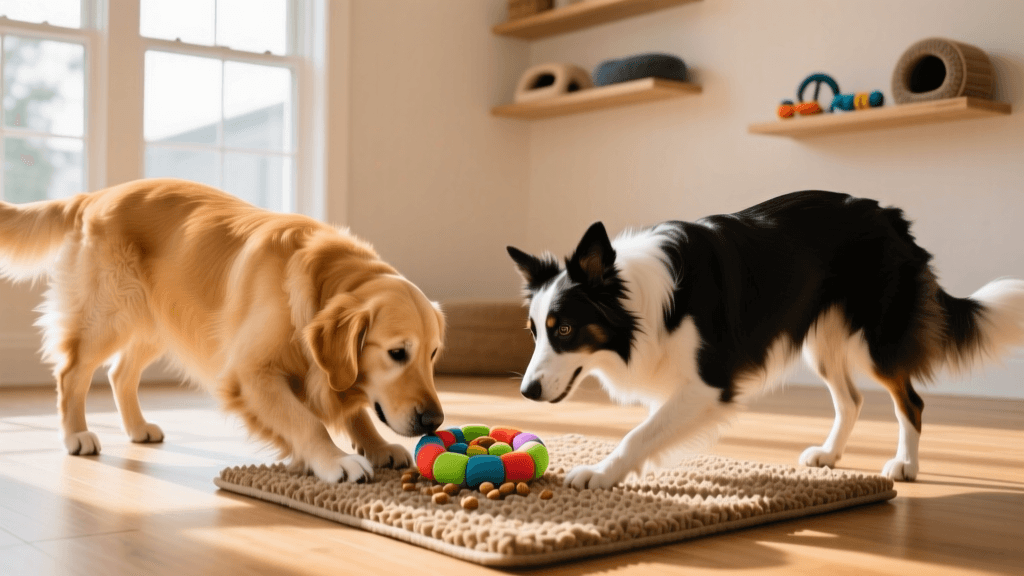
- Snuffle Mats and Lick Mats: Enrichment tools are essential for mental fatigue. Spreading your dog's meals over a textured lick mat with frozen, dog-safe bone broth triggers the parasympathetic nervous system, naturally lowering their heart rate and reducing transition-related anxiety.
Step-by-Step Transition Plan
Preparation should begin months before the baby's due date. Below is a structured timeline to help your dog psychologically adjust to the impending changes.
| Phase | Timeframe | Action Item | Canine Psychological Focus |
|---|---|---|---|
| Scent Introduction | 3 Months Out | Bring home hospital blankets and introduce baby lotions | Olfactory desensitization |
| Audio Desensitization | 2 Months Out | Play baby soundtracks at low volume, gradually increasing | Auditory habituation |
| Boundary Training | 1 Month Out | Establish nursery 'invisible walls' using positive reinforcement | Spatial routine adjustment |
| The Arrival | Day Zero | Leashed, calm greeting in a neutral zone before entering | Pack hierarchy reassurance |
| Integration | Weeks 1-4 | Supervised, reward-based proximity and safe-space retreats | Positive association building |
Creating Safe Zones and Decompression
One of the most critical aspects of managing a life transition with your dog is providing them with an absolute 'Safe Zone.' This is an area of the house—such as a spare bedroom, a finished basement, or a large, comfortable crate in a quiet corner—where the baby is never allowed to go. Your dog must learn that this space is their sanctuary. When they retreat to this zone, they are signaling that they have reached their social limit and need to decompress. Respecting this boundary is non-negotiable for maintaining trust.
Additionally, 'decompression walks' are vital. Unlike structured obedience walks, a decompression walk involves a long line (15 to 30 feet) in a quiet, natural area where the dog is allowed to sniff, explore, and process their environment at their own pace. Sniffing lowers a dog's pulse rate and allows them to process the overwhelming olfactory data of the new baby. Scheduling just 20 minutes of sniffari time a day can drastically reduce indoor tension and displacement behaviors.
Conclusion
Welcoming a newborn is a beautiful milestone, but it requires empathy, patience, and a deep understanding of your dog's psychological needs. By learning to decode subtle stress signals, utilizing modern 2026 calming technologies, and adhering to a structured desensitization plan, you can guide your dog through this major life transition with confidence. Remember, your dog is looking to you for guidance and reassurance. By advocating for their boundaries and rewarding their calm choices, you are laying the groundwork for a lifelong, safe, and loving bond between your child and your canine companion.
beth-carrasco
All our authors care for dogs every day — read more of their work on the authors page.