Force-Free Cooperative Dog Nail Trimming Guide 2026
Discover the 2026 force-free guide to cooperative care dog nail trimming. Learn scratch board techniques, consent signals, and stress-free grooming tools.
The Evolution of Canine Grooming in 2026
As we navigate through 2026, the dog training community has overwhelmingly rejected aversive techniques in favor of science-based, force-free methodologies. Nowhere is this paradigm shift more evident than in canine husbandry, specifically nail trimming. Historically, trimming a fearful dog's nails involved physical restraint, muzzling, and high-stress wrestling matches that left both the dog and the owner traumatized. Today, veterinary behaviorists and certified professional dog trainers universally advocate for cooperative care—a system that empowers the dog to actively participate in their own grooming.
Cooperative care, originally pioneered by exotic animal trainers and zookeepers, has firmly taken root in the mainstream dog training world. Rather than physically restraining a fearful dog to trim their nails—a practice that spikes cortisol, damages the human-animal bond, and risks injury to both parties—cooperative care offers the dog a clear 'opt-in' and 'opt-out' mechanism. When a dog learns that they have agency and can pause the procedure by simply lifting their head or walking away, their baseline anxiety plummets. The Fear Free Pets initiative has been instrumental in popularizing these low-stress handling techniques, proving that grooming and veterinary care do not have to be traumatic events.
The Science of Consent and Agency
At the core of cooperative care is the concept of agency. When an animal feels trapped, their amygdala triggers a fight-or-flight response, flooding their system with adrenaline and cortisol. In this state, learning is impossible, and the dog is merely surviving the experience. By introducing a 'consent signal,' we give the dog a functional way to communicate their comfort level. If the dog remains in the consent position, they are giving permission to proceed. If they break the position, they are asking for a break. Respecting this boundary builds profound trust and actually speeds up the desensitization process over time.
Essential Force-Free Tools for 2026
To succeed in cooperative nail trimming, having the right 2026 equipment is non-negotiable. Here are the top-rated, force-free tools currently dominating the market:
- LickiMat Soother ($12 - $15): Made from non-toxic, natural rubber, this mat features raised nodules designed to hold soft treats like plain pumpkin puree, goat's milk kefir, or bone broth. Licking releases endorphins, naturally soothing the canine nervous system during handling.
- Dremel PawControl 7760-PGK ($35 - $40): Unlike older, terrifyingly loud rotary tools, the current PawControl model features a whisper-quiet motor and an integrated LED light. Its 45-degree paw guide ensures you never accidentally hit the quick, making it a favorite among force-free groomers.
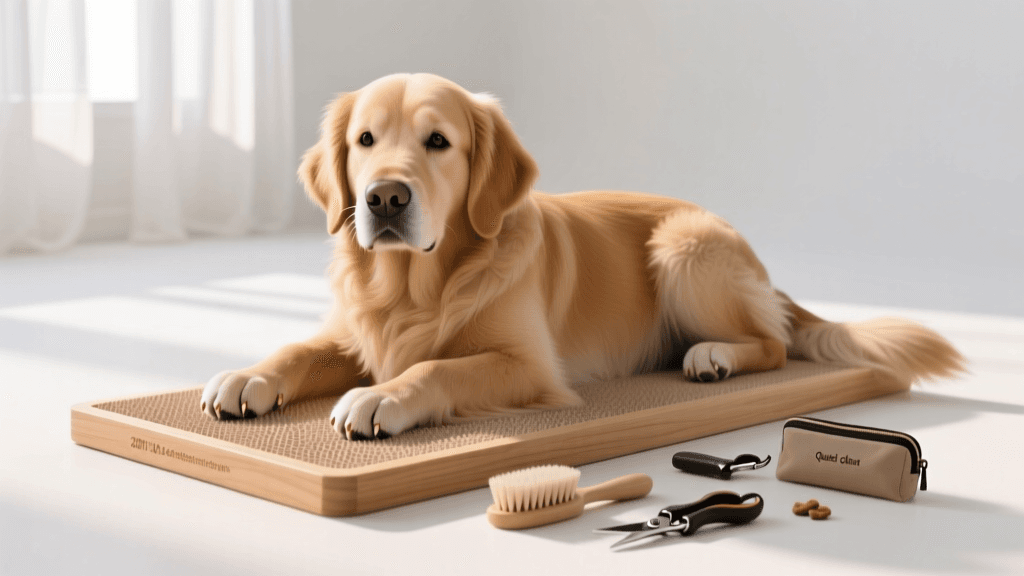
- Custom Scratch Boards ($30 - $60): For dogs with severe handling phobias, a scratch board is a game-changer. You can purchase pre-made boards like the ScratchPaws Pro or build one using a wooden plank and 80-grit adhesive sandpaper. This allows the dog to file their own front nails through a trained scratching behavior.
- Ziwi Peak Air-Dried Venison ($45 per 2.2lb bag): High-value reinforcement requires high-value rewards. Venison is a novel protein for most dogs, making it an exceptional motivator for challenging husbandry tasks.
- Karen Pryor i-Click Clicker ($5 - $8): A quiet, button-style clicker that provides a precise marker signal without startling noise-sensitive dogs. The raised button is easier to use while your other hand is managing treats and tools.
Step-by-Step Cooperative Nail Trimming Protocol
Phase 1: Establishing the Consent Signal (Chin Rest)
Before introducing any tools, you must establish a consent position. The 'chin rest' is the gold standard for cooperative care because it keeps the dog's head still and gives you clear access to their paws.
- Hold a small bowl or your cupped hand at your dog's eye level.
- The moment your dog investigates and rests their chin in the target, click your marker (or say 'Yes!') and feed a high-value treat.
- Repeat until the dog eagerly drives their chin into the target and holds it there for 3 to 5 seconds.
- If the dog lifts their head, the 'game' stops immediately. Do not lure them back down. This teaches the dog that keeping their chin down makes the good things happen, and lifting their head is their functional 'opt-out' signal.
Phase 2: Tool Desensitization
Never bring a running grinder or sharp clippers near a dog without a systematic desensitization protocol. Pair the tool with the LickiMat to create a positive conditioned emotional response (+CER).
- Place the turned-off Dremel near the dog's LickiMat. Let them eat their soothing treat while simply looking at the tool.
- Turn the grinder on at the lowest speed, three feet away. Feed treats continuously while the motor runs. Turn it off, stop feeding.
- Gradually decrease the distance over multiple sessions until the grinder is touching the dog's shoulder, then their leg, and finally their paw, all while they remain relaxed on their lick mat.
- Once the dog tolerates the vibration on their nail for one second, click, treat, and remove the tool. Slowly build duration up to the 3 seconds required to file the nail tip.
Phase 3: The Scratch Board Alternative
If your dog opts out of the grinder, the scratch board is the ultimate force-free backup. This method requires zero physical restraint of the paw.
- Shape the scratching behavior using a target stick. Reward any paw swipe against the sandpaper.
- Place the board on a non-slip yoga mat. Hold it at a 45-degree angle.
- Cue the dog to 'scratch.' The dog files their own front nails by swiping down the board.
- Reward heavily after every 3 to 5 swipes to prevent over-filing and joint strain. As the nails get shorter, switch from 60-grit to 100-grit sandpaper to avoid generating excessive heat near the quick.
2026 Nail Trimming Method Comparison
Choosing the right method depends on your dog's temperament, your skill level, and your commitment to force-free principles. Below is a comparison of the most common methods used by modern trainers.
| Method | Force-Free Compatibility | Noise Level | 2026 Avg Cost | Best For |
|---|---|---|---|---|
| Guillotine Clippers | Low (Requires restraint) | Silent | $15 - $25 | Dogs already fully desensitized to paw handling |
| Scissor-Style Clippers | Low to Medium | Audible 'Snap' | $20 - $35 | Thick nails on large breed dogs |
| Rotary Grinder (Dremel) | High (With desensitization) | Low Hum | $35 - $50 | Smooth finishes, dogs afraid of clipping pressure |
| Scratch Board | Extremely High (Dog-led) | Silent | $30 - $60 | Severe handling phobias, reactive dogs, front nails only |
Troubleshooting and Respecting the 'Opt-Out'
The cornerstone of the American Veterinary Society of Animal Behavior (AVSAB) humane training guidelines is respecting the animal's boundaries. If your dog lifts their head from the chin rest, walks away from the lick mat, or refuses to engage with the scratch board, the session is over. Do not lure them back, do not physically restrain them, and do not express frustration.
Analyze the antecedent: Was the grinder too loud? Was the room too hot? Were the treats not valuable enough? Did you push the duration too quickly? Take a 48-hour break, lower your criteria, and start from Phase 1. By honoring the opt-out, you build profound trust. Dogs who trust that their 'no' will be respected are significantly more likely to offer a 'yes' in future sessions. According to ASPCA's force-free dog training guidelines, patience and positive reinforcement yield longer-lasting behavioral changes and deeper bonds than any coercive method.
Conclusion: A Journey, Not a Race
Transitioning to cooperative care nail trimming is a journey that requires patience, observation, and a willingness to let the dog set the pace. In 2026, we have the tools, the science, and the understanding to make husbandry a bonding experience rather than a battleground. Whether you utilize a whisper-quiet rotary grinder paired with a LickiMat, or you teach your dog to file their own nails on a custom scratch board, the goal remains the same: a dog who feels safe, heard, and respected. Embrace the opt-out, celebrate the small victories, and watch as your dog transforms from a fearful grooming subject into an active, willing partner in their own care.
jonas-cole
All our authors care for dogs every day — read more of their work on the authors page.