Best Puppy Breeds For Remote Workers In 2026: Top 5 Picks
Discover the best puppy breeds for remote workers in 2026. Learn potty training, socialization, and care tips for your new home-office companion.
The Rise of the Home-Office Puppy in 2026
Working from home in 2026 offers unprecedented flexibility, making it the perfect time to welcome a puppy into your life. However, balancing a demanding remote job with the rigorous demands of a puppy's first year requires careful breed selection and strategic planning. Not all puppies are suited for a quiet home office environment. Some demand constant outdoor stimulation and will bark at every delivery driver, while others are perfectly content snoozing under your standing desk. Choosing the right breed is the first critical step in ensuring a harmonious work-from-home environment.
The first year of a puppy's life is packed with developmental milestones, from potty training and teething to early socialization. For remote workers, these milestones must be managed between video calls, deep work sessions, and household chores. In this comprehensive guide, we explore the best puppy breeds for remote workers, alongside actionable care strategies tailored to the modern home-office lifestyle.
Top 5 Puppy Breeds for the Home Office
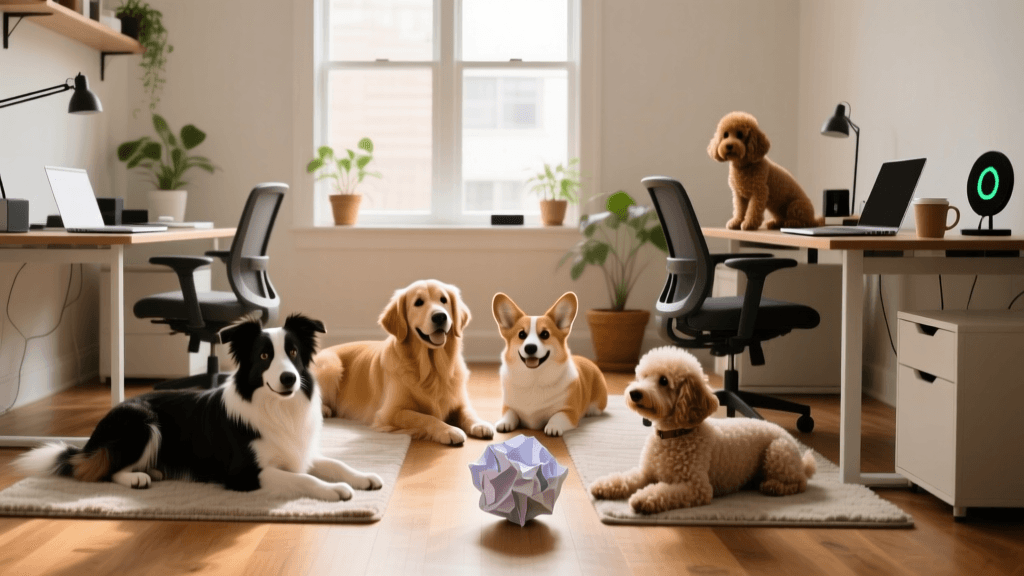
When selecting a puppy to share your workspace, you want a breed with a moderate to low energy level, a low tendency to bark, and an adaptable temperament. Here are the top five breeds thriving in remote-work households in 2026.
1. Cavalier King Charles Spaniel
The Cavalier King Charles Spaniel is the ultimate lap dog. Known for their gentle and affectionate nature, they are highly adaptable to their owner's schedule. They require moderate exercise—a quick morning walk and an evening stroll are usually sufficient—leaving you plenty of time to focus on your tasks. Their low barking drive makes them exceptional companions for professionals who spend hours on virtual meetings.
2. Bichon Frise
If you work from a compact home office or apartment, the Bichon Frise is a stellar choice. They are famously hypoallergenic, meaning your workspace won't be covered in heavy shedding. Bichons are cheerful and playful but do not possess the hyperactive endurance of working breeds. They are highly intelligent and respond beautifully to positive reinforcement potty training.
3. Greyhound
Often misunderstood as high-energy racing dogs, retired Greyhounds or carefully bred companion Greyhounds are actually notorious "couch potatoes." They are incredibly quiet, rarely barking without a severe reason, and are content to sleep on a plush bed next to your desk for hours. Their short coats require minimal grooming, saving you time during your busy workweek.
4. Pug
Pugs are comical, deeply devoted, and possess remarkably low exercise needs. A pug will happily follow you from the kitchen to your home office, snoring softly in the background. While their breathing noises might require you to use noise-canceling software during important client calls, their loving demeanor and small footprint make them ideal for remote workers.
5. Miniature Schnauzer
For those who want a slightly more alert and trainable companion, the Miniature Schnauzer is fantastic. They are low-shedding and highly intelligent. While they can be vocal, their intelligence makes them prime candidates for early "quiet command" training. They excel at learning to use indoor potty systems, which is a game-changer for remote workers living in high-rise apartments.
Comparison Chart: Home Office Puppy Traits
| Breed | Energy Level | Barking Tendency | Shedding | Best For |
|---|---|---|---|---|
| Cavalier King Charles | Low/Moderate | Very Low | Moderate | Quiet, affectionate companionship |
| Bichon Frise | Moderate | Low | Minimal | Allergy sufferers, small offices |
| Greyhound | Low (Indoors) | Very Low | Low | Apartment dwellers, deep work |
| Pug | Low | Moderate | High | Humor, low exercise needs |
| Miniature Schnauzer | Moderate | Moderate/High | Minimal | Smart training, alert companions |
First-Year Care for the Remote Worker's Puppy
Bringing a puppy into your home office requires a structured routine. Puppies thrive on predictability, and aligning their care schedule with your work blocks is essential for success.
Potty Training on a Work Schedule
Potty training is the most immediate challenge for any new puppy owner. According to the ASPCA's house training guidelines, consistency and supervision are the keys to success. For remote workers, the Pomodoro technique can be adapted for puppy care. Work for 45 minutes, then take a 10-minute break to take the puppy to their designated potty spot.
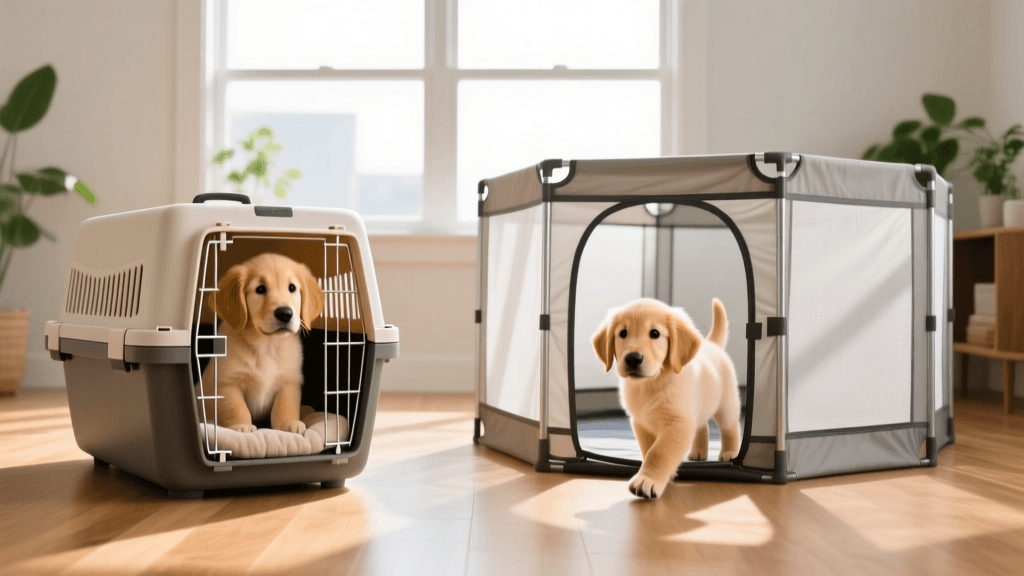
Invest in a high-quality crate and place it near your desk. Puppies naturally avoid soiling their sleeping area. When you are in a deep-focus sprint and cannot supervise, the crate prevents accidents. For apartment dwellers, consider a premium indoor grass patch system like the Doggielawn or a smart potty pad holder to minimize disruptions during back-to-back Zoom calls.
Teething and "Mute" Toys for Zoom Calls
Between 12 and 24 weeks of age, your puppy will begin teething. This developmental milestone is marked by an intense need to chew. If you provide squeaky toys or hard nylon bones, the noise will inevitably interrupt your professional calls.
Instead, stock your desk drawer with "mute" enrichment toys. The West Paw Toppl and the classic Kong, stuffed with frozen plain yogurt and puppy-safe peanut butter, provide silent, long-lasting mental stimulation. The cold temperature also soothes inflamed gums. Rotate these toys daily to maintain your puppy's interest while you work.
Early Socialization Without Leaving the Desk
The critical socialization window occurs between 8 and 16 weeks of age. During this time, puppies must be exposed to a wide variety of sights, sounds, and people to prevent fear-based behaviors later in life. The American Kennel Club's socialization framework emphasizes that socialization is about positive exposure, not just physical interaction.
As a remote worker, you can socialize your puppy without leaving your home office. Play audio tracks of city noises, vacuums, and doorbells at low volumes while feeding your puppy high-value treats. Invite your remote colleagues over for a "puppy meet-and-greet" during your lunch break. Carry your puppy in a supportive sling while you walk to your local coffee shop, allowing them to observe the world safely from the comfort of your embrace.
Managing Developmental Milestones
Understanding the timeline of your puppy's first year helps you anticipate challenges and adjust your work schedule accordingly.
8 to 12 Weeks: The Fear Period and Bite Inhibition
During this stage, puppies are highly impressionable and may experience sudden fear periods. A delivery driver dropping a package might suddenly seem terrifying. Keep your workspace calm and use treat-dispensing cameras, like the 2026 Furbo 360, to toss treats and reassure your puppy when you are in another room. This is also the time to teach bite inhibition; if puppy teeth touch your skin during play, immediately withdraw attention for 10 seconds.
3 to 6 Months: Independence and Boundary Testing
As your puppy gains confidence, they will begin to test boundaries. They might steal a pen from your desk or chew on a headset cable. Puppy-proof your home office by using cable management sleeves and keeping important documents in closed drawers. Increase their physical exercise during your morning and evening hours to ensure they are tired enough to nap during your core working hours.
6 to 12 Months: Adolescence
Canine adolescence is often the most frustrating stage for owners. Your puppy may seem to "forget" their potty training or recall commands. Patience and consistency are vital. Maintain your strict routine, and consider enrolling in a virtual puppy obedience class during your lunch hour to reinforce your bond and sharpen their skills.
Feeding Schedules for the Remote Worker
A predictable feeding schedule leads to a predictable potty schedule. In 2026, smart pet technology makes this easier than ever. Feed your puppy three measured meals a day until they are six months old, then transition to two meals.
Align their breakfast with your morning routine, their lunch with your mid-day break, and their dinner with the end of your workday. Utilizing a smart microchip feeder ensures that if you have multiple pets, your puppy gets their specific growth-formula kibble without being stolen by an older dog. Always measure food using a digital scale to prevent obesity, a growing concern in indoor companion dogs.
Conclusion
Raising a puppy while working remotely is a deeply rewarding experience that requires preparation, patience, and the right breed match. By selecting a low-barking, adaptable breed like a Cavalier King Charles Spaniel or a Greyhound, and by structuring your day to accommodate potty breaks, silent teething toys, and creative socialization, you can cultivate a peaceful and productive home office. Embrace the milestones of the first year, and soon, your new companion will be the best coworker you have ever had.
hannah-wickes
All our authors care for dogs every day — read more of their work on the authors page.