2026 AKC Fast CAT Guide: Training, Gear, And Rules
Master the 2026 AKC Fast CAT season with our ultimate guide to sprint training, essential lure coursing gear, rules, and speed conversion charts.
Welcome to the 2026 Fast CAT Season
If you are looking for an electrifying way to bond with your dog while burning off their endless energy, the AKC Fast CAT (Coursing Ability Test) is the ultimate canine sport. As we move through the 2026 competition season, Fast CAT continues to dominate the dog sports world due to its accessibility, sheer speed, and the raw instinct it taps into. Whether you have a Greyhound built for the track or a scrappy Terrier with something to prove, this guide will walk you through everything you need to know about training, gear, and official rules for the 2026 season.
What is AKC Fast CAT?
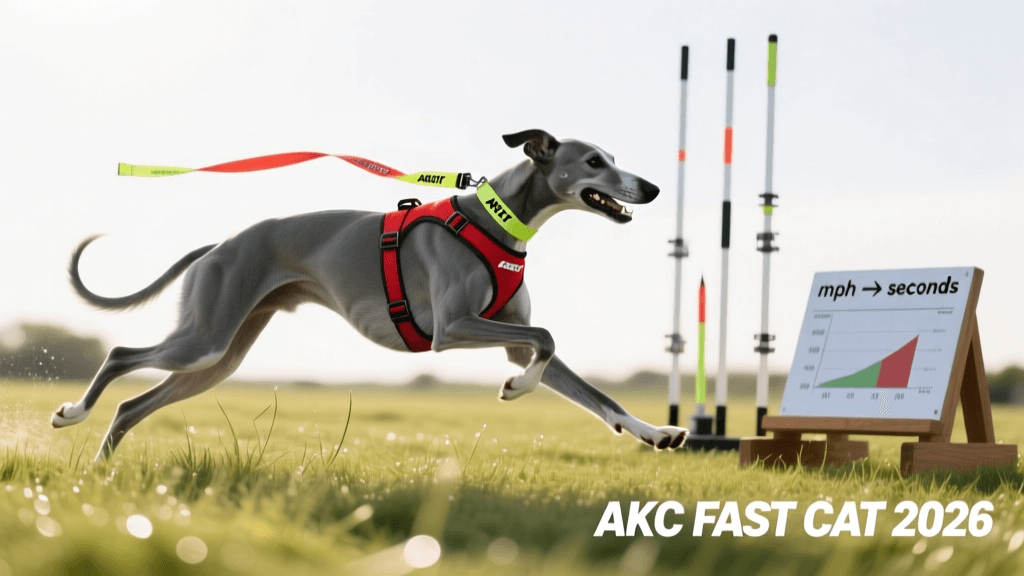
Fast CAT is a 100-yard dash where dogs chase a mechanical lure across a straight course. Unlike traditional lure coursing, which involves complex turns and field strategy, Fast CAT is a pure test of straight-line speed and prey drive. The dog's time is recorded and converted into miles per hour (MPH). It is an incredible test of athleticism, and because it relies on instinct rather than complex obedience, almost any healthy dog over 12 months of age can participate.
2026 Official Rules and Divisions
The American Kennel Club maintains strict guidelines to ensure fairness and safety. According to the official AKC Fast CAT regulations, the sport is divided into two height categories to ensure accurate timing and fair competition:
- 12 Inches and Under: Dogs measuring 12 inches or less at the withers (shoulders) run the standard 100-yard course but receive a time handicap to account for their shorter stride length.
- Over 12 Inches: Dogs measuring over 12 inches run the standard 100-yard course with no time adjustments.
For the 2026 season, handlers must ensure their dogs are registered and have a valid AKC, PAL, or Canine Partners number. Dogs must be at least 12 months old to compete, ensuring their growth plates have fully closed before engaging in high-impact sprinting. Dogs can earn titles such as BCAT (Beginner), DCAT (Dog), and FCAT (Fast CAT) based on cumulative points earned from their MPH scores.
Essential Gear for the 2026 Season
Having the right equipment is non-negotiable when dealing with high-speed canine athletes. Here is the top-tier gear recommended for the 2026 Fast CAT circuit:
1. Non-Restrictive Sprint Harness
Never run your dog in a standard collar or a restrictive no-pull harness for Fast CAT. You need a harness that allows full shoulder extension. The Ruffwear Web Master or specialized canine racing harnesses like the Zero DC Freemotion are excellent choices. These harnesses distribute the pulling force across the chest and back, preventing tracheal damage and allowing for maximum biomechanical efficiency.
2. High-Tech GPS Tracking Collars
While the official track uses photoelectric timers, tracking your dog's training sprints is vital for monitoring progress and preventing overexertion. The Fi Series 4 Smart Collar has become a staple in 2026 for sports handlers. Its advanced GPS and accelerometer can help you map your training routes and monitor your dog's daily activity levels to ensure they are getting adequate rest between sprint sessions.
3. The Lure and Long Line
For home training, you will need a reliable lure machine. The Squid Lure Machine remains the gold standard for backyard training due to its variable speed control and durability. Pair this with a 30-to-50-foot biothane long line. Biothane is essential because it does not absorb water or mud, preventing the line from becoming heavy and tangled during high-speed recalls.
Step-by-Step Sprint Training Plan
Training for Fast CAT is not just about letting your dog run; it requires structured conditioning and behavioral shaping.
Phase 1: Building Lure Drive
Some dogs naturally chase anything that moves, while others need encouragement. Start by dragging a plastic bag or a fleece tug toy on a string across the grass. Let your dog catch it quickly and reward them with a high-value treat or a game of tug. Gradually increase the distance and speed. The goal is to teach the dog that the plastic bag is the most exciting thing in the world.
Phase 2: The Critical Recall
The most common reason for disqualification or injury in Fast CAT is a dog that does not stop at the end of the 100-yard course. You must train a rock-solid recall to the handler standing in the 'catch pen.' Practice calling your dog to you from short distances, using a unique, high-pitched whistle or a specific verbal cue. Never use the same recall word you use for everyday obedience; reserve this special cue exclusively for the end of a sprint.
Phase 3: Arousal and Focus
Competition environments are loud and distracting. Train your dog to maintain focus on the lure even when people are cheering or other dogs are barking. Practice 'pre-start' routines where you hold your dog in a sit or stand position inside the start box, building their anticipation before releasing them to chase. A secure, calm hold prevents the dog from anticipating the release and pulling you over before the lure begins moving.
Fast CAT Speed Conversion Chart
Understanding how your dog's 100-yard dash time translates to Miles Per Hour (MPH) is crucial for tracking their athletic development. Below is the official conversion chart used by judges and handlers in 2026:
| Time (Seconds) | Speed (MPH) | Athletic Tier |
|---|---|---|
| 12.00 | 17.04 | Beginner / Small Breeds |
| 10.00 | 20.45 | Intermediate |
| 8.00 | 25.56 | Advanced |
| 6.00 | 34.09 | Elite Sprinter |
| 5.00 | 40.91 | World-Class Sighthound |
Note: Dogs in the '12 Inches and Under' division will have a mathematical handicap added to their final MPH calculation to level the playing field against longer-legged breeds.
Canine Conditioning and Injury Prevention
Sprinting places immense stress on a dog's musculoskeletal system. According to veterinary sports medicine experts supported by the AKC Canine Health Foundation, proper conditioning is the difference between a long, successful sports career and a devastating soft-tissue injury.
Warm-Up and Cool-Down Protocols
Never let your dog sprint cold. A proper warm-up should include 10 to 15 minutes of brisk walking, followed by dynamic movements like figure-eights through your legs, play bows, and short, low-speed trots. This increases blood flow to the muscles and synovial fluid to the joints. After the run, a 10-minute cool-down walk is mandatory to flush lactic acid from the muscles and prevent cramping.
Core Strength and Proprioception
Off-track conditioning should include balance work. Using equipment like inflatable peanut balls or balance discs helps strengthen your dog's core and improves proprioception (body awareness). A strong core stabilizes the spine during the extreme spinal flexion and extension that occurs during a full-speed double-suspension gallop.
Knowing When to Rest
Overtraining is a major issue in dog sports. Monitor your dog for signs of fatigue, such as a drop in top speed, reluctance to enter the start box, or delayed recovery times. In 2026, top handlers utilize a periodization approach, alternating between high-intensity sprint weeks and active recovery weeks to keep their canine athletes peaked for competition day.
Final Thoughts for the 2026 Competitor
Fast CAT is more than just a race; it is a celebration of your dog's natural instincts and athletic prowess. By investing in the proper non-restrictive gear, implementing a structured training plan that prioritizes the recall, and adhering to strict veterinary conditioning protocols, you are setting your dog up for a safe and exhilarating career on the track. Get out there, build that lure drive, and we will see you at the finish line!
hannah-wickes
All our authors care for dogs every day — read more of their work on the authors page.