Adopting a Dog With OA: 2026 Home Prep & Care Guide
Learn how to prepare your home and manage treatment for canine OA when adopting a senior dog in 2026. Essential mobility aids and first-day tips.
Embracing the Golden Years: Adopting a Dog With Osteoarthritis
Bringing a new dog into your home is a life-changing decision, and choosing to adopt a senior dog is one of the most rewarding paths you can take. However, when browsing shelter profiles in 2026, you will frequently encounter older dogs diagnosed with Osteoarthritis (OA). Many potential adopters hesitate, fearing the emotional toll and financial burden of managing a dog with chronic pain. Yet, with modern veterinary advancements and thoughtful home preparation, adopting a dog with OA is entirely manageable and deeply fulfilling. This guide will walk you through the decision-making process, essential home modifications, and the latest 2026 treatment protocols to ensure your new companion thrives in their golden years.
Understanding Canine Osteoarthritis in Rescue Dogs
Osteoarthritis is a progressive, degenerative joint disease that affects the cartilage, synovial fluid, and underlying bone. According to the American College of Veterinary Surgeons, OA is the most common chronic disease in dogs, affecting a significant percentage of canines over the age of seven. In shelter environments, OA is often the result of previous injuries, genetic predispositions in large breeds, or simply the natural wear and tear of aging. Dogs with OA experience stiffness, reduced mobility, muscle atrophy, and chronic pain, which can manifest as reluctance to jump, irritability, or decreased appetite. Understanding that OA is a manageable condition rather than a terminal illness is the first step in making an informed adoption decision.
The Decision-Making Process: Is an OA Dog Right for You?
Before committing to an OA dog, honest self-assessment is crucial. Managing canine OA requires a proactive owner willing to administer daily treatments, maintain a strict weight management regimen, and invest in home modifications. You must consider your physical ability to assist a large, mobility-impaired dog into vehicles or up stairs. Additionally, you must evaluate your financial readiness. While adopting a senior dog with OA is a profound act of compassion, it requires a dedicated budget for veterinary care, specialized diets, and mobility aids. If you have the time, patience, and resources, providing a soft landing for an arthritic rescue dog is an incredibly noble and joyful endeavor.
Preparing Your Home: First-Day Essentials for OA Dogs
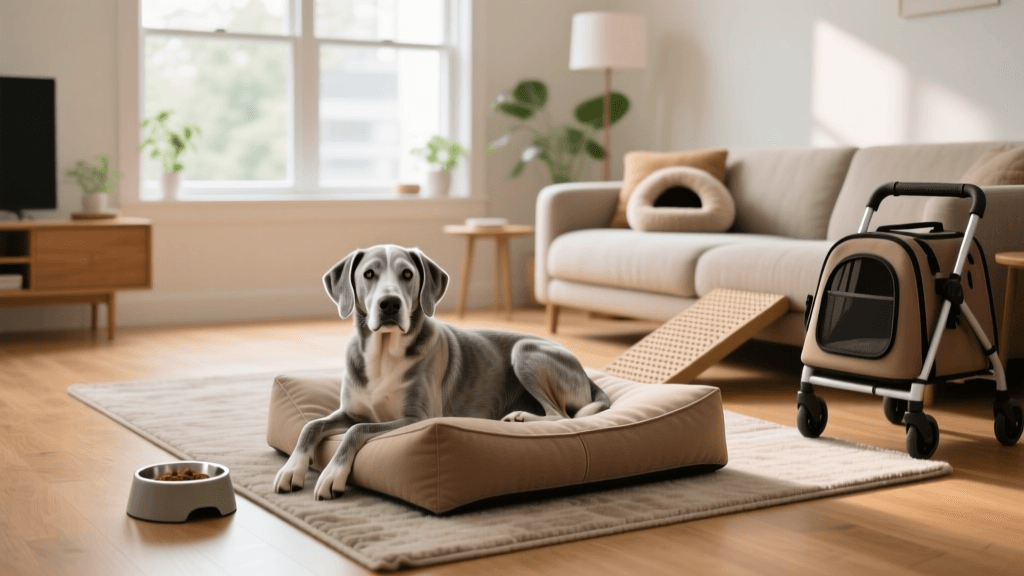
Before your new companion crosses the threshold, your home must be transformed into a joint-friendly sanctuary. The goal is to minimize slip hazards, eliminate the need for jumping, and provide supportive resting areas.
Orthopedic Sleeping Solutions
Standard dog beds offer inadequate support for arthritic joints. In 2026, therapeutic orthopedic beds featuring multi-layer memory foam and cooling gel inserts are the standard of care. Look for beds with a minimum of four inches of high-density therapeutic foam and waterproof, easily washable liners. Bolstered edges are highly recommended, as they provide a sense of security and a comfortable place for your dog to rest their head and neck, reducing spinal strain.
Mobility Aids and Ramps
Jumping is the enemy of arthritic joints. You must eliminate the need for your dog to leap onto couches, beds, or into vehicles. Invest in high-traction, adjustable pet ramps. For vehicle loading, a ramp with an incline no steeper than 18 to 20 degrees is ideal to prevent excessive joint flexion. For indoor furniture, opt for foam-based pet stairs with non-slip surfaces. Additionally, a well-fitted mobility harness with a sturdy dorsal handle is an absolute first-day essential, allowing you to safely support your dog's hindquarters when navigating stairs or standing up from a lying position.
Comprehensive Home Modification Checklist
Modifying your living space is critical to preventing painful slips and falls. Use the table below to audit your home before bringing your senior dog home.
| Home Area | Hazard for OA Dogs | 2026 Recommended Solution |
|---|---|---|
| Hardwood and Tile Floors | Slipping, splaying, and severe joint strain | Interlocking EVA foam mats or non-slip rug runners with rubber backing |
| Staircases | High impact on carpal and stifle joints | Install stair gates and carry or use a harness to assist the dog |
| Food and Water Bowls | Neck and shoulder strain from bending down | Elevated feeding stations adjusted to the dog's shoulder height |
| Outdoor Steps | Slippery surfaces in wet or icy conditions | Anti-slip traction tape and outdoor-rated pet ramps |
| Doorways | Drafts causing joint stiffness | Thermal draft stoppers and heated floor mats near resting areas |
Modern Treatment for Canine OA in 2026
The veterinary landscape for treating canine OA has transformed dramatically. The days of relying solely on daily painkillers are over. Today, a multimodal approach is the gold standard, combining biologic therapies, physical rehabilitation, and targeted nutrition.
Anti-NGF Monoclonal Antibodies
The most significant breakthrough in recent years is the widespread adoption of anti-Nerve Growth Factor (anti-NGF) monoclonal antibodies. As detailed on the official Librela information portal, these monthly injections target the specific proteins that transmit pain signals in arthritic joints. Unlike traditional NSAIDs, which are metabolized by the liver and kidneys, biologic therapies are broken down into amino acids, making them exceptionally safe for senior dogs with pre-existing organ compromise. This therapy has revolutionized OA management, restoring mobility and quality of life to thousands of rescue dogs.
NSAIDs and Joint Supplements
While biologic therapies handle the pain signaling, Non-Steroidal Anti-Inflammatory Drugs (NSAIDs) are still occasionally used for acute flare-ups under strict veterinary supervision. However, the focus in 2026 is heavily on joint preservation through advanced nutraceuticals. High-quality supplements containing Undenatured Type II Collagen, Avocado/Soybean Unsaponifiables (ASU), and high doses of EPA/DHA Omega-3 fatty acids are essential. These ingredients actively reduce joint inflammation and support cartilage matrix health.
Physical Rehabilitation and Technology
Canine physical therapy is more accessible than ever. Underwater treadmills provide low-impact cardiovascular exercise that builds muscle mass without loading the joints. At home, smart activity trackers worn on the collar allow owners to monitor their dog's daily step count and resting heart rate, providing early warnings of OA flare-ups before visible lameness occurs. Furthermore, automated, app-controlled heating pads can be scheduled to warm your dog's bed just before they wake up, significantly reducing morning stiffness.
Budgeting for OA Care in 2026
Financial preparedness is a critical component of the adoption decision. Managing canine OA requires a consistent financial commitment. In 2026, you should budget for monthly biologic injections, which typically range from $80 to $150 depending on the dog's weight. High-quality joint supplements and prescription mobility diets will add another $60 to $100 per month. Initial home modifications, including orthopedic beds, ramps, and flooring, may require a one-time investment of $300 to $600. It is highly recommended to enroll your newly adopted senior dog in a pet insurance plan that covers chronic conditions, or to establish a dedicated emergency savings account specifically for their musculoskeletal care.
Conclusion
Adopting a senior dog with Osteoarthritis is not a burden; it is a privilege. By understanding the disease, preparing your home with strategic modifications, and utilizing the advanced 2026 treatment protocols available, you can offer a rescue dog a pain-free, joyful second chapter. The ASPCA frequently highlights the profound bond that forms between adopters and senior pets. When you take the time to manage their OA effectively, you are rewarded with a deeply grateful, gentle companion who will spend their golden years wrapped in comfort and love.
marcus-aldridge
All our authors care for dogs every day — read more of their work on the authors page.