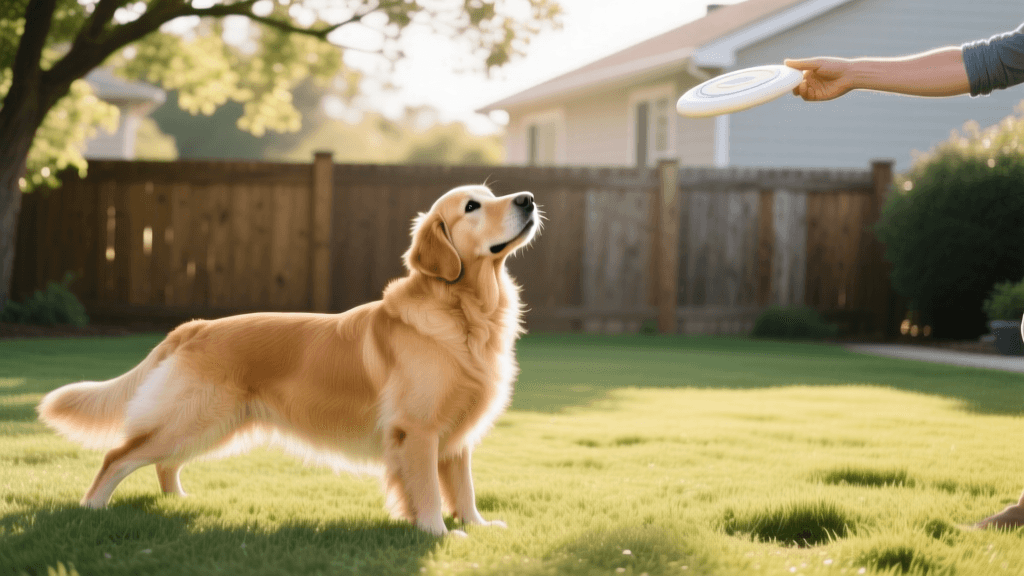
The 12-Week Impulse Control Plan for Adolescent Dogs
Master your adolescent dog's wild energy with our 12-week impulse control progression plan. Build calm behaviors, focus, and daily household harmony.

Why Adolescent Dogs Need a Structured Progression Plan
Welcoming a puppy into your home is a joyous occasion, but many owners are caught off guard when their sweet pup transitions into adolescence. Typically occurring between six and eighteen months of age, this developmental stage is characterized by surging hormones, brain reorganization, and a sudden onset of selective hearing. According to the American Veterinary Medical Association (AVMA), adolescent dogs are undergoing significant neurological changes that can temporarily erase previously learned behaviors and heighten reactivity to their environment.
Random, sporadic training sessions will not suffice during this chaotic period. To survive the teenage phase and emerge with a well-mannered companion, you need a structured training progression plan. This 12-week impulse control blueprint is designed specifically for the daily realities of living with an adolescent dog. By systematically building duration, distance, and distraction (the 3 Ds of dog training), you will teach your dog how to process excitement and choose calm behaviors independently.
Phase 1 (Weeks 1-4): Foundation and Environmental Management
The first month of your progression plan focuses on establishing a rock-solid foundation indoors. Adolescent dogs lack the internal brakes to stop themselves from jumping, counter-surfing, or bolting out doors. Therefore, we must manage their environment while teaching an incompatible behavior: going to a designated mat or cot.
The "Place" Command Progression
The "Place" command is the cornerstone of household impulse control. Unlike a simple "sit" or "down," which can be performed anywhere, "Place" gives your dog a specific physical boundary and a clear job. According to the American Kennel Club's training resources, teaching a dog to settle on a mat provides them with a safe haven and reduces anxiety-driven hyperactivity.
Week 1-2: Shaping the Behavior
- Equipment Needed: A raised, chew-resistant cot (such as the Kuranda PVC cot, approximately $120) and a treat pouch.
- The Process: Stand near the cot. The moment your dog looks at it, click or say "Yes" and toss a treat onto the fabric. Repeat this 20 times per session, three times a day.
- Treat Selection: Use high-value, low-calorie treats like Zuke's Mini Naturals ($6 per bag) or freeze-dried beef liver ($15 for a 3oz bag) to maintain motivation without overfeeding.
Week 3-4: Adding the Cue and Initial Duration
Once your dog is reliably stepping onto the cot to earn a reward, introduce the verbal cue "Place" just before they step up. Begin to delay the reward. Instead of treating immediately upon all four paws landing on the cot, wait two seconds, then five seconds, then ten seconds. Feed directly on the mat to reinforce that staying on the mat is where the value lies.
Phase 2 (Weeks 5-8): Adding Distractions and Duration
With the foundation laid, weeks five through eight focus on proofing the behavior against real-world household triggers. The ASPCA's guide to common dog behavior issues emphasizes that dogs do not generalize behaviors naturally; a dog who can settle in a quiet bedroom may completely fail to settle when the doorbell rings. We must systematically introduce the 3 Ds: Duration, Distance, and Distraction.
Weekly Progression Chart for "Settle"
Use the following table to track your daily 10-minute training sessions. Never increase more than one "D" at a time. If your dog breaks the "Place" command, calmly reset them and drop down to the previous week's criteria.
| Week | Duration Target | Distance Target | Distraction Level |
|---|---|---|---|
| Week 5 | 1 to 2 Minutes | 2 Feet Away | Low (Quiet Room, Owner Sitting) |
| Week 6 | 3 to 5 Minutes | 5 Feet Away | Low to Medium (TV On, Owner Standing) |
| Week 7 | 5 to 8 Minutes | 10 Feet Away | Medium (Family Moving, Dropping Toys) |
| Week 8 | 10+ Minutes | Out of Sight | High (Doorbell Ringing, Guests Entering) |
Integrating into Daily Routines
Training progression plans only work if they are woven into your daily life. During Phase 2, enforce the "Place" command during high-arousal daily events:
- Meal Prep: Dog goes on "Place" while you chop vegetables or cook. Reward intermittently for remaining settled.
- Feeding Time: Dog must hold "Place" while you set their bowl down. Release them with a specific cue like "Okay" or "Free" to eat.
- Work From Home: Position the cot under your desk. Use a long-lasting chew, like a bully stick ($4-$8 each), to reward prolonged settling while you take Zoom calls.
Phase 3 (Weeks 9-12): Real-World Application and Proofing
The final phase of your 12-week plan moves the impulse control out of the living room and into the real world. An adolescent dog who can control their impulses on a patio or during a walk is a dog that can safely accompany you to breweries, outdoor cafes, and neighborhood strolls.
Loose-Leash Walking Progression
Impulse control on a leash is notoriously difficult for teenage dogs. The sight of a squirrel or another dog triggers a predatory drift that overrides basic obedience. To combat this, we use a 15-foot biothane long line ($25) and a front-clip harness (like the Ruffwear Front Range, $40) to safely practice engagement and disengagement.
The "Look at That" (LAT) Game Progression:
- Week 9: Stand 30 feet away from a mild trigger (e.g., a stationary person). The moment your dog looks at the trigger, mark "Yes" and feed a high-value treat. This builds a classical conditioning loop: Trigger = Treat from handler.
- Week 10: Decrease distance to 20 feet. Require your dog to look at the trigger, then voluntarily look back at you to earn the reward. This builds impulse control by teaching them to disengage.
- Week 11: Introduce movement. Walk parallel to the trigger at 20 feet. Reward heavily for maintaining a loose leash and checking in with you.
- Week 12: Decrease distance to 10 feet and introduce passing triggers. If the dog lunges, you have moved too fast; increase distance and return to Week 10 criteria.
Tracking Your Dog's Progress and Troubleshooting
Adolescent regression is a normal part of canine development. Your dog will have days where they seem to have forgotten everything you taught them in Phase 1. This is not a failure of your progression plan; it is a feature of their brain development.
Consistency in your progression plan is the bridge between a chaotic adolescent and a well-mannered adult dog. Never increase distance and distraction at the same time; build one pillar of the 3 Ds before adding another. When in doubt, make the exercise easier to ensure your dog succeeds.
Common Troubleshooting Scenarios
- The Dog Won't Stay on the Mat: You have likely increased the distraction level too quickly. Return to a quiet room, use higher-value treats (like boiled chicken breast), and rebuild duration in 10-second increments.
- The Dog Barks at Guests from the Mat: The dog is conflicted. They want to greet but are being asked to stay. Toss high-value treats to the mat *before* the dog begins barking to change their emotional response to the doorbell from excitement to anticipation of food.
- Leash Reactivity Spikes: Hormonal fluctuations can cause sudden spikes in reactivity. Temporarily avoid high-traffic walking routes and stick to quiet, predictable environments while continuing your LAT progression at sub-threshold distances.
Conclusion: The Payoff of Patience
Living with an adolescent dog requires immense patience, but following a structured 12-week impulse control progression plan transforms daily chaos into predictable harmony. By investing just 30 minutes a day into systematic mat training and leash proofing, you are not just teaching commands; you are rewiring your dog's brain to choose calmness over chaos. Stick to the progression, manage their environment, and celebrate the small victories. By the time your dog reaches adulthood at 18 to 24 months, the impulse control habits you built during these crucial 12 weeks will be second nature, resulting in a confident, relaxed, and deeply bonded companion for life.
priya-sutaria
All our authors care for dogs every day — read more of their work on the authors page.